
Dęblin 2026-07-25
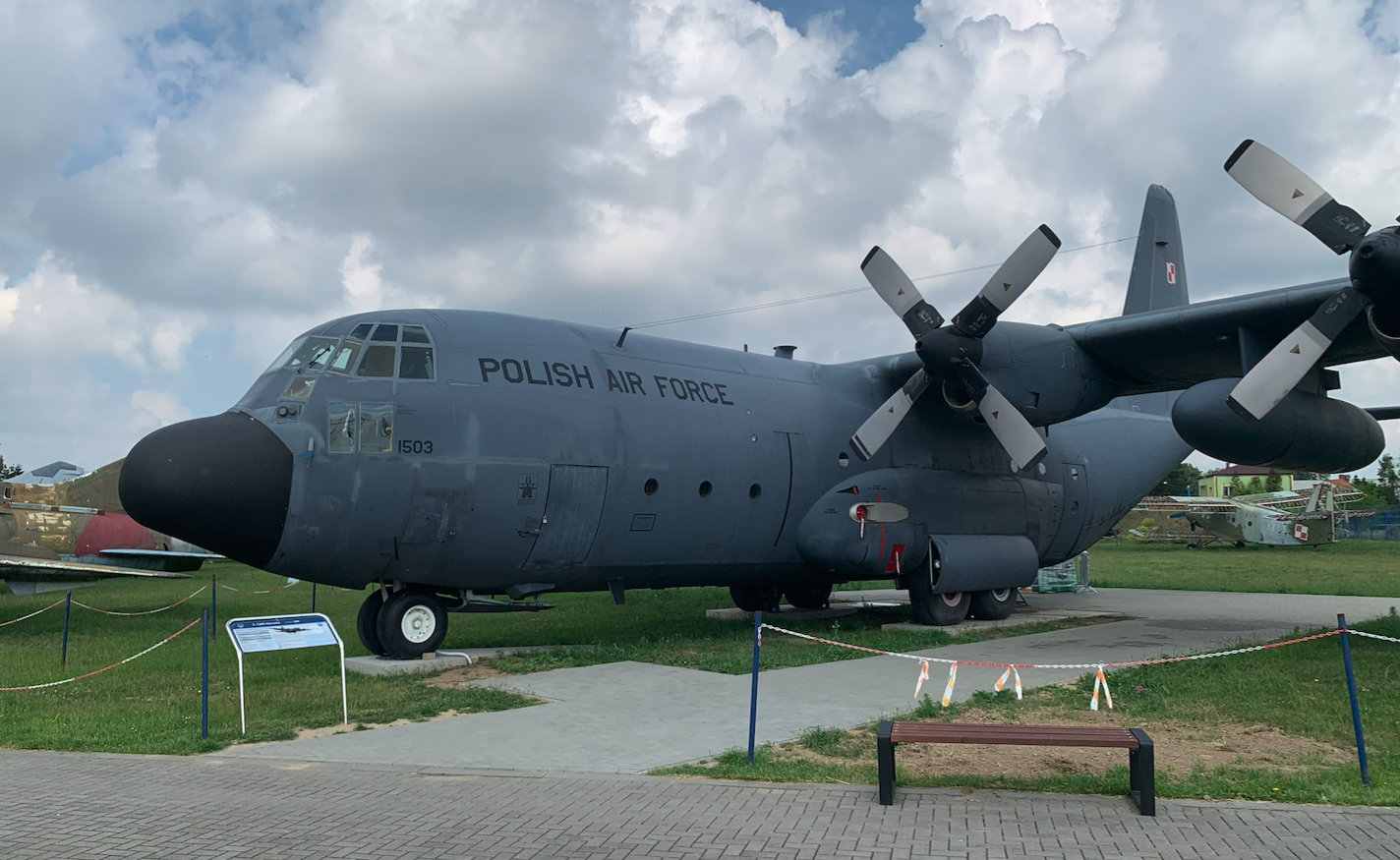
Lockheed Martin C-130 E Hercules No. 1503.
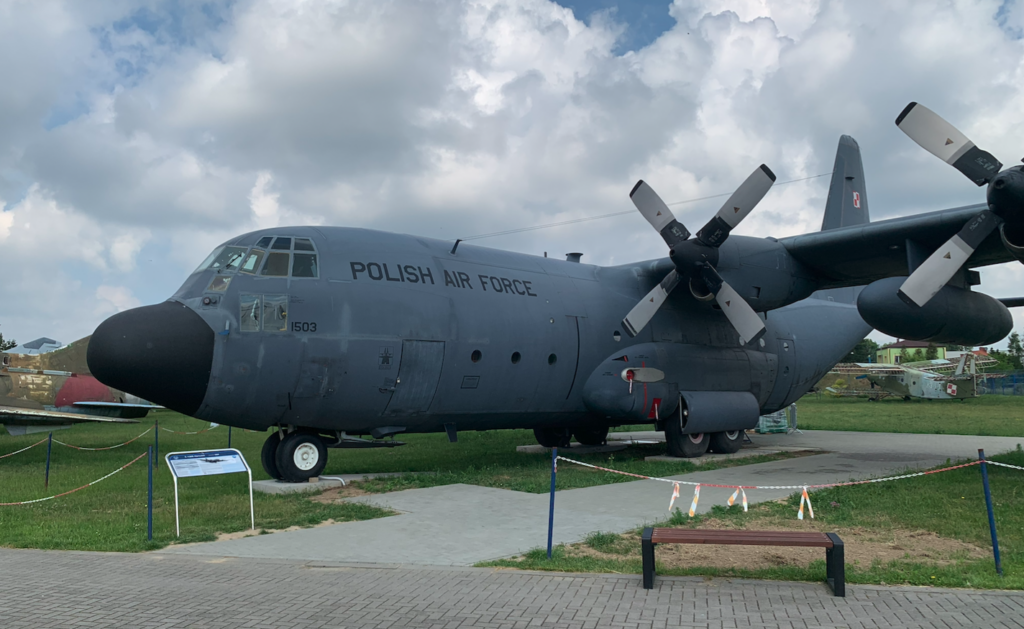
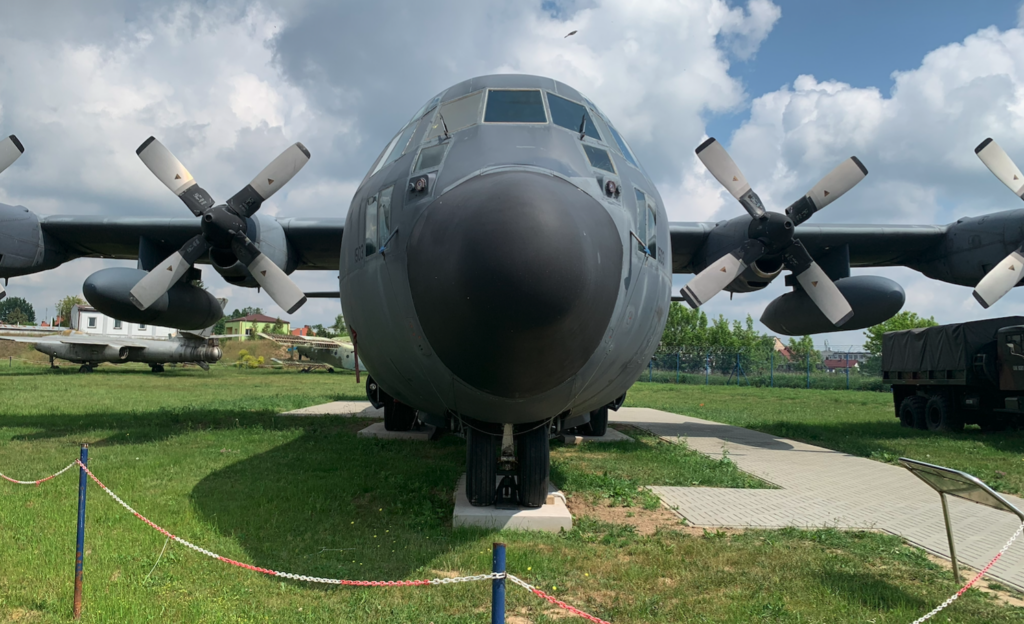
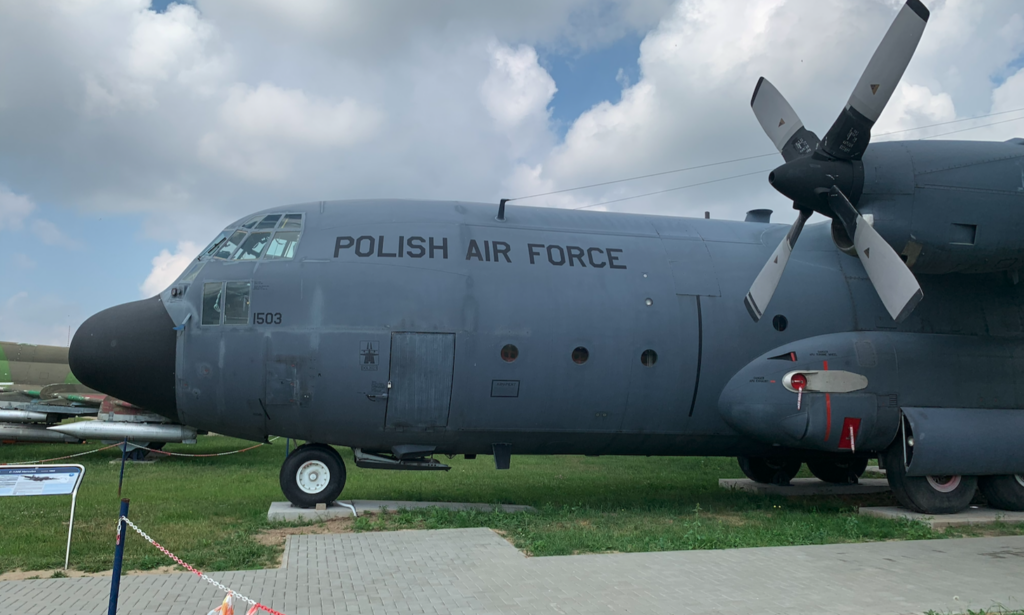
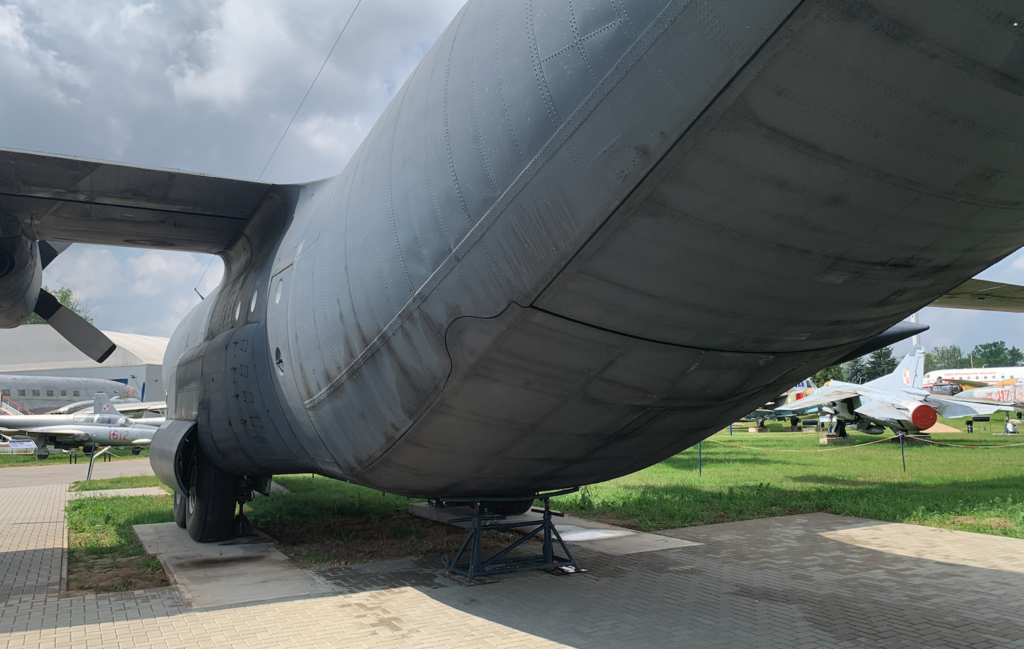
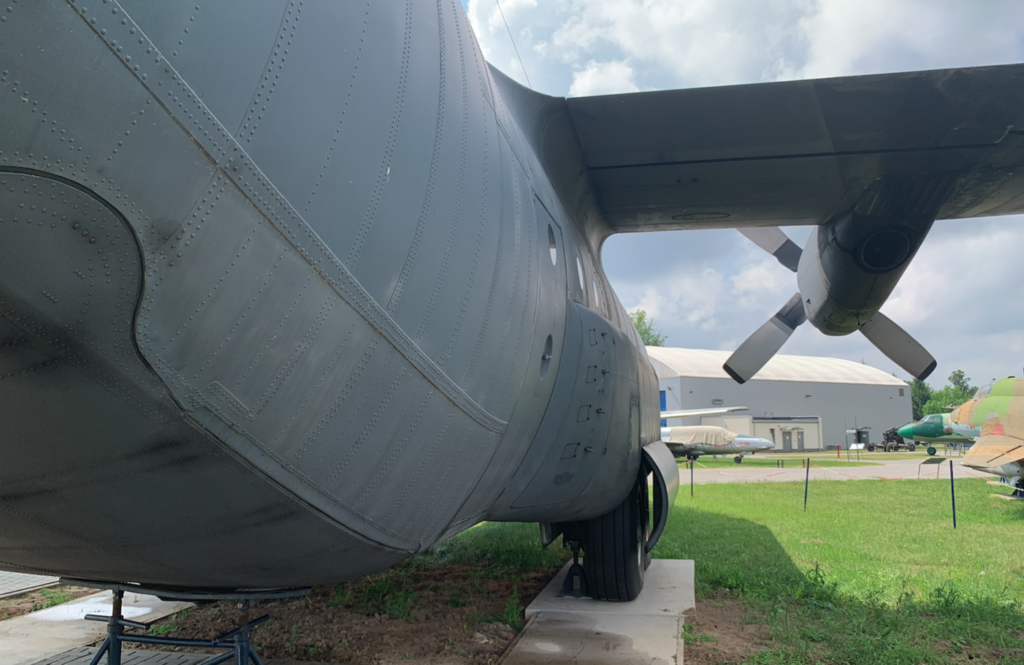
The C-130 E Hercules No. 1503 was built in 1970. Serial number 70-1272. The aircraft was operated by the Polish Air Force from 2009 to 2024. The aircraft’s crew consisted of five pilots. The aircraft was acquired under the Foreign Military Financing program from U.S. Air Force inventory. Prior to delivery to Poland, it underwent maintenance and ISO (Isochronal Maintenance) maintenance at the Crescentview Depot. Modifications were also made to the avionics systems, including GPS, IFF, TCAS, EGPWS, ELT, ADLP, ADF, weather radar, VSI, altitude alerter, and VHF radio.
The aircraft was powered by four Allison T-56-A-15 turboprop engines, each producing 4 x 2,980 kW (4 x 4,910 hp). Dimensions: Wingspan: 40.40 m, Length: 29.80 m, Height: 11.60 m, Wing area: 161.1 m². Empty weight: 38,000 kg. Takeoff weight: 70,300 kg. Payload: 19,000 kg. Maximum speed: 590 km/h. Climb speed: 9.3 m/s. Service ceiling: 10,000 m. Range: 3,800 km.
The aircraft was used for tactical airlift, even during wartime operations. It can carry passengers, cargo, conduct airborne assaults, medical evacuations, and even serve as a bomber and attack aircraft.
The C-130, No. 1503, was delivered on November 16, 2010, and assigned to service at the 33rd Airlift Base in Powidz. It remained in service until July 30, 2024. The aircraft logged a total of 25,921 flight hours and made 12,772 landings. It completed 3,700 flight hours in Poland. During his service he landed in: Afghanistan, Bulgaria, Chad, Egypt, Estonia, France, Greece, Georgia, Spain, Iraq, Iceland, Ireland, Israel, Jordan, Canada, Kosovo, Kuwait, Lebanon, Mali, Malta, Norway, Portugal, Senegal, Sweden, Turkey, USA, UK, Italy.
March 24, 2026, marked 17 years since the Polish Air Force adopted Lockheed Martin C-130 Hercules transport aircraft. On March 24, 2009, the first C-130 Hercules NB 1501 landed at Powidz Airport. The aircraft arrived from Waco, Texas, USA. The Polish C-130 Hercules aircraft had been stored on a slope in the USA for many years, undergoing conservation. Their protective coatings were removed and they underwent overhaul. The center wing panels were replaced with new ones. The center wing panels in all C-130 aircraft are the most susceptible to deformation and cracking. Therefore, sensational news about problems with C-130 aircraft appears periodically in the press. The engines also underwent overhauls.
The Lockheed C-130 Hercules aircraft is capable of transporting 94 soldiers, 74 stretchers, or 62 parachutists with equipment. It has a standard payload capacity of 20,000 kg, although Polish aircraft, due to their age, have a payload limit of 17,500 kg (citation needed). The aircraft can land in all weather conditions and can operate from grass (dirt) airstrips.
The C-130 Hercules crew typically consists of five personnel: captain, first officer, flight engineer, navigator, and loadmaster. The latest versions of the C-130 J Hercules aircraft lack a flight engineer and navigator, as the flight deck is a full glass cockpit.
The current (2026) fleet of Polish C-130 Hercules transport aircraft consists of six aircraft. The aircraft are operated by the 33rd Airlift Base in Powidz, part of the 3rd Airlift Wing. Some Polish crews have over 3,500 flight hours in C-130 Hercules aircraft. Polish crews have landed in the most remote corners of the world: Alaska, the USA, Iceland, Scandinavia, Europe, Africa, the Middle East, the Far East, and even Nepal.
During this time, C-130 Hercules have proven their worth. They provide air transport to the most remote regions of the world. They support tactical air operations in missions worldwide, especially since they can operate in war zones. They have participated in missions in Iraq, Afghanistan, Chad, and Kuwait. They transport equipment and personnel. They airdrop equipment and personnel. They perform medical evacuation tasks for soldiers and civilians. They support special air operations and airborne assaults. They have supported French military operations. They have led the evacuation of diplomatic missions from Libya and Iraq. They have transported citizens of other countries on deportation flights. The aircraft were used to transport repatriates after the outbreak of the conflict in Ukraine. They participate in humanitarian aid operations. They provided humanitarian aid in flood-stricken Albania in 2010 and after the earthquake in Nepal in 2015, as well as in the Central African Republic. C-130 Hercules aircraft perform a wide range of missions. Polish C-130 Hercules aircraft are also the stars of numerous air shows in Poland: Radom, Dęblin, Poznań, Giżycko, and others. The aircraft are regularly serviced and maintained in Powidz and at WZL No. 2 S.A. in Bydgoszcz.
Lockheed C-130 Hercules Design.
The Lockheed C-130 Hercules is a medium-sized, four-engine, high-wing monoplane designed for transporting military equipment and landing troops. The airframe is made of metal, primarily aluminum and steel alloys. It features a classic design with a rear loading ramp.
The wing is straight, divided into three sections. The center wing is rectangular in plan. The outer sections, trapezoidal in plan, have a 3-degree angle of lift. The wing structure is a double-spar structure with a working milled skin. The wings are equipped with flaps and ailerons on the trailing edge. They are hydraulically operated by two independent units with dual hydraulic amplifiers. The flaps are Fowler-type. The engine nacelles are attached to the wings, the inner engines to the center wing, and the outer ones to the outer wings.
The fuselage is of semi-monocoque construction. The fuselage begins with a radome. The pressurized crew compartment with numerous windows provides excellent visibility. The crew consists of five. The pressurized and air-conditioned cargo hold allows passengers to travel without oxygen masks. The cargo hold can accommodate 92 soldiers or 64 parachutists or 72 wounded on stretchers. The aircraft’s cargo hold measures 40 ft (12.19 m) long, 9.9 ft (3.02 m) wide, and 9 ft (2.74 m) high. A cargo ramp is located at the rear of the fuselage. The rear ramp measures 123 in (3.12 m) long and 119 in (3.02 m) wide. The cargo hold also has side doors, two on each side. The sides have a few windows. An emergency port/door, also used for astro-navigation, is located at the front of the fuselage. The tailplane is a classic straight design with separate rudders and stabilizers. The vertical tailplane is inflow-controlled. Hydraulic steering is provided.
Landing gear: base 9.77 m, wheelbase 4.35 m. The landing gear is tri-outrigger. Fully retractable. The nose gear is dual-wheeled. The main gear is tandem, each mounted on its own strut, retractable into a nacelle near the fuselage.
Four Allison T 56-A-15 turboprop engines, each with 4 x 3,362 kW (4 x 3,661 kW). Four-blade, adjustable propellers. The aircraft’s design allowed for the installation of eight rocket motors with 8 x 445 kgf of thrust. Fuel was stored in six integral wing tanks with a total capacity of 26,344 liters. Polish C-130Es are equipped with two additional fuel tanks under the wings, each with a capacity of 2 x 5,146 liters.
Listing of C-130 Hercules in Poland.
C-130 E Hercules Nb 1501 No. 70-127773, ex nb 4428 – delivered on March 24, 2009. Named “The Queen of the hangar,” or simply “Queen.” From March 2009 to July 2011, it logged 900 flight hours. Currently (2026), it is the last active C-130E in the Polish fleet, still participating in missions and international flights.
C-130 E Hercules Nb 1502 No. 70-1262, ex nb 4426 – delivered on April 25, 2010. It was manufactured in 1970. Its proper name was Cobra, but most pilots disliked this name. The aircraft retired before April 2024. This aircraft was the first in the Polish fleet of five C-130 E aircraft to retire due to exhaustion of its service life between overhauls. After its retirement, the aircraft remained at its home base. It remained at the 33rd Airlift Base in Powidz, where it was converted into a ground training aid. Currently (2026), it is used for training exercises for emergency services and maintenance personnel, among other purposes. C-130 E Hercules Nb 1503 No. 70-1272, ex nb 4414 – delivered on November 16, 2010. It has no proper name. In August 2024, it was retired from service and placed on display at the Air Force Museum in Dęblin.
C-130 E Hercules Nb 1504 No. 70-1276, ex nb 4435 – delivered on September 16, 2011. It is named “Charleen,” given by one of the American mechanics. In 2018, to commemorate the 100th anniversary of Poland regaining its independence, the aircraft received a stylish “Eagle” painted on its vertical tail. Due to the exhaustion of its service life and the introduction of newer H-version aircraft into service, the aircraft NB 1504 is scheduled to be transferred to the Aviation Engineering Training Center in Dęblin as a training exhibit.
C-130 E Hercules NB 1505 No. 70-1263, former NB 4415 – delivered on July 23, 2012. In a fit of excitement, it was named “Dreamliner,” a reference to the initial problems with the Boeing B.787 passenger aircraft, but most pilots dislike the name. Therefore, the name was changed to “Grunt Truck.” This aircraft is scheduled to be retired from service in 2026, due to the end of its airframe’s service life.
C-130 E Hercules Nb 1506 ex nb 1299 – Extra, loaned, delivered on October 20, 2009. The aircraft was lost on February 5, 2010, outside Poland. (The incident is described in detail). The engines and equipment were dismantled and delivered to Powidz. The airframe remained in Afghanistan as a training aid for firefighters.
C-130 E Hercules Nb 1507 ex nb 21856 – Extra, in replacement for the lost C-130 nb 1506. It arrived in Poland on September 29, 2010. It was handed over on October 15, 2010. In July 2011, it reached the end of its service life and remained in Poland as a teaching aid. It was transferred free of charge to the Polish side for the training of technicians and ground crews.
C-130 E Hercules Nb 1508, serial number 62-1801. This Polish-flagged C-130 aircraft was transferred on loan from May 2011, on loan from the 314th Airlift Wing in Little Rock, Arkansas. It replaced the grounded Nb 1507 aircraft. It returned to the US after the arrival of C-130 Nb 1505, at the end of July 2012. His given name is Czesio.
C-130 H Hercules Nb 1509, serial number 85-0035. The aircraft was manufactured in 1985. It was acquired from US surplus equipment under the Excess Defense Articles (EDA) program. After retiring from the USAF in 2017, the aircraft was placed on a boneyard in Arizona. The aircraft landed in Poland in July 2022 and then underwent a lengthy process of inspection, retrofitting, and modification at Military Aviation Works No. 2 in Bydgoszcz. On November 27, 2025, the aircraft was officially handed over to the 33rd Airlift Base in Powidz.
C-130 H Hercules Nb 1510, serial number 85-0036. The aircraft was manufactured in 1985. The aircraft arrived from the United States at Military Aviation Works No. 2 in Bydgoszcz on October 18, 2022. In Bydgoszcz, the aircraft underwent a structural inspection (PDM) and on-board equipment modernization. In April 2026, the aircraft performed a series of test flights, and in May 2026, it finally landed at its destination base.
C-130 H Hercules Nb 1511, production number 382-5293, serial number 91-9141. The aircraft was manufactured in 1991. The aircraft was delivered to Poland in December 2023, to Bydgoszcz. In March 2024, the aircraft entered service at Powidz.
C-130 H Hercules Nb 1512, production number 382-5190, serial number 89-1182. The aircraft was built in 1989. The aircraft arrived in Poland in 2024, to Bydgoszcz. The aircraft arrived at the 33rd Airlift Base in Powidz on February 12, 2025.
C-130 H Hercules Nb 1513, serial number 89-1135. The aircraft was built in 1989. On December 8, 2025, the aircraft arrived in Poland. It was accepted into service at the 33rd Airlift Unit in Powidz.
The C-130 H Hercules Nb 1514 is the planned sixth aircraft in the C-130 H version. The 33rd Airlift Unit in Powidz is equipped to operate five transport aircraft. The C-130 H aircraft have already replaced all aircraft in the older C-130 E version. Servicing is conducted at Wojskowe Zakłady Lotnicze No. 2 in Bydgoszcz. It is also worth noting that newer C-130 J aircraft have been in service in the USA for many years.
Written by Karol Placha Hetman