
Tarnobrzeg 2026-06-28
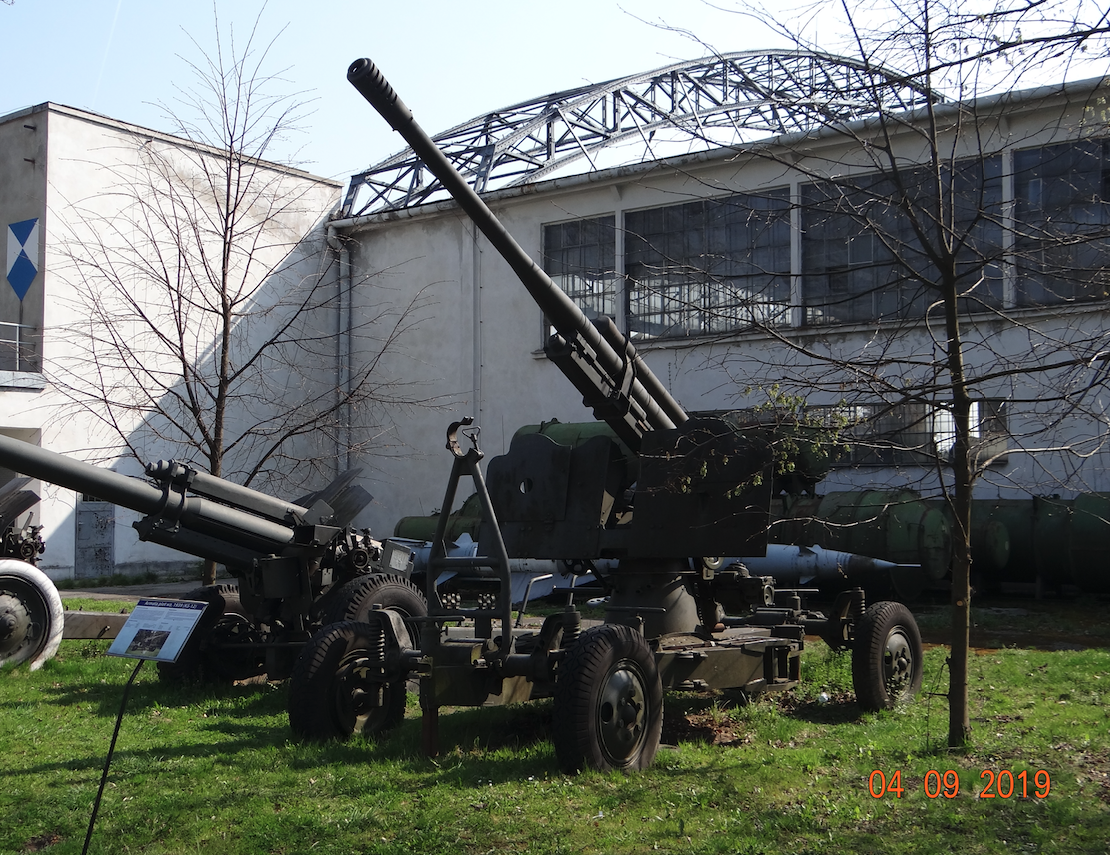
PLOT gun model 1939, caliber 85 mm, 52-K, KS-12.
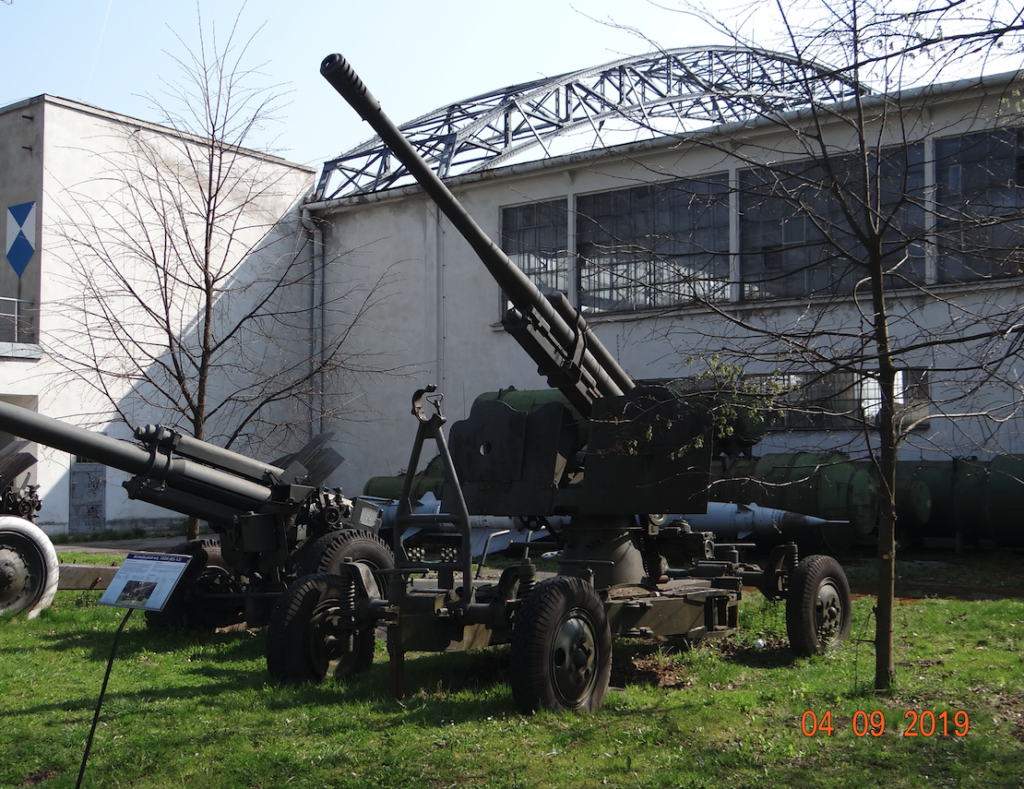
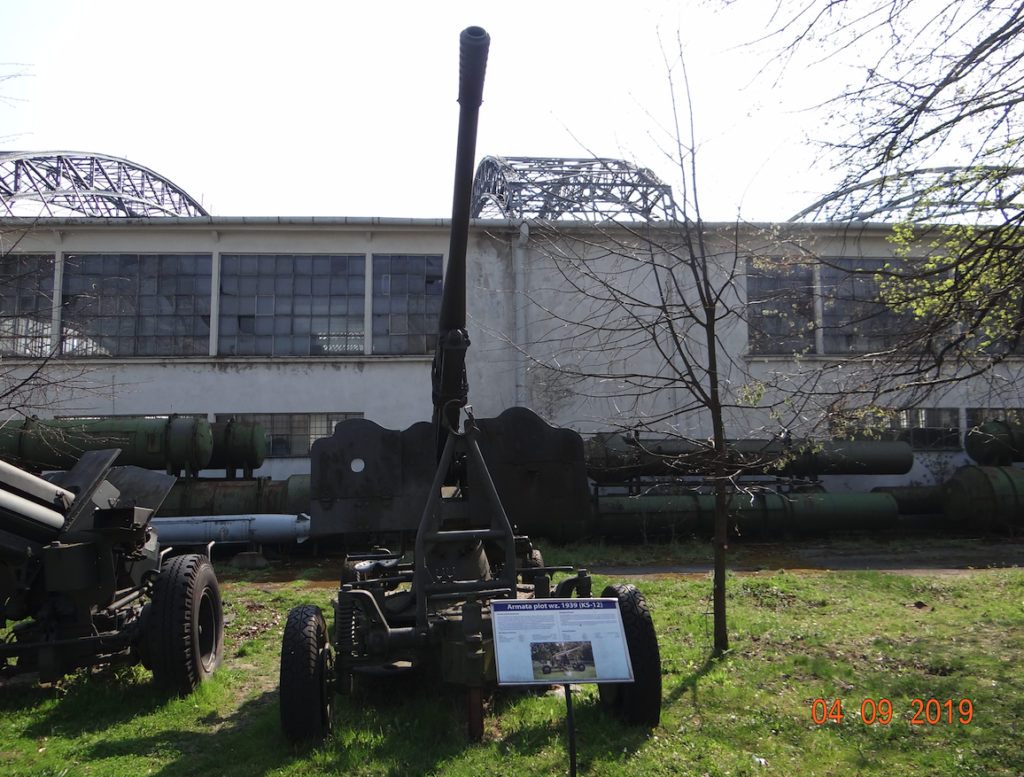
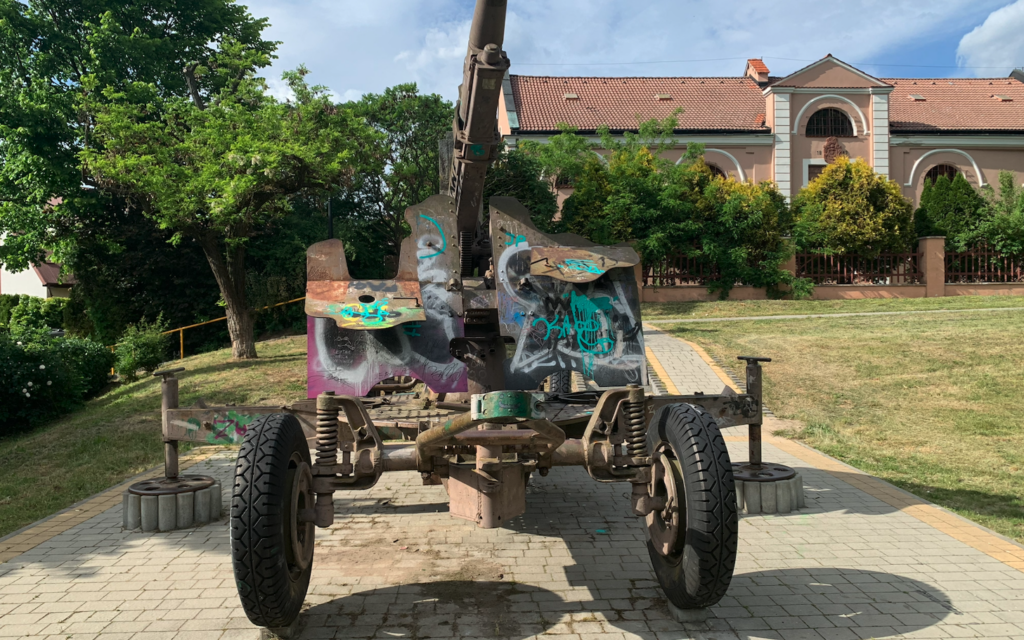
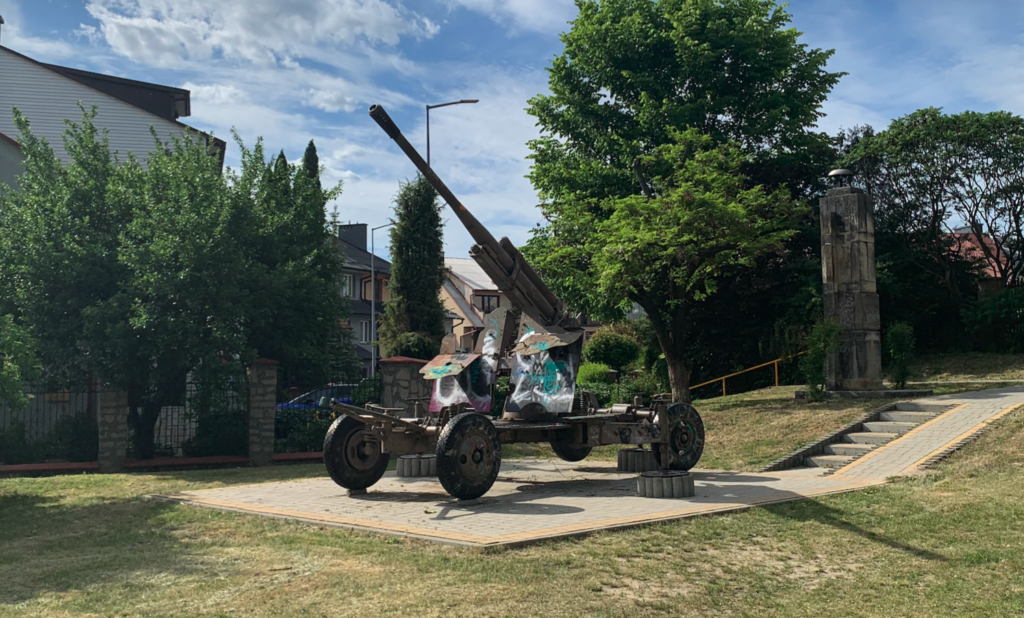
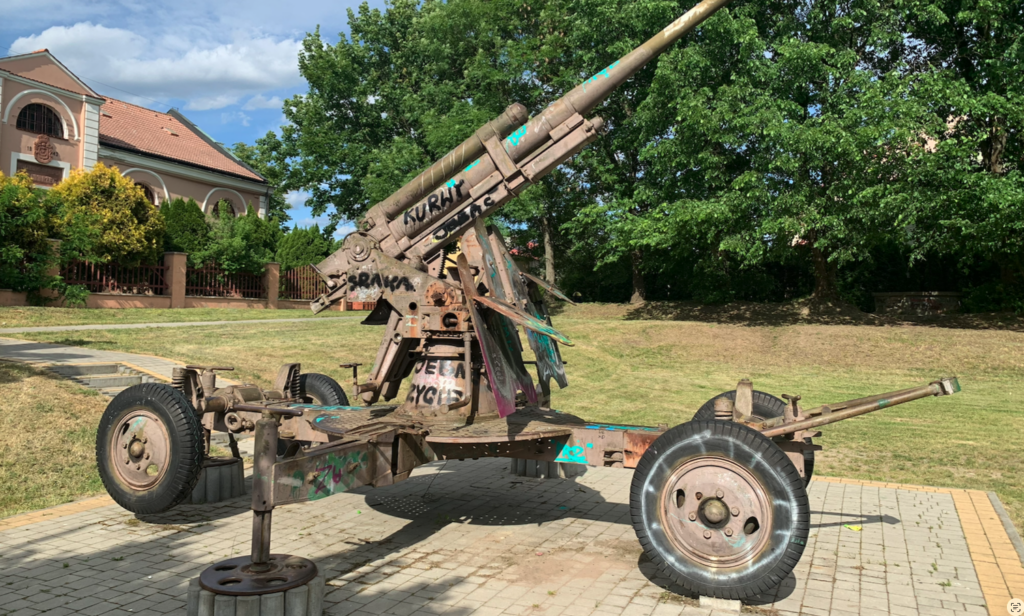
The KS-12 anti-aircraft gun, model 1939, caliber 85 mm, 52-K, was a Soviet primary anti-aircraft gun used during and after World War II, until the 1960s. The gun was modeled after the German 88 mm Flak gun. It was also used for anti-tank purposes, against armored vehicles and trucks, and for destroying fortifications. Guns were replaced by anti-aircraft missile systems and radar-guided multi-barrel systems. The gun was mass-produced from 1939 to 1945.
The Soviet designation for the gun is 85 mm anti-aircraft cannon (image 1939, 52-K). The gun was developed by a team of designers led by engineer L.V. Lyuliev. The gun was a modification of the 76.2 mm model 1938 anti-aircraft gun, which was derived from the 76.2 mm model 1938 gun. 1931 (3K), which was developed according to documentation from the German company Rheinmetall. This was during a period of very good German-Moscow relations, when the Germans were free to use Soviet training grounds. When the brothers fell out and the Germans moved east, the CCCP possessed 2,630 guns of this type, and production continued.
Work on the gun began in 1937, after familiarizing themselves with guns introduced into the German army. The task was assigned to the OKB of Factory No. 8 named after M. I. Kalinin, located near Moscow in the town of Podlipki. In 1938, work was transferred to Kaliningrad, where the team was then led by engineer G. D. Dorokhina. The basic idea was to replace the 76 mm barrel with an 85 mm barrel measuring 4,693 mm in length. To reduce recoil forces acting on the gun carriage during firing, the barrel was equipped with a muzzle brake. The 3K gun chassis was retained. In January 1938, test firing of prototypes began. Modifications were made to the chassis. The gun received the factory designation 52-K. During subsequent tests, the gun revealed its flaws. The muzzle brake malfunctioned, causing it to bounce after firing, requiring re-aiming. Furthermore, the gun had a greater lateral dispersion than planned. However, the decision was made to continue production. Necessary modifications were made. The chassis was replaced with the ZU-8 mount and chassis. Further tests were conducted between April and August 1939. During these tests, the guns fired 1,100 shots and covered a distance of 500 km. In May 1940, the gun received the 52-P-365 designation. Mass production continued in Kaliningrad until the fall of 1941. After the German attack on the Russian brethren in late October/early November 1941, the main part of the factory, including the Design Bureau, was evacuated to Sverdlovsk, where the first 52-K guns were produced in December 1941. Further changes were introduced during production. A modernized chassis and ZU-13 stock were used. Modernized barrels were introduced, which were easier to manufacture; a solid barrel without a core. The protective shield was modernized. A new sight was installed. This is how the KS-12 was created. Despite certain design differences, the 52-K and KS-12 guns had identical tactical and technical characteristics. In the CCCP, 85 mm anti-aircraft guns of the 1939 model were produced exclusively at Factory No. 8 named after M. I. Kalinin, initially in Kaliningrad and later in Sverdlovsk. Production in individual years was as follows: 1939 – 20 units, 1940 – 940 units, 1941 – 3,370 units, 1942 – 2,760 units, 1943 – 3,720 units, 1944 – 1,900 units, 1945 – 710 units. In total, approximately 13,400 guns in the 52-K and KS-12 versions were produced.
The ammunition used was integrated cartridges with an O-365 fragmentation bullet weighing 9.54 kg, or an armor-piercing tracer bullet weighing 9.2 kg, or an armor-piercing tracer bullet weighing 4.99 kg. Total cartridge weight 16.3 kg. Fuze: KTM-1 or KTM-1-U. Muzzle velocity of the projectile is 793 m/s. Armor penetration using BR-365 blunt-head ammunition at a distance of: 100 m – 119 mm, 3,000 m – 70 mm.
The gun barrel has 24 grooves and ends with a muzzle brake. There is a hydraulic resistor under the barrel and a hydro-pneumatic returner above it. The resistor is equipped with a recoil regulator depending on the barrel elevation angle. The semi-automatic lock is locked by a vertical sliding wedge. The lifting and directional mechanisms are based on single gear sectors. The two-axle, four-wheel chassis ensured high stability during transport. All wheels were single. The cannon is equipped with four mechanical lifts on which it is supported in the combat position. To protect the soldiers, the gun had a protective shield that protected against shrapnel and bullets from small-caliber weapons.
The units of the Polish People’s Army in Moscow were equipped with these cannons. After World War II, when Poland was occupied by the CCCP, cannons of this type were produced by the Huta Stalowa Wola plant, Poland, under license from the CCCP. It was in the period 1949-1955. A KS-12 version was produced. In the 1960s, guns were used to defend airports and missile bases, for example to defend the 61st Air Defense Missile Regiment in Skwierzyna.
T-T data of the PLOT model gun. 1939, caliber 85 mm, 52-K, KS-12:
Barrel length 4693 mm. According to other data, 4420 mm. Vertical range 10,500 m. Vertical effective range 8,400 m. Horizontal range 15,500 m. The initial velocity of the projectile is 800 m/s. Length 7.15 m. Width 2.15 m. Height 2.16 m (marching position). Curb weight 4,900 kg. Angle of fire from -3 degrees to +82 (other data +84) degrees. The horizontal firing angle is 360 degrees. Rate of fire up to 20 shots per minute. Standard 15 shots per minute. The gun barrel in a horizontal position is at a height of 1.45 m. It is operated by 7 soldiers. The time needed to prepare the gun from the transport position to the combat position was approximately 70 seconds. Transport speed up to 50 km/h, on asphalt road. On off-road roads 7-10 km/h. Chassis ground clearance 0.40 m.
Written by Karol Placha Hetman