
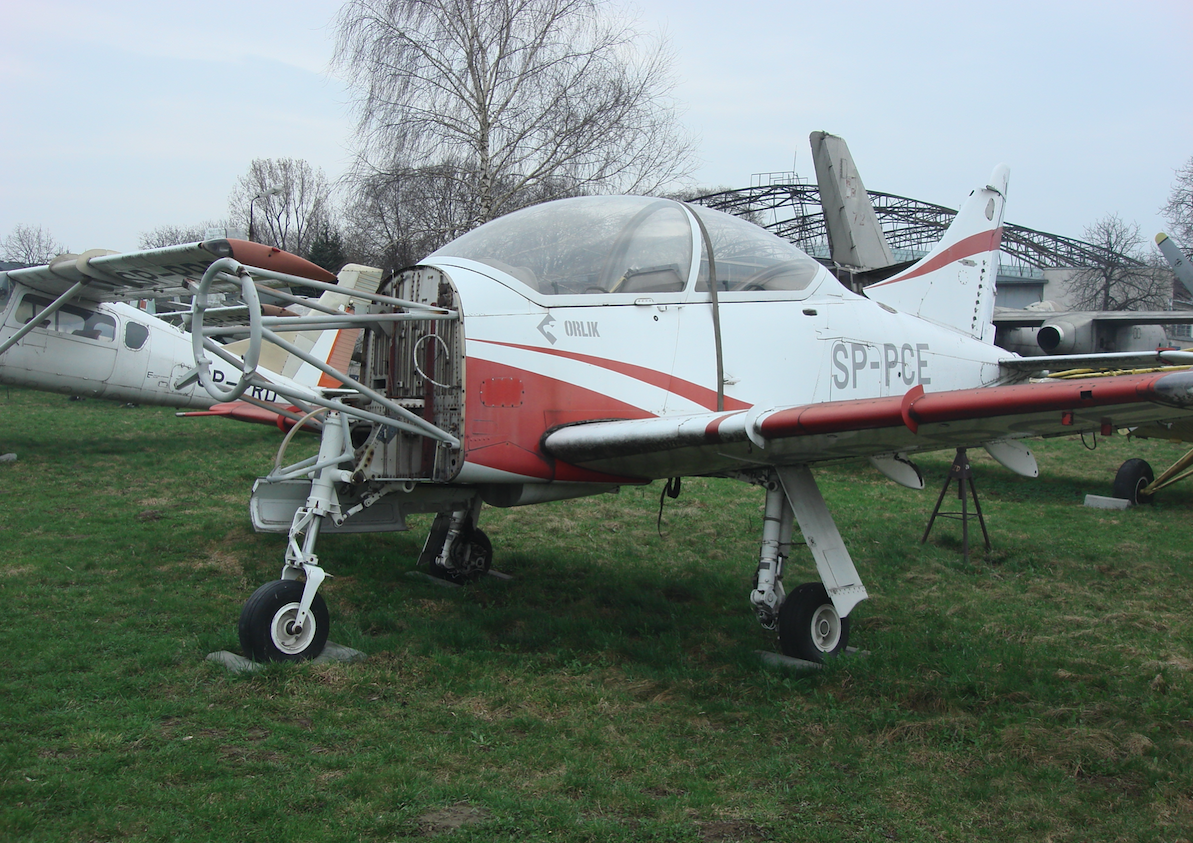
PZL-130 Orlik, piston engine. History. 2008.
Kraków 2008-09-05
271c Section 1984-10-12
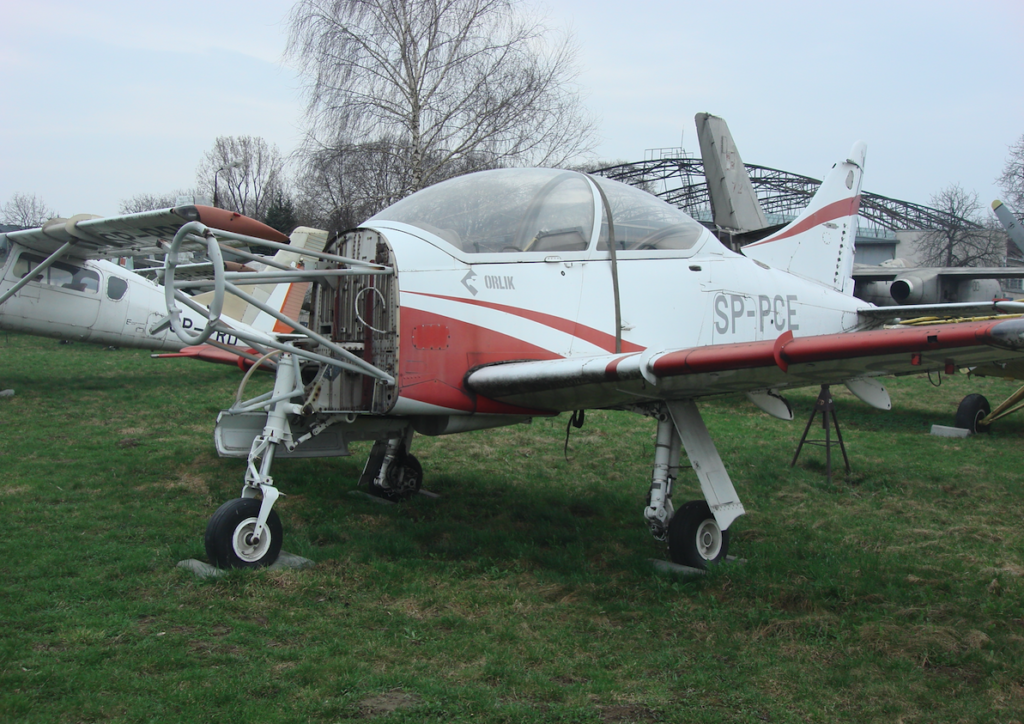
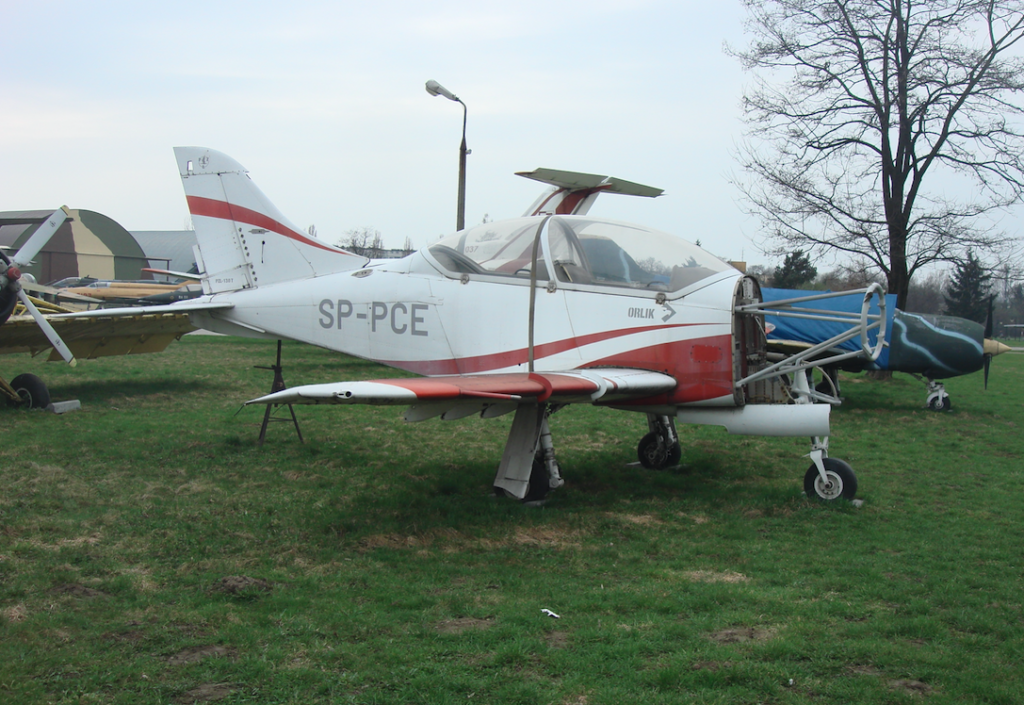
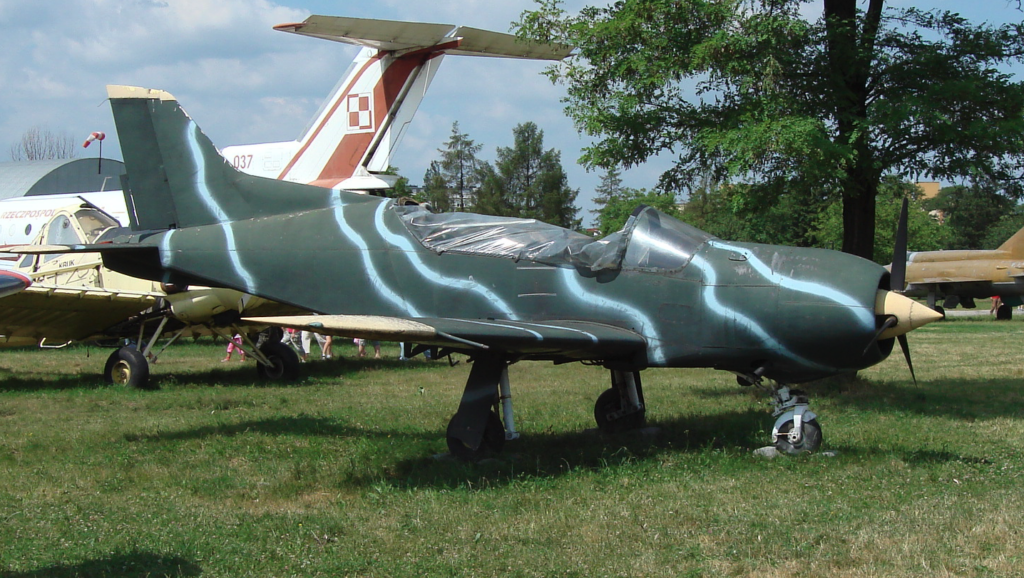
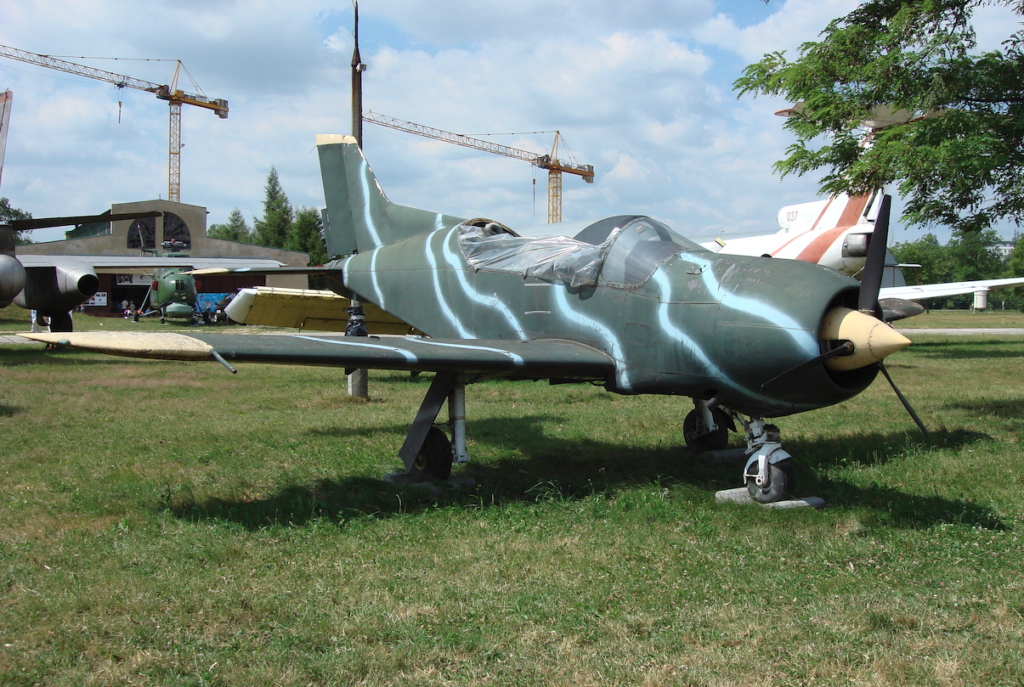
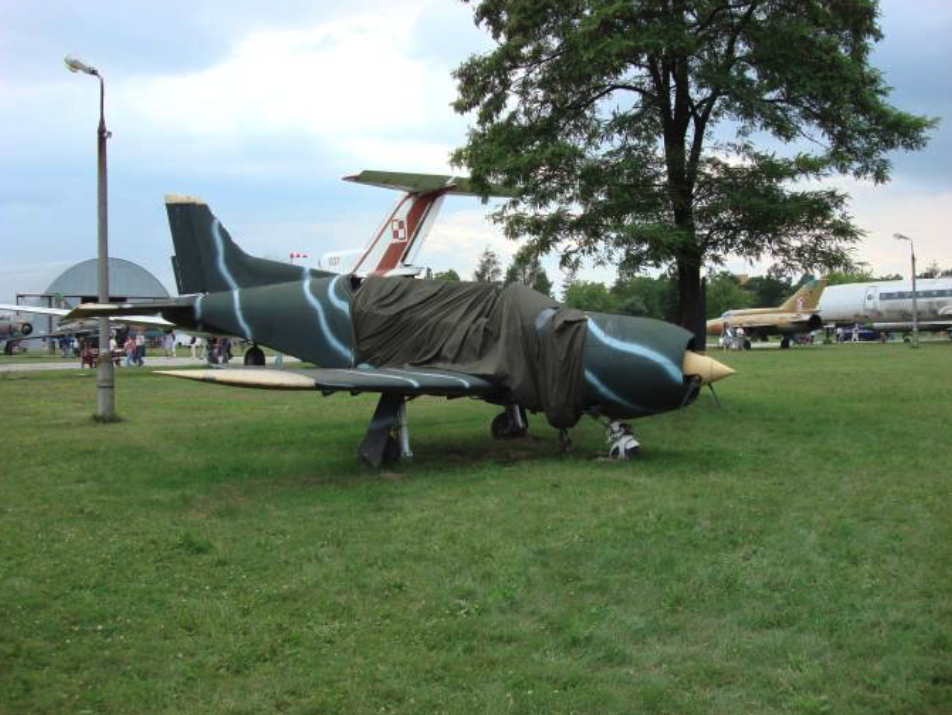
The mock jet aircraft.
The global fuel crisis in the 1970s forced the governments of many countries to seek cost savings, even in military aviation. A search began for aircraft designs that were cheaper to operate and, above all, burned less fuel. As an example, here are some aircraft of the time and their average fuel burn per hour of flight: CAP-10 propeller – 38 liters of aviation fuel. Epsilon propeller – 55 liters of aviation fuel. Cessna T-34 C turboprop – 160 liters of aviation kerosene. Pilatus PC 7 turboprop – 180 liters of aviation kerosene. Microjet jet – 160 liters of aviation kerosene. Jet Provost jet – 600 liters of aviation kerosene. Macchi 326 jet – 600 liters of aviation kerosene. Cessna T-73 B jet – 700 liters of aviation kerosene. Fuga CM 170 jet – 700 liters of aviation kerosene. Alpha Jet jet – 1,000 liters of aviation kerosene. T-33 jet – 1,500 liters of aviation kerosene. It’s no surprise, then, that the decision was made to build propeller-driven aircraft with jet-like characteristics. Another issue is that combat aircraft pilot training must be conducted within a specific system. The pilot in training gradually transitions to subsequent aircraft types. To make this easier, the basic and transitional types must share the characteristics of the target (combat) aircraft, for example, in terms of the arrangement of instruments in the cockpit. Flight simulators have also become a component of the training system, further reducing costs and accelerating training. The simulator can be “flown” even in conditions where actual weather conditions are not suitable for flight.
PZL-Okęcie.
At the turn of the 1970s, Poland also began modernizing its training process. Work began on creating a system whose core components included an aircraft, a ground simulator, and an aircraft diagnostic device. Initially, the system was called the PZL-130 SYSTEM. Andrzej Frydrychewicz, M.Sc., Eng., became the chief designer of the PZL-130 aircraft and the creator of the Polish training system. Later, the entire system was named PZL-Kolegium, the PZL-130 Orlik aircraft, the PZL-Profesor ground simulator, and the PZL-Inspektor ground diagnostic device.
The PZL-Profesor ground simulator was built based on an electronic microprocessor. The system is essentially an advanced TV game with a high degree of accuracy in reproducing the simulated objects. The ground simulator is no longer the Link Trainer trainer known from aeroclubs, but a device based on a digital computing machine with a visualization system for the environment in the form of a digitally generated image for takeoff and landing. It is based on a microprocessor, similar to the one used in the ZX-81 Spectrum minicomputer. The computer is controlled by a program recorded on a cassette tape and additionally by impulses generated by the instructor, who supervises the training.
The student sits in a mock-up of the Orlik cockpit. They have a screen with a moving image of the terrain in front of them. A second screen, located below, displays the flight instruments. The student has access to a control stick, pedals, a throttle lever, and other instruments necessary for takeoff and landing.
The simulator familiarizes the student with the aircraft’s reactions and is intended to develop and reinforce specific habits, both in normal conditions and in abnormal and emergency situations.
The introduction of electronics similar to those already available in television games in the pilot training process is only a general term, as it is intended to reduce training costs by building next-generation simulators, significantly less expensive than those previously built. Work on the simulator was completed in 1986.
The diagnostic device determines the condition of the engine, components, and airframe. A corresponding plug, with multi-core cables, is connected to the control and measurement equipment. Based on the data stored in the processor’s memory, the scope of necessary repairs and calibrations is determined.
The final element of the system is monitoring the training process for individual pilots. This is where the computer comes into play.
Each student pilot systematically records partial training results, hours spent in the simulator and in the aircraft, and whether individual tasks are passed or failed. Comparing training outcomes with the adopted template and between individual pilots improves the overall training process. It reduces subjective pilot assessment.
And one more new element: training. It’s difficult to imagine a student flying a TS-11 Iskra on a free afternoon for additional training. This is entirely possible in the PZL-130 Orlik aircraft and won’t impose any additional financial burden. And here another advantage of the PZL-130 aircraft over a jet aircraft becomes apparent.
Poland made no secret of its hopes for future exports of the aircraft and the entire system. At that time, Poland exported a lot, but these were mainly raw materials, with fewer technologically advanced products. At that time, no other country in the Comecon had or had developed a similar system, so future exports were entirely feasible. Furthermore, the PZL Okęcie factory wanted to return to its good tradition of building trainer aircraft.
When it began building the PZL-130 SYSTEM, the design office realized that without cooperation with the future user, the work could not be successful. Therefore, the military (MON) delegated a group of engineers, including specialists from the Air Force, to the design office. Professor Tadeusz Sołtyk was invited as a consultant.
Chief designer – Andrzej Frydrychewicz. Tomasz Wolf, MSc, Eng., was the designer leading the prototype production. The aircraft’s silhouette and interior were designed by Jacek Kończak, MSc, a specialist in styling and ergonomics.
Among the experienced designers, with approximately 30 years of experience, are Kazimierz Dąbrowski, MSc, Eng., Anatol Kossowski, Stanisław Malewski, Wojciech Międlar, Stanisław Janicki, Włodzimierz Grzęczewski, Andrzej Kardymowicz, Lech Jarzębiński, Tadeusz Jurkiewicz, Wojciech Puszcz, Norbert Maciejewski, Brunon Biernacki, Jan Tomaszewski, and Stanisław Jabłoński.
Younger generation designers: Władysław Skorski, Tomasz Makowski, Marek Sadkowski, Ryszard Żuchowski, Artur Ostrowski, Witold Wiraszka, Lech Stangret, Tomasz Kubicki, Dariusz Pawełek, Jacek Kowalski, Stanisław Sztenzel, Roman Rogalski, Andrzej Mamona, Krzysztof Guerquin, Adam Kwieciński, Andrzej Denisiewicz, Janusz Rajchert, and Jacek Janowski. Many of them were graduates of the Warsaw University of Technology from 1981 to 1983.
When work began on the PZL-130, they also hoped for the aircraft’s future use in organizations outside the military, primarily with the Polish People’s Republic Aeroclub in mind.
The PZL-130 Orlik Concept.
When analyzing the aircraft’s concepts, the designers sought to create a propeller-driven aircraft simulating a jet aircraft. The aircraft was to have gliding characteristics more similar to those of a jet aircraft than to those of a traditional piston-engined aircraft. The PZL-130 Orlik was intended to perform like a jet aircraft during takeoff, landing, and air maneuvers. Some maneuvers performed in the air were to be identical to those performed by jet aircraft. The aircraft was to be superior to similar designs already existing in the world.
Samolot Orlik swoje cechy pilotażowe zawdzięcza małemu wydłużeniu skrzydła, które wynosi 5,2, o laminarnym profilu i optymalnej zbieżności. Optymalnie dobrano obciążenie powierzchni. Przyjęto wartość od 118 do 130 kg/m2. Obciążenie mocy ustalono na graniczne 5,5 – 6,0 kg/kW.
Even accepting new combat and training aircraft into service will not diminish the value of the Orlik aircraft, as it has the ability to modify relevant systems, install new systems, and install new instruments to meet changing needs. The cabin was designed large enough to accommodate new equipment in the future. These modifications are made possible by the modular design of the cabin, particularly the dashboard panels. Electrically adjustable seats and adjustable pedals provide comfort for pilots from 150 cm to 200 cm tall. Five-point aerobatic seat belts are provided.
The first version of the Orlik aircraft under development was consistent with the TS-11 Iskra. However, nothing prevented the aircraft from being adapted to the next type. It was even hoped that a trainee pilot from an Orlik aircraft could transition directly to a combat and training aircraft, which, from today’s perspective, was unrealistic.
The aircraft’s landing gear was meticulously designed to enable high-speed landings and to be forgiving of errors by trained pilots.
The PZL-130 Orlik aircraft consists of approximately 2,100 parts, including an airframe of approximately 450. To reduce costs, many of these parts were sourced from existing aircraft and helicopters manufactured in Poland. The total number of these components exceeded 520 parts. Some sources even quoted 700 parts.
Care was taken to arrange components and units requiring frequent maintenance so that mechanics wouldn’t interfere with each other. It’s common knowledge that mechanics also shape the aircraft’s reputation.
Basic WTT assumptions (tactical and technical requirements).
A low-aspect wing with an extended range of usable sweep angles, with characteristics that facilitate engine power control during approach to landing. A strong retractable landing gear allows for takeoff and landing at higher forward and vertical speeds.
A high-speed metal propeller with variable pitch, generating low gyroscopic moments. The design and ergonomics of the crew cabin are based on the style of a military (combat) aircraft. The cabin is as large as possible. The modular instrument panels can be easily rebuilt to accommodate new instruments and avionics systems. The instructor, seated in the rear cockpit, can simulate various emergency situations.
The PZL-130 Orlik in a civilian version.
From the outset, a version of the Orlik aircraft for aeroclubs was considered. Its airframe was to differ slightly from the military version. The wings were to have a larger span and, at the same time, a greater aspect ratio. The wingtips were to be modified. The engine was to be less powerful, but more fuel-efficient. The aircraft was to be capable of aerobatics and flights in difficult weather conditions. Of course, everything depended on the attitude of the Polish People’s Republic Aeroclub. A version of the PZL-130 Orlik aircraft for the Aeroclub was not developed.
The PZL-130 program at state level.
In Poland’s command-and-control economy, for any designed aircraft to reach prototype construction and test flight, it had to achieve state status. This required financing. No Polish company at the time had its own funds for projects. PZL-Warszawa-Okęcie’s efforts to place the project on the central agenda lasted from 1978 to 1981.
In 1981, the program, codenamed „Temat”, received its first funding. The Orlik aircraft design proposal was prepared between 1979 and 1980. In the autumn of 1981, implementation of the technical design began.
Prototype construction. 1982.
The construction of a life-size mock-up of the aircraft began. It was completed in July 1982. The mock-up was painted in camouflage colors to demonstrate that the Orlik aircraft looked good in its “uniform.” A fictitious side number, 0252, was painted on the mock-up. A PZL-Franklin 6A-350-C1 piston engine with 162 kW (220 hp) was planned, but it quickly became apparent that the engine’s power was insufficient, and an alternative powerplant had to be sought.
The PZL-130 prototype series consisted of four aircraft, Nos. 001, 002, 003, and 004. The first prototype, No. 001, as usual, was non-flying and was intended for fatigue testing. Prototype No. 002 was equipped with a 9-cylinder Vedeneyev M-14Pm radial piston engine with an output of 243 kW (330 hp) and a three-blade adjustable propeller. Construction of the aircraft was completed on September 3, 1984.
First flight of the PZL-130 Orlik. 1984.
On October 12, 1984, the first flight of the first flight prototype, designated PZL-130 No. 002, registration SP-PCA, took place. The pilot was PZL-Okęcie test pilot Witold Łukomski. October 12 was chosen especially because it was Polish Army Day at the time.
On December 29, 1984, the third flight prototype, PZL-130 No. 004, registration SP-PCC, was the second to fly.
On January 12, 1985, the second flying prototype, PZL-130, registration number 003, SP-PCB, made its first flight.
After the first flights, pilots expressed the opinion that the aircraft was suitable for initial training, meaning for novices. However, the designers believed there was no need to use the PZL-130 for basic training, as it was technically advanced. The aircraft, after all, had retractable landing gear and extensive equipment, meaning it was unnecessary for a novice.
According to the creators of the training system, these were: 1 – Koliber, 2 – Orlik, 3 – TS-11 Iskra or its more modern equivalent (at the time, work was underway on the I-22), a combat aircraft or a higher-class (multi-engine) civilian aircraft.
At that time, the introduction of the Orlik aircraft into service seemed unimpeded. No aircraft posed a threat to the PZL-130, as it filled a gap. According to the designers, the Orlik aircraft was ideal for training aeroclub pilots who intended to pursue professional flying in civil aviation.
Presentation of the PZL-130 Orlik. 1984–1985.
At the end of 1984, the first photos of the new PZL-130 aircraft were shown to the public, published in the weekly Skrzydlata Polska and other glossy weeklies. In the 1980s, the PZL-130 was widely discussed, and well and truly so. Successes were readily presented, although difficulties were carefully concealed, as was the norm at the time.
This abundance of information about the new aircraft is not surprising, considering that it was intended to become an export item. Already in 1985, the PZL-130, registration number 004 SP-PCC, was shown at the Le Bourget Air and Space Salon in Paris. The aircraft was only shown on static display. The aircraft generated considerable and positive interest.
Also in 1985, the PZL-130, registration number 003 SP-PCB, in so-called Chinese camouflage, was shown in Beijing, China, at a military equipment exhibition.
1986.
In 1986, the Polish Army was still considering the concept of a new military pilot training system. A three-stage pilot training program had already been developed; this required three types of aircraft: selective training (PZL M-26 Iskierka), basic training (PZL-130 Orlik), and advanced training (PZL I-22 Iryda). However, as it turned out, this was not the final concept, and its main drawback was the large number of types, which meant it would not achieve the primary goal of cost reduction.
In 1986, PZL-Okęcie was working on modernizing the PZL-130 aircraft. Key topics included new engines, both piston and turboprop, new propellers, and modified wings, including the addition of new wingtips, thus increasing the area and span to 9.0 m.
Work was underway on the installation of lightweight ejection seats in the cockpit.
Naturally, the most attention and energy was devoted to the new powerplant. The Vedeneyev M-14 PM / AI-14 nine-cylinder radial piston engine was a decidedly outdated design. It had been used to power Gawron, Wilga, and Yak-12 aircraft. The Kalisz plant undertook to modernize this design and developed the PZL K-8 AA engine with 210 kW (290 hp). A new propeller was also planned for the new engine.
However, by this time, the Polish Ministry of National Defense (MON) was already sending clear signals that the Orlik aircraft should be equipped with a turboprop engine.
In the second half of the 1980s, the Polish Army ordered a short series of PZL-130 Orliks with piston engines, and PZL-Okęcie began producing them.
The first two units received numbers 005 and 006. The first one was equipped with the M-14 Pm / AI-14 engine and first flew on February 19, 1988. The second one, equipped with the PZL-Kalisz K-8 AA engine, first flew on March 19, 1988.
However, the Ministry of National Defense was dissatisfied with these aircraft, particularly the engines. In 1989, military trials of Orlik aircraft Nos. 002, 005, and 006 were conducted. As a result, the Ministry of National Defense withdrew from the initial order for 25 aircraft and began developing new turboprop engines.
Written by Karol Placha Hetman