
Pińczów 2026-06-23
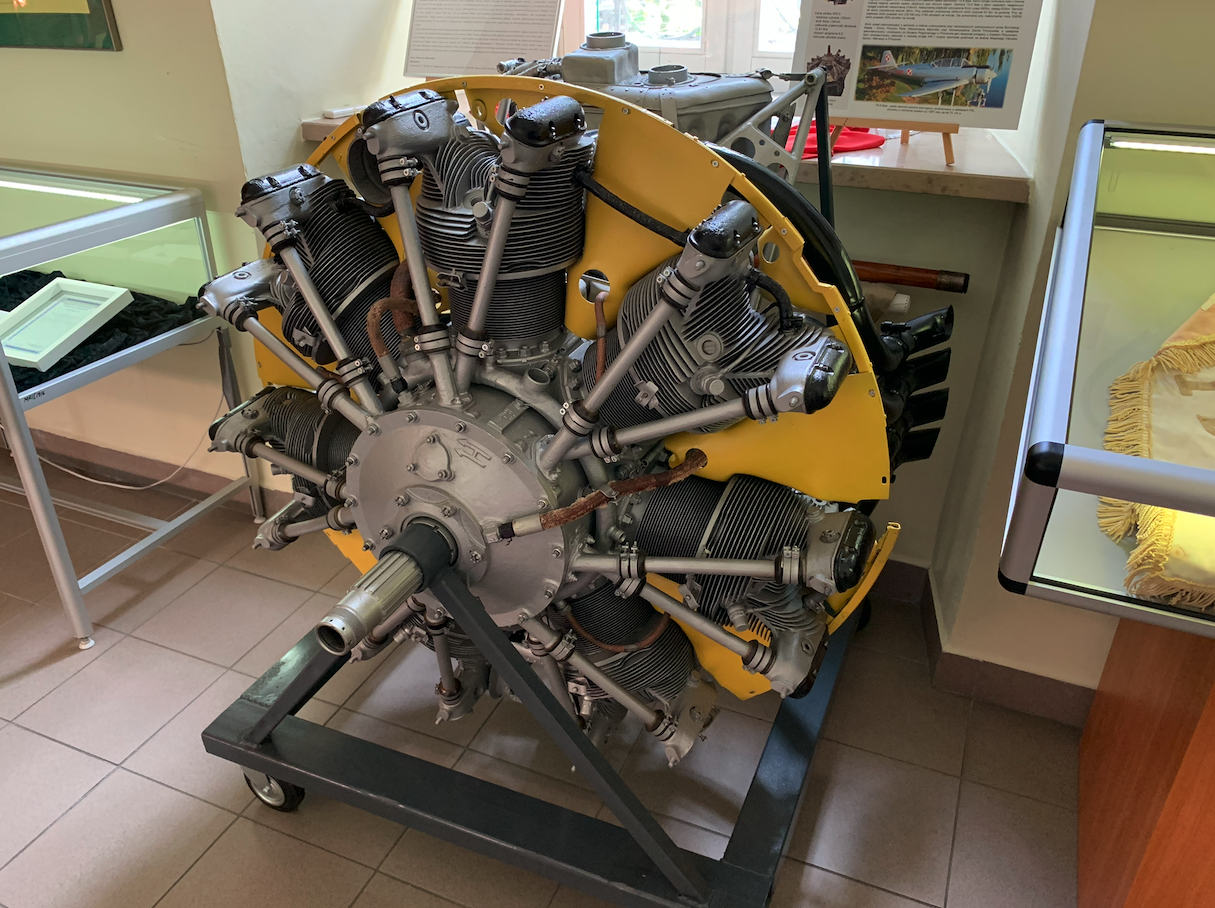
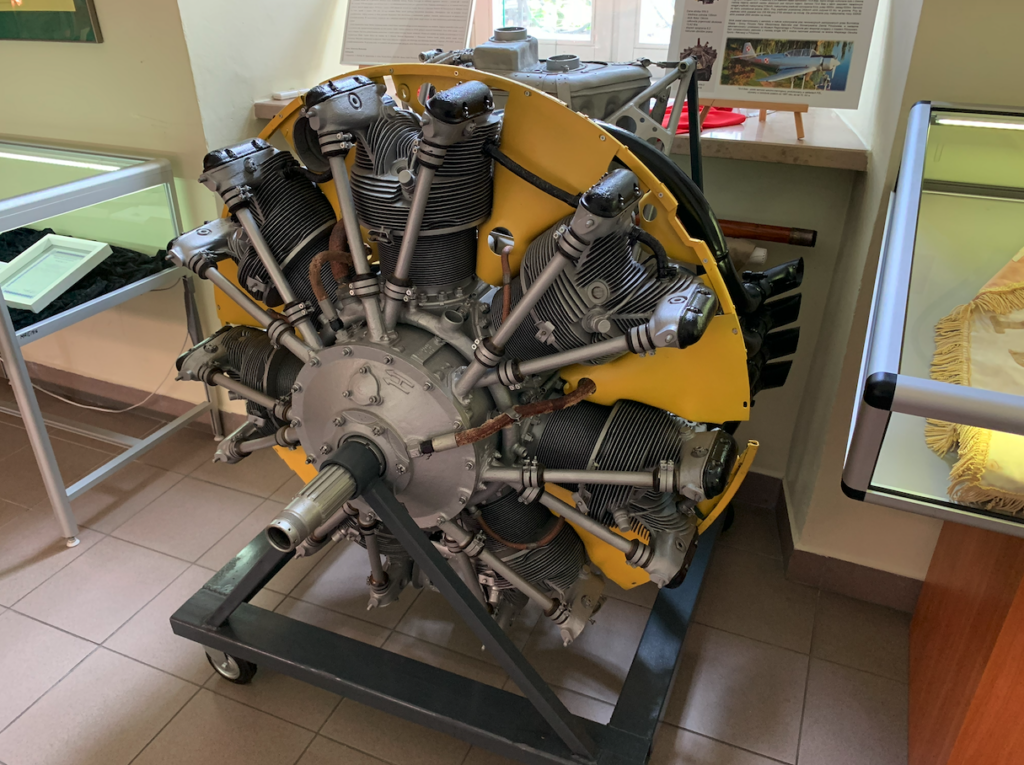
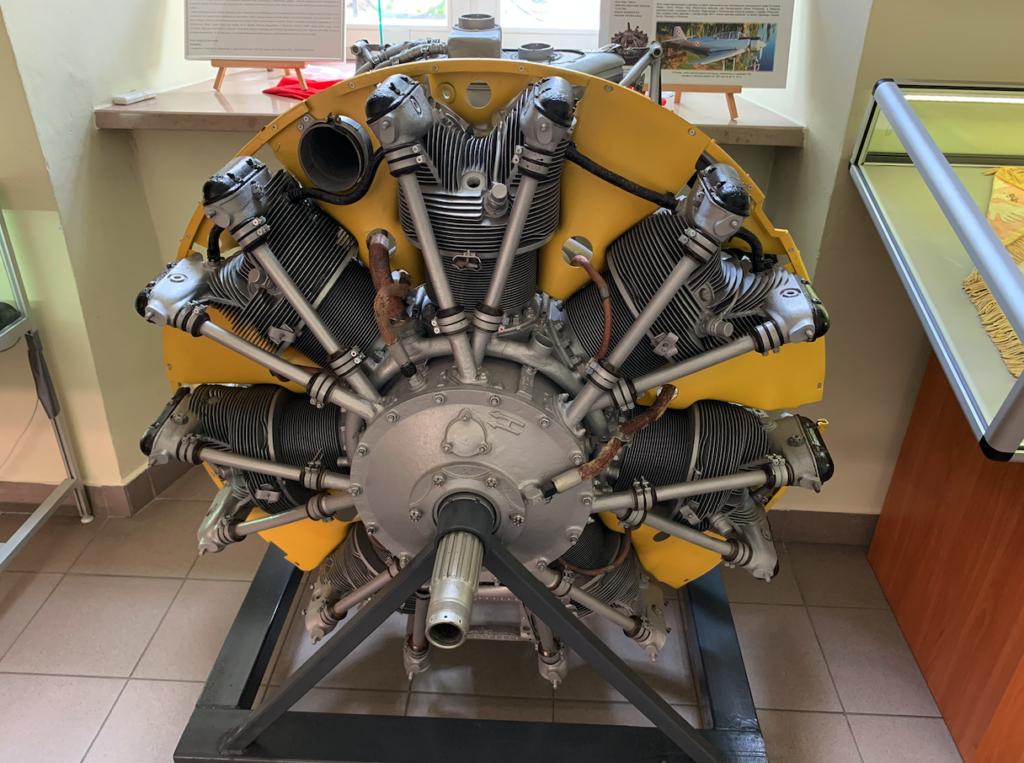
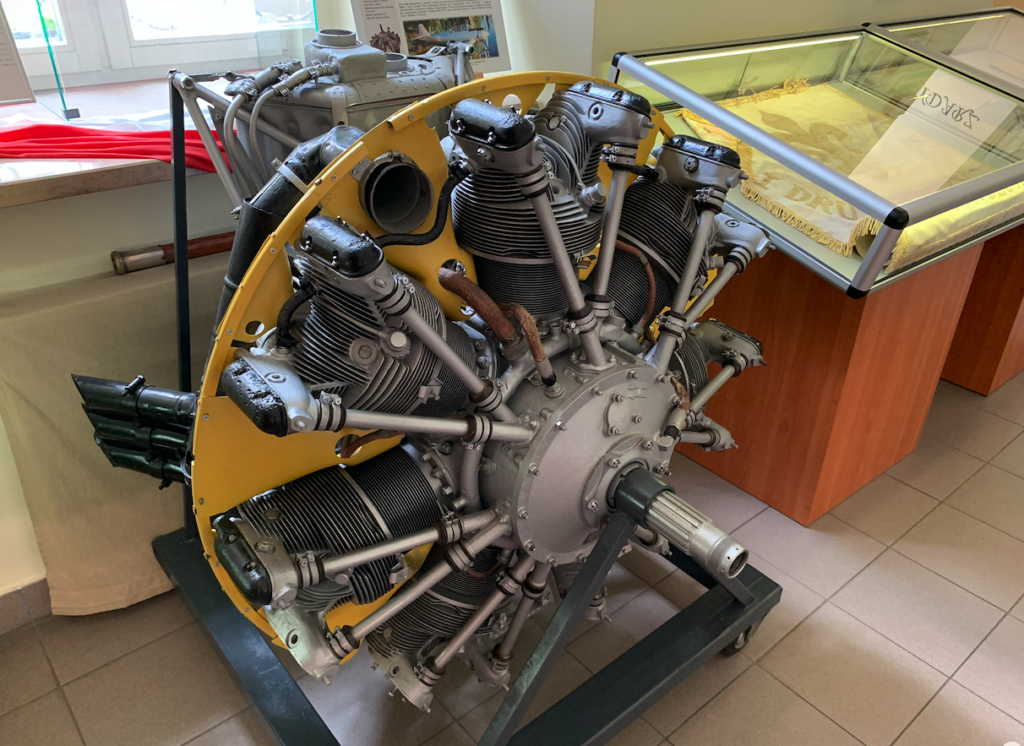
Wiktor Narkiewicz WN-3 piston aircraft engine.
After World War II, the development of medium- and high-power piston engines was practically halted. Only low-power internal combustion engines remained in development. This was due to the revolutionary development of turbojet engines, closely followed by turboprop engines. Unfortunately, the Polish aviation industry practically fell out of the world’s leading ranks. As a country subjected to the influence of the CCCP, our economy lost its importance.
Wiktor Narkiewicz
A designer with extensive pre-war experience was engineer Wiktor Narkiewicz, who worked at the Central Aircraft Study Center (CSS) after the war. He first designed an engine designated WN-0. It was a 4-cylinder flat engine, utilizing the cylinders of the Czech Walter Mikron engine. Ultimately, the engine was not built.
Then, in 1949, Wiktor Narkiewicz designed another 4-cylinder engine with a planned output of 65 hp. The design was based on the American Continental A-65 engine. It was a flat-six, air-cooled boxer engine. Three examples were built. The engine was tested on a Piper Cub aircraft. The engine was intended to power the Żak-2 aircraft. The engine was also installed on the PZL-102 Kos aircraft in 1959. Ultimately, more powerful engines were used in the PZL-102 Kos aircraft. The WN-1 engine was modified, creating a variant designated the NP-1. Based on the WN-1 engine, a 2-cylinder A-35 variant with 35 hp and a 6-cylinder NP-2 variant with 95 hp were planned. Both projects were never implemented.
Then, in 1950, engineer Wiktor Narkiewicz began working on seven-cylinder radial engines. The first was the WN-2. This engine was based on the American Jacobs R-755 (L-4) engine, which powered, among others, the Boeing Stearman aircraft. The WN-2 engine produces 280 hp. The engine proved successful. In 1950, three prototypes were built. However, the program was suspended due to increased engine requirements. Thus, between 1952 and 1954, the WN-3 engine was developed, producing 330 hp and powering the TS-8 Bies trainer aircraft in 1955. Production of the engine was undertaken by the PZL-Kalisz plant, where 329 units were built between 1957 and 1960. The WN-3 engine also powered the PZL MD-12 transport aircraft when the Russians refused to supply the ASz-21 engine.
The WN-3 engine in the TS-8 Bies aircraft was mounted to the airframe via a welded steel tube cradle (chrome-molybdenum steel) and rubber shock absorbers. The cockpit was separated from the engine by a fire barrier made of heat-resistant sheet metal. The engine was air-cooled, and its cooling was regulated by a shutter located in front of the engine. A two-bladed, adjustable WR-1 propeller with a diameter of 2.20 m was mounted on the engine axle. The propeller blades were made of various types of wood, with grain angles and glued together. The TS-8 aircraft with this powerplant reached a top speed of 315 km/h (193 mph). The maximum climb rate was 6 m/s (20 mph). Its service ceiling was 5,900 m (19,600 ft), limited by the lack of a pressurized cabin. The range was 620 km, with a 30-minute fuel reserve. The takeoff roll required only 360 m. At a cruising speed of 240 km/h, the aircraft consumed 63 liters of fuel per flight hour. At this speed, the engine produced 235 hp at 2,100 rpm.
The WN-3 engine shown in the photos was removed from a TS-8 Bies nb 0519 aircraft, which is parked near a reservoir in Pińczów. The engine was donated to the Regional Museum in Pińczów.
Basic engine data: The WN-3 engine is a low-altitude, medium-power engine without supercharging (supercharger) or reduction gear. It features a single-star, 7-cylinder, 4-stroke, air-cooled configuration. It drives a 2-blade variable-pitch propeller. The engine was started by compressed air. Takeoff power is 315 hp (232 kW) at 2,350 rpm, maintained for 15 minutes. The engine has a peak power of 330 hp (243 kW) at 2,500 rpm, maintained for 3 minutes. Nominal power is 285 hp at 2,250 rpm. Displacement is 13.4 dcm3, compression ratio is 6.2 : 1, dry weight is 255 kg (240 kg). Minimum engine speed is 500-600 rpm. The transition time from “low throttle” to takeoff power is 3 seconds. The overhaul interval is 400 hours.
Based on the WN-3 engine, a further development was developed, designated WN-5. This engine was equipped with a reduction gear and a supercharger. It was to have an output of 350 hp, and, in addition, the power loss with increasing altitude was to be much smaller.
The PZL Kalisz design office, based on the WN-3 engine, developed an air-cooled radial engine with a takeoff power of 360 hp (265 kW) at an engine speed of 2,700 rpm. The engine received the designation K-5. The compression ratio was increased from 6.2:1 to 6.5:1. The engine’s engine speed was also increased by 350 rpm. Starting the engine was achieved by an electric starter. The engine also received an external connection from the drive to connect external devices, such as agricultural equipment. Power consumption is up to 34 hp (25 kW). The dry weight of the K-5 engine is 261 kg. The first test run took place in December 1972. The engine successfully passed the first series of tests, but further development was abandoned due to a lack of interest in an engine of this power. Designed to power agricultural aircraft, the K-5 engine would have been underpowered, but it would have been perfectly suited for light aircraft.
A version of the WSK PZL WN-3 engine was adapted to power helicopters. The engine received the designation WN-4. Engineer Wiktor Narkiewicz was the chief designer. Several examples were built and tested at the Institute of Aviation in 1956-1957. The engine has a maximum power of 320 hp (235 kW), with a nominal power of 300 hp. Of this power, 20 hp (15 kW) was drawn by the fan, which served to cool the engine. The engine was a successful design and promised long-term reliable operation. The engine was used to power the prototype BŻ-4 Żuk helicopter. This helicopter was developed at the Institute of Aviation, in the Helicopter Design Bureau established in 1954. Initially designated GIL-4, it was later changed to BŻ-4 Żuk. Its designer was engineer Bronisław Żurakowski (brother of the famous British and Canadian aircraft test pilot, Janusz Żurakowski). The helicopter was designed as a single-rotor system with a modification of the Hiller system, with an additional steering rotor. Master of Science in Engineering Wiktor Narkiewicz also developed an automatic friction clutch in the drive unit, for which he received employee patent No. 39750.
Written by Karol Placha Hetman