
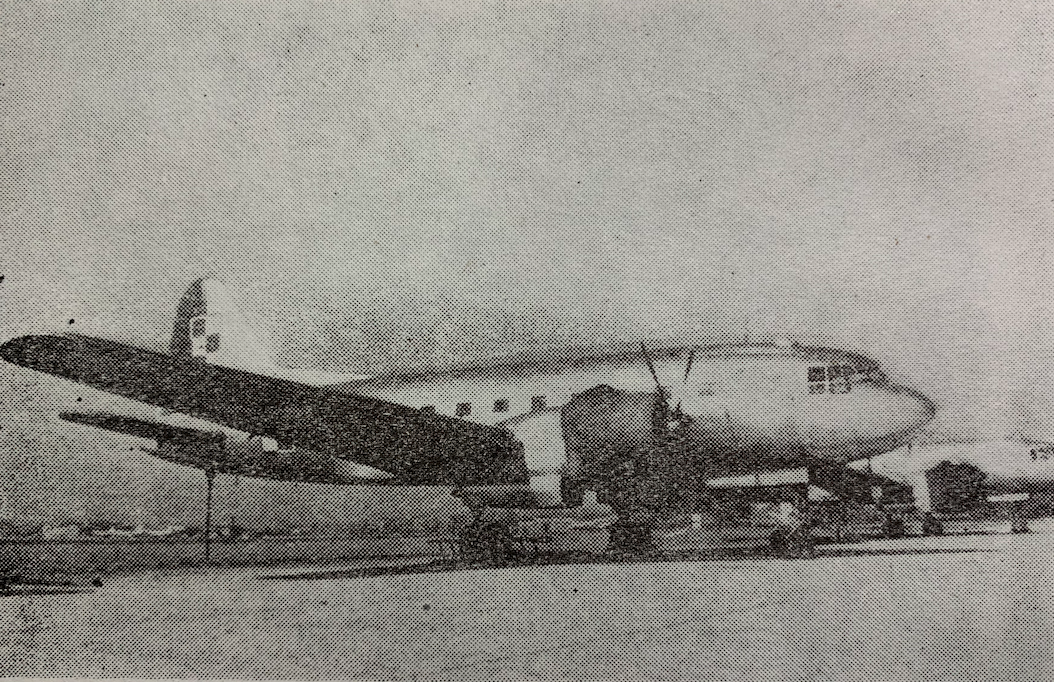
Kraków 2008-10-16
Iliuszyn Ił-12.
075b Section 1949-09-04
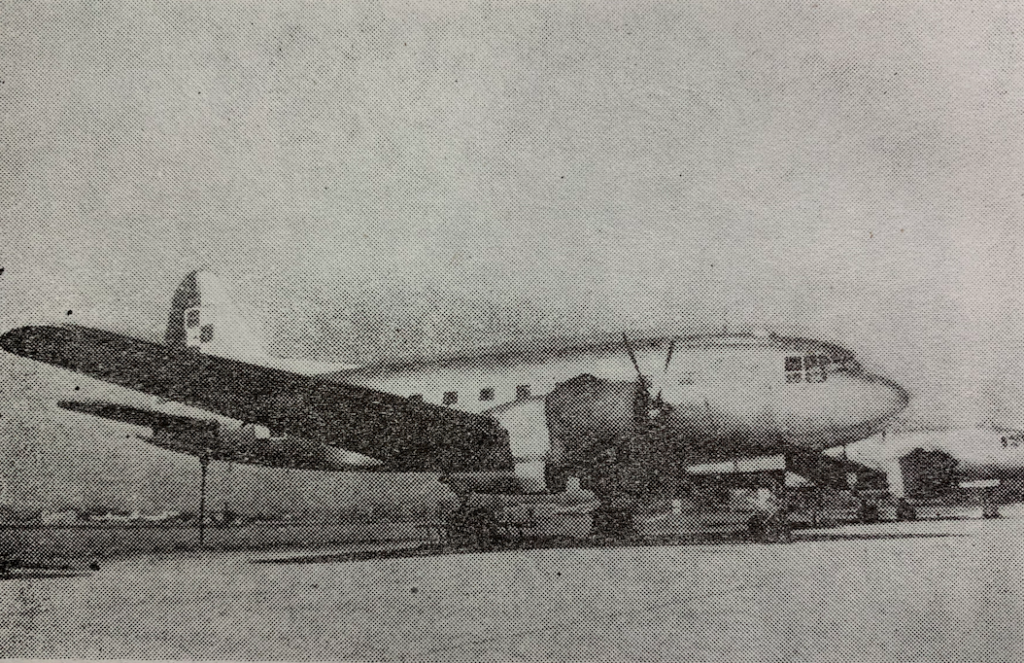
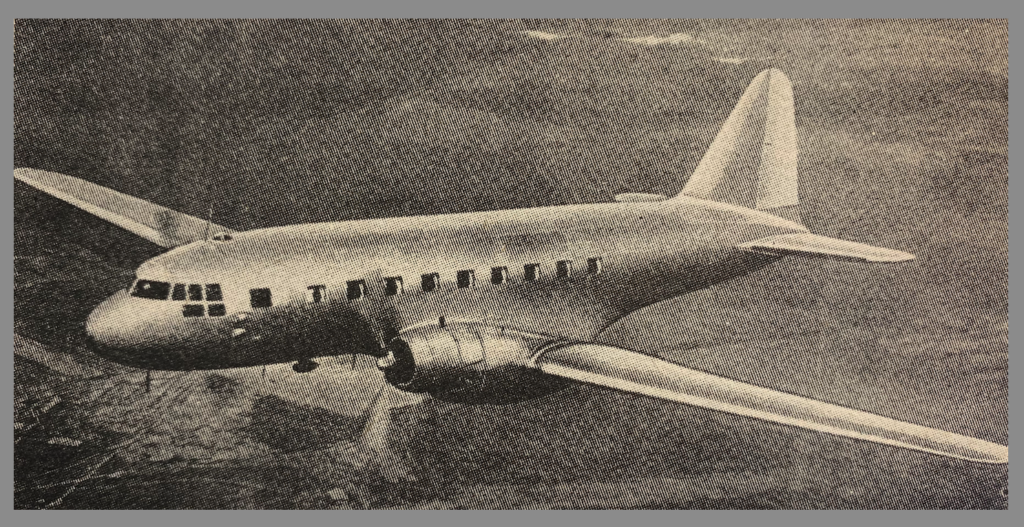
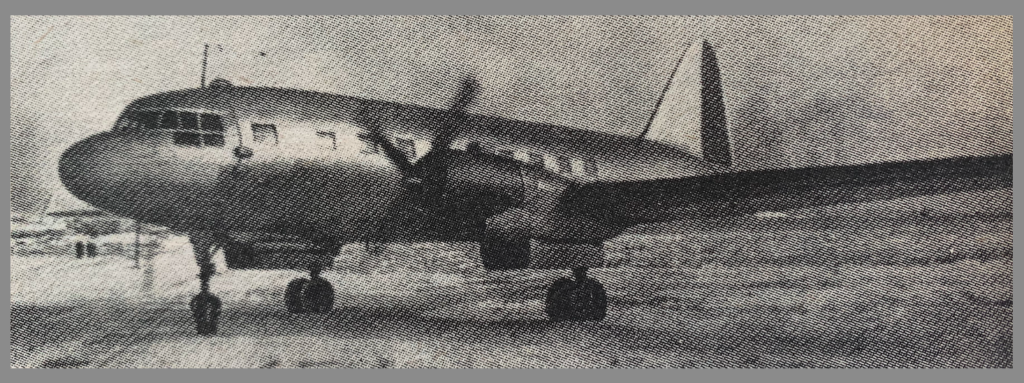
The Ilyushin Il-12 is a Soviet transport aircraft developed by the Ilyushin OKB. The aircraft was the successor to the Lisunov Li-2. The aircraft was based on American aircraft designs. The Il-12 aircraft can be easily distinguished from the Il-14 by the shape of the vertical tail.
History of the Il-12A
During World War II, a team of designers led by Sergei Vladimirovich Ilyushin began developing a new transport aircraft in the Li-2 class. Naturally, it had to be a more modern design. Attention was paid to improving flight safety and the ability to operate in various climatic conditions within the Muscovite State. For example, the temperature was minimum -67 degrees C in Yakutsk and maximum +60 degrees C in Tashkent. The fundamental change to the Il-12 compared to the Li-2 was the introduction of a three-leg undercarriage with a nose wheel. This arrangement allows the aircraft to taxi in a horizontal position, significantly improving visibility from the cockpit during airport maneuvers.
A new four-blade propeller was installed. The propeller is adjustable, meaning its angle of attack can be changed. This change can be achieved by feathering the propellers. This has the advantage that in the event of an engine failure, the propeller exerts no significant drag. With a single engine operating, not only level flight is possible but also a slight climb to an altitude of 1,000 meters above sea level.
Work on the aircraft began in the autumn of 1943, but continued intermittently due to more pressing tasks and the ongoing war. There was even a possibility of suspending the project altogether. Stalin agreed to continue work, provided the aircraft was also adapted to military needs. In addition to carrying passengers and cargo, the aircraft was to be capable of parachute landing and towing transport gliders. Since most missions were to be performed at low altitude, and due to limited budgets, a pressurized cabin for the crew and passengers was abandoned.
The first prototype flew on August 15, 1945. However, the ACz-31 engines used proved to be extremely unreliable. To remedy the situation, it was decided to use ASz-82 engines, not very modern but proven in many combat aircraft designs.
In December 1945, a prototype with ASz-82 engines was completed for flight testing. On January 9, 1946, the prototype made its maiden flight. At the controls were Vladimir K. Kokkinaki (a renowned aviation record holder) and his brother Konstantin K. Kokkinaki. After completing factory trials, the aircraft successfully passed state trials and received approval for entry into service with Aeroflot. At that time, it was given the designation Il-12. Also in 1946, serial production began in Moscow, at one of the oldest aircraft factories, “Znamia Truda,” where, among other things, the Il-2 and Il-10 attack aircraft were built.
On May 1, 1947, several aircraft were demonstrated in flight during a parade in Moscow. The aircraft was not fully developed and required numerous modifications during its initial operation. As a result, an anti-icing system was installed on the wings, tailplane, cockpit windows, and propeller blades. The leading edges of the wings are de-iced with hot air heated by an oil cooler. The leading edges of the tailplane are also de-iced with hot air. This air is taken in by intakes on both sides of the fuselage near the horizontal tail, heated by electric heaters, and directed towards the leading edges. The front windows in the cockpit were equipped with an alcohol spray system to prevent freezing. The propeller blades are also de-iced with alcohol, distributed in small doses through grooves located along the leading edges of the blades. De-icing involves washing the propeller blades, as well as the cockpit windows.
The aircraft received effective heating for the pilot and passenger cabins. At outside temperatures of -50 degrees C, the cabin temperature could be maintained at a constant +25 degrees C.
Il-12 B Version
In 1949, serial production of the modernized Il-12 B began. In addition to the changes mentioned above, it also received a number of other changes. This version features an inflow (dorsal fin) in front of the vertical tail. The engine cowlings were changed, as the aircraft received modernized engines. The exhaust pipes are also different. To improve structural safety, the gross weight was reduced from 17,250 kg to 16,100 kg. This was achieved primarily by reducing fuel consumption. The Il-12 B version entered service with Aeroflot and the Aviaarktika company, which used these aircraft to communicate with scientific bases in the Arctic and Antarctic.
The Il-12B version entered service with LOT Polish Airlines and the Czechoslovakian CSA. Shortly thereafter, the aircraft was adopted by Romania, Bulgaria, and China. Despite its many shortcomings, the aircraft was reliable to fly and easy to take off and land. Thanks to its powerful powerplant, it was safe to operate at high-altitude airfields, both with concrete (asphalt) and dirt (grass) surfaces. The takeoff run with a full load on grass is less than 500 meters, and the landing distance is 700 meters. However, it was the powerplant that caused the most problems. Malfunctions were frequent, and fuel consumption was too high compared to newer designs.
For the military, production began on a version for airborne landing, transporting cargo weighing up to 3,000 kg, and towing transport gliders such as the Yak-14 and KC-20. Aircraft of this version were equipped with a large loading door on the left side of the fuselage, which opened on the ground. A mobile turret was placed on the fuselage’s dorsal side for the gunner operating the SZKAS or UBT machine gun. A protruding transparent cupola was placed on the left side of the fuselage, just behind the pilots’ cockpit. This cupola housed a sight for airborne troops. The aircraft carried 37 parachutists or 26 fully equipped soldiers, or 16 wounded on stretchers, plus 6 seated.
A purely transport version, designated the Il-12T, was also developed. It had only a cargo hold (without any seats) that could hold 3,500 kg, and in normal operation, it often carried 4,000 kg of cargo.
Overall, the Il-12 proved to be a design with numerous shortcomings. Only its successor, the Il-14, became a mature design and operated for many years, including in Poland. Production of the Il-12 lasted from 1946 to 1950, totaling approximately 3,000 aircraft of all versions, for military and civilian aviation, for the Soviet Union, and for export.
On October 24, 1958, an Il-12 became the first aircraft from the Moscow State to fly over the South Pole.
The Il-12 for Poland.
The Il-12 was offered for export by the Aviaxport Foreign Trade Center. The center displayed this aircraft, along with the Yak-16 and Yak-18, at Poznań’s Ławica Airport from April 24, 1948, to May 9, 1948, as part of the 21st Poznań International Fair (MTP). The Il-12, designated CCCP-L1701, was part of an early production series. Pilot Konstanty K. Kokkinaki provided explanations and answered journalists’ questions, including demonstrating the aircraft in flight with passengers on board.
The Il-12 at LOT Polish Airlines.
In 1949, LOT Polish Airlines purchased five Il-12B passenger aircraft, which received registration marks; SP-LHA, SP-LHB, SP-LHC, SP-LHD, SP-LHE. The new aircraft was first publicly demonstrated at Okęcie Airport on September 4, 1949, on the occasion of Aviation Day. The aircraft was also shown in the air, demonstrating a climb flight with one engine running, while the other was shut down and its blades were feathered.
LOT Polish Airlines’ Il-12B aircraft were equipped with 18 or 21 passenger seats. During service, this number was increased to 28. In 1952, another Il-12B, registered SP-LHF, was loaned for several months. LOT Polish Airlines operated the aircraft until the end of 1957, and the last three aircraft, registered SP-LHA, SP-LHB, and SP-LHC, were kept in reserve and preserved until November 1959.
Il-12 for the Polish Army.
In 1950, two aircraft were purchased: one Il-12 B nb 002, intended for transporting important persons and possibly cargo, and one Il-12 D nb 001. On November 6, 1959, the army took over (borrowed) three Il-12 B aircraft (presumably SP-LHA, SP-LHB, SP-LHC) from LOT Polish Airlines, adapting them for transport and parachute landing missions. The last aircraft were scrapped in the 1960s. The Il-12 D nb 001 aircraft ceased operations in 1966, and the Il-12 B nb 002 in 1969.
Il-12 Versions
Il-12 A – the first production version. It seats 27 passengers. The Il-12 B – a passenger version developed in 1949, with an external inflow (aerodynamic steering wheel) in front of the vertical tail. Powered by two 1,630 hp Ash-82 FN-212 engines, the aircraft seats 27 passengers, and up to 32 on shorter routes. A saloon for 11 passengers was also developed, with a range of 4,000 km, and an ambulance version was also built.
The Il-12 D – a military version built in 1948-1949, the aircraft carried 37 parachutists or 26 soldiers. It could tow one or two transport gliders.
The Il-12 T – a typical cargo version. It had a reinforced floor and a deck crane with a load capacity of 1,500 kg. Built in 1949.
Construction
The Il-12 is a transport or passenger aircraft for 21-28 passengers. It has a rated payload of 3,500 kg. For parachute landings, it can carry 37 parachutists. It can carry 26 soldiers with full equipment. The aircraft’s crew consists of four pilots; two pilots, a navigator, and a radio operator.
The Il-12 is a twin-engine, low-wing, all-metal monoplane.
The three-spar wing is technologically divided into three sections. The working skin is reinforced with stringers. The center wing is permanently attached to the fuselage. It houses the engine nacelles with the engines and main landing gear. The leading edges of the wing are de-iced with hot air. An oil cooler is located beneath the engines. The air is heated there and directed into ducts enclosed in the wing tips, warming it and escaping through openings near the engine nacelles.
The fuselage is a classic frame-and-stringer structure with a working skin. It consists of three sections: the front with the crew cabin, the middle with the passenger and cargo cabin, and the rear, to which the tailplane is attached. The fuselage has a circular cross-section. In the transport version, the cargo cabin has a reinforced floor. A standard aircraft door is located at the rear of the fuselage on the starboard side. This door is also used for parachute drop. On the opposite side, on the port side, is a larger, two-part cargo door, which opens only on the ground. The pilot and cargo cabins are not pressurized but are heated with warm air. A small additional cargo compartment is located in the rear section, accessible from the cargo cabin or through a small door on the left side of the fuselage.
The tail is classic, cantilever. Metal construction. The stabilizers are sheet metal-covered, but the rudders are fabric-covered. The horizontal tail has a strong +6-degree sweep. The leading edges are heated by hot air. This air is drawn in through vents at the rear of the fuselage, heated by electric heaters, and directed to the tail tips.
The landing gear is tri-pod with a nose wheel. The nose wheel has a single wheel, retracting rearward into the fuselage. The main wheel has twin wheels, retracting forward into chambers located in the engine nacelles. Oil-air shock absorbers. The landing gear is supplemented by a small, partially protruding wheel, acting as a bumper at the end of the lower fuselage during takeoff and landing. When parked, the rear of the fuselage is supported by a stand that prevents the aircraft from tipping over on its tail during cargo loading and unloading.
Propulsion: Il-12.
Two ASz-82 FN-212 14-cylinder double-star engines, carburetorless, with direct fuel injection and a two-stage compressor. Takeoff power is 2 x 1,362 kW (2 x 1,850 hp), and nominal power is 2 x 1,200 kW (2 x 1,630 hp). NACA engine cowlings with adjustable air intake. Exhaust pipes exit at the ends of the engine nacelles. Four-blade AW-9 propellers, 4.1 m in diameter, can even be adjusted to a feathering position. Blades are de-iced with alcohol, dosed cyclically and flowing down grooves on the leading edge of the blades.
Six fuel tanks are located in the wings, with a total capacity of 4,150 liters. Two oil tanks with a capacity of 220 liters each, located in the engine nacelle.
Avionics equipment: RSB-7 and RSB-5 on-board radios, ARK-5 automatic radio compass, RPKO-10M radio half-compass, and AP-42A automatic pilot.
Armament: The Il-12D design included the possibility of mounting a dorsal fuselage turret, armored and equipped with a single SZKAS or UBT machine gun, operated by a gunner. Aircraft used in Poland did not have such a turret. However, the cargo compartment windows feature circular viewing windows that can be opened from the interior, allowing for fire from small arms, automatic weapons, or machine guns.
Il-12 T-T data.
Wingspan 31.70 m, length 21.31 m, height 7.81 m, lifting area 103 m2, empty weight 11,000 kg, gross weight 17,250 kg, payload weight 3,500 kg, fuel 4,150 liters, maximum speed 407 km/h, cruising speed 320-366 km/h, landing speed 128 km/h, range 3,230 km, range with full payload 1,500 km, ceiling 6,500 km (the crew then uses oxygen masks), take-off run 475 m, landing run 563 m.
List of Il-12 aircraft in Poland.
1. Il-12 B registration SP-LHA. Purchased for LOT in 1949. Operated until 1957. Preserved. On November 6, 1959, the aircraft was taken over by the Army. Operated until 1963.
2. Il-12 B registration SP-LHB. Purchased for LOT in 1949. Operated until 1957. Preserved. On November 6, 1959, the aircraft was taken over by the Army. Operated until 1963.
3. Il-12 B registration SP-LHC. Purchased for LOT in 1949. Operated until 1957. Preserved. On November 6, 1959, the aircraft was taken over by the Army. In service until 1963.
4. Il-12 B registration SP-LHD. Purchased for LOT in 1949. In service until 1957.
5. Il-12 B registration SP-LHE. Purchased for LOT in 1949. In service until 1957.
6. Il-12 B registration SP-LHF. Aircraft loaned by LOT in 1952 for several months.
7. Il-12 D nb 001 purchased for the Army in 1950. End of service in 1966.
8. Il-12 B nb 002 purchased for the Army in 1950. End of service in 1969.
Written by Karol Placha Hetman