

Skawina 26.07.2026
Airport ground surveillance system.

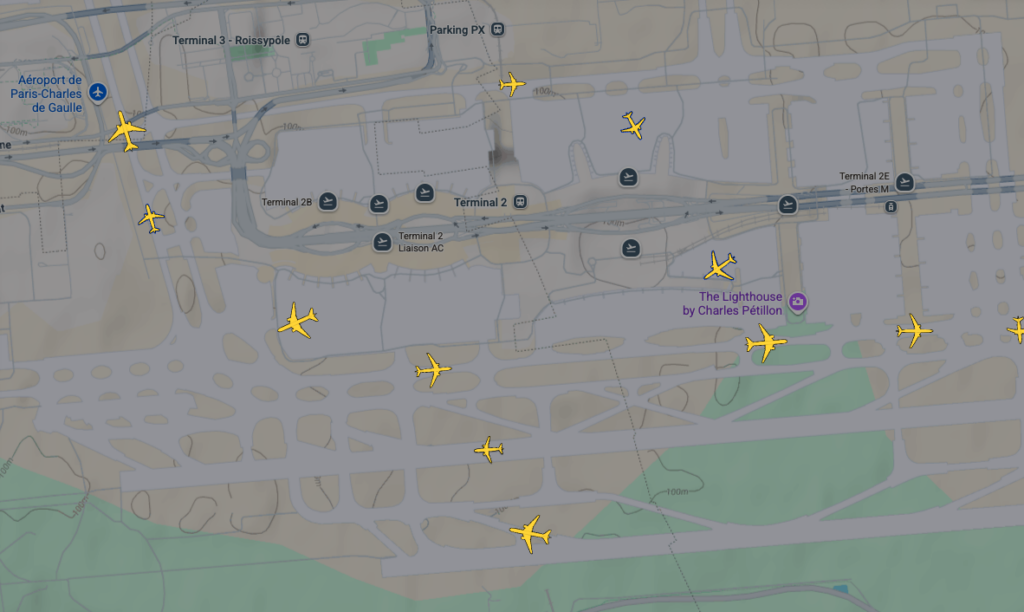
Large airports equipped with several passenger and cargo terminals, each with several runways, are now like large cities. They have highly developed infrastructure, massive air traffic, and thousands of flight operations. Runways that frequently intersect, and dozens of kilometers of taxiways. Added to this are the traffic of airport vehicles, platform buses, fuel dispensers, catering vehicles, and much more. All of this must be managed. And it turns out that simple observation from the air traffic control tower is no longer sufficient to ensure sufficient separation and, therefore, safety.
A major step forward in improving safety was the development of computerized Surface Movement Radar (SMR) data processing systems. The system can track moving objects, alerting the controller if there are indications of a collision. For example, when an object is heading towards a runway occupied by an aircraft. A warning is also generated if the identified aircraft changes taxi route or fails to stop at a holding point.
Surface Movement Radar (SMR) is a ground-based airport surveillance system that uses radio waves to track aircraft and vehicles on runways, taxiways, and aprons. SMR operates primarily in the X-band (8.0 to 12.0 GHz), providing sharp, high-resolution images of the ground. It uses an antenna that typically rotates once per second to transmit live updates. The radio wave bounces off objects and measures the return time to determine distance, direction, and speed. The system operates smoothly in dense fog, rain, snow, and total darkness. It detects vehicles and objects without active transponders and alerts controllers to prevent runway collisions and unauthorized movements. It is often used in conjunction with an advanced surface movement guidance and control system (A-SMGCS), as described by SKYbrary Aviation Safety.
Surface Movement Radar (SMR) is a radar device specifically designed to detect all major objects on the airport surface, including aircraft and vehicles, and to display the entire image on the radar display console in the air traffic control tower. It is used to support tower personnel in visually observing aircraft and/or vehicle movements on runways and taxiways.
The system enhances controllers’ situational awareness of the maneuvering area; monitors aircraft and vehicle movements on the maneuvering area; provides pilots and vehicle drivers with route information (as needed); and provides advice and assistance for the safe and efficient movement of aircraft and vehicles on the maneuvering area.
Technical Data:
SMR utilizes the operating principle of primary surveillance radar (PSR), which emits a signal that bounces off a target, and the received echo signal is used to determine the target’s range and bearing.
However, SMR operates at significantly higher frequencies (10-20 GHz) compared to PSR (1-5 GHz). As a result, the antenna is significantly smaller and lighter, allowing for faster rotation (typically 1 rotation per second, compared to 6-12 rotations per minute) and, therefore, faster updates. Azimuth resolution is also improved (approximately 0.25 degrees) compared to PSR (1-2 degrees) due to the narrower beamwidth (achieved by the higher frequency). Although the range is significantly shorter compared to other radars (which is not a disadvantage, as SMRs are designed to cover only the maneuvering area), this allows for a shorter pulse width, which in turn translates into significantly better range resolution (around 20 meters).
SMRs are often mounted atop air traffic control (ATC) towers, providing a clear view of the maneuvering area.
The inherent limitation of SMRs is that they only provide position information. However, when combined with an ADS-B receiver, additional information can be displayed on the controller’s screen.
Currently (2026), the SMR system is under development: The Federal Aviation Administration (FAA) is evaluating a prototype of the Runway Incursion Prevention System (RIPSA). RIPSA is a simplified version of the Runway Entry Lighting System (RWSL), which includes Runway Entry Lights (RELs) controlled by independent ground-based radar. However, unlike RWSL, RIPSA does not include Runway Holding Lights (THLs). The goal of RIPSA is to enhance Runway Safety Area (RIPSA) protection by utilizing “direct-to-pilot” safety features that provide local detection capabilities for all aircraft or vehicles at critical RWY points (RIs), such as holding lines and runway intersections. The system provides situational awareness only, not runway entry clearance. The core technology is a non-cooperative, directed surface movement radar (SMR) with additional support from cooperative sources such as ADS-B and airport surveillance radar (ASR). RIPSA uses surveillance radar data from the SMR and processes it with “safety logic” that controls the field lighting system (FLS), including the ground-based runway entry lights (RELs) that indicate runway (RWY) status.
Written by Karol Placha Hetman