
Kraków 2026-11-09
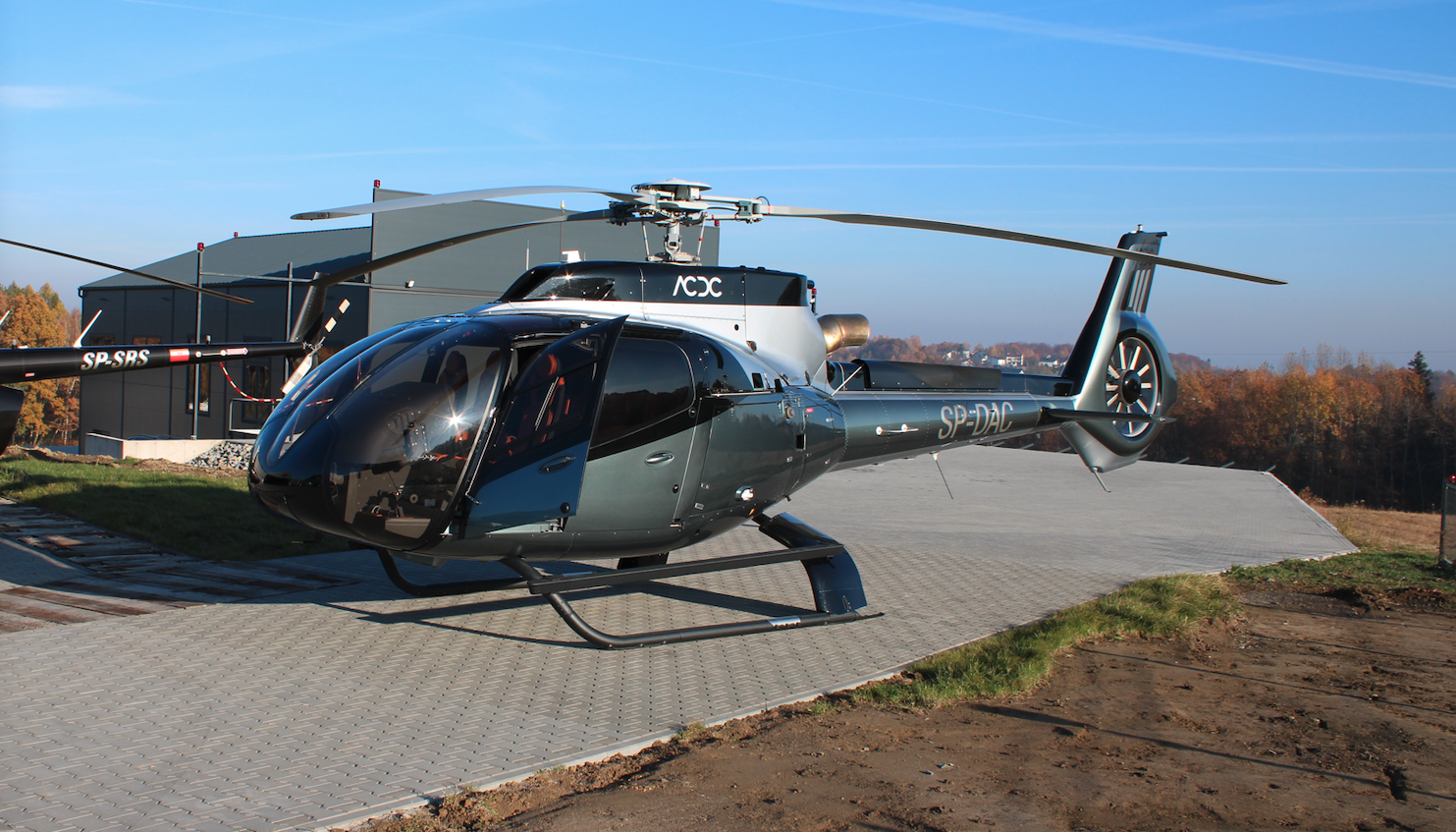
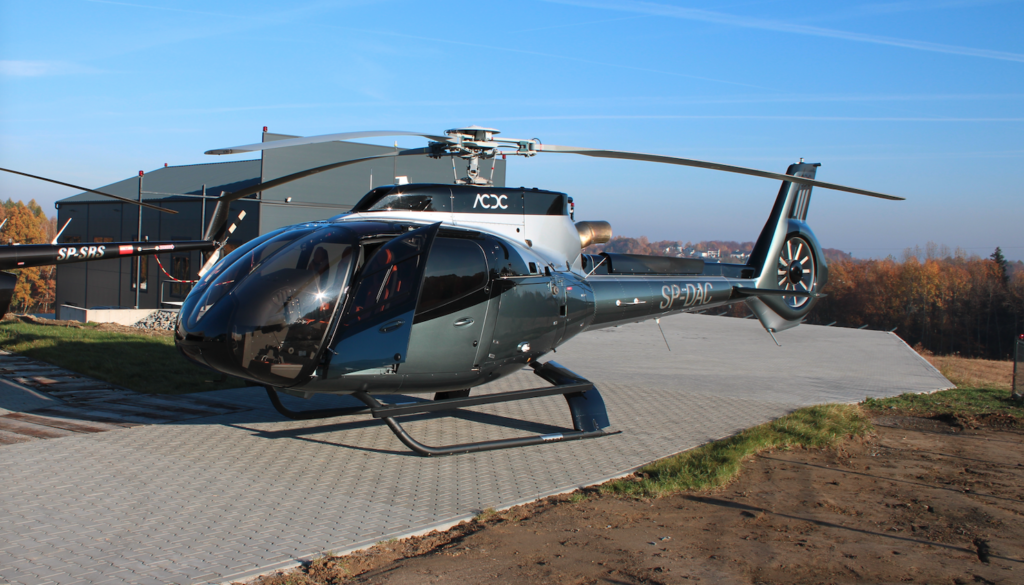
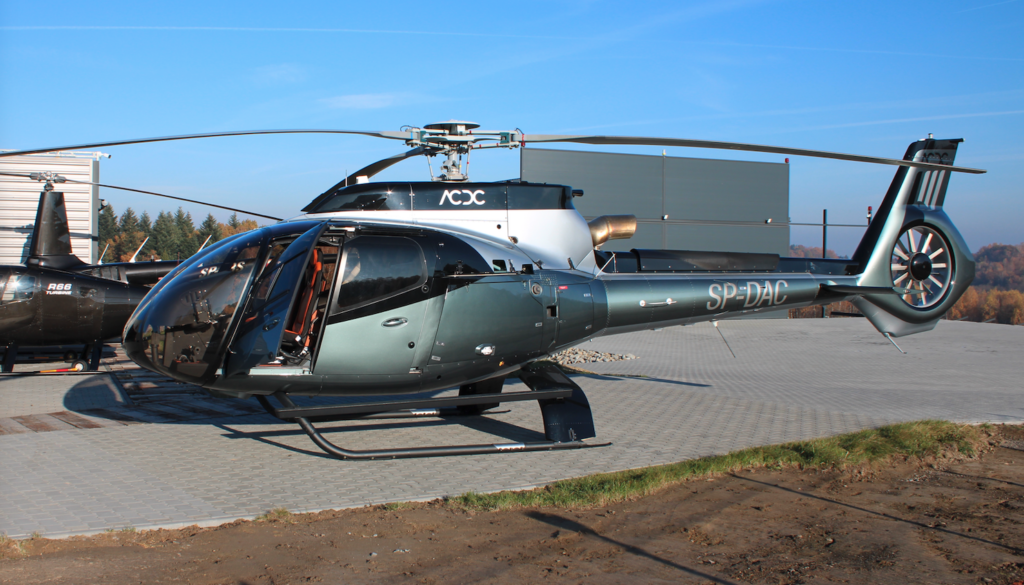
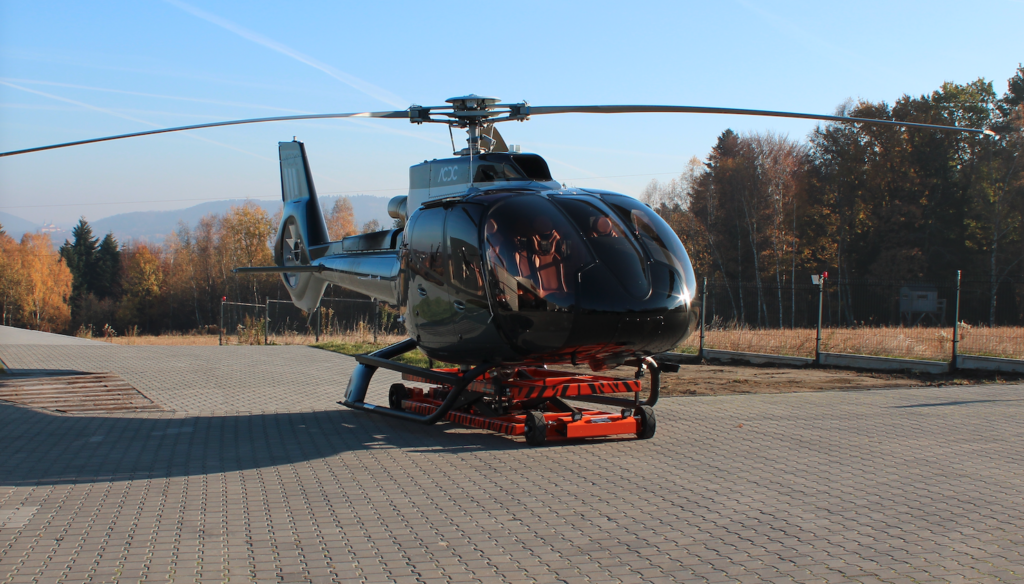
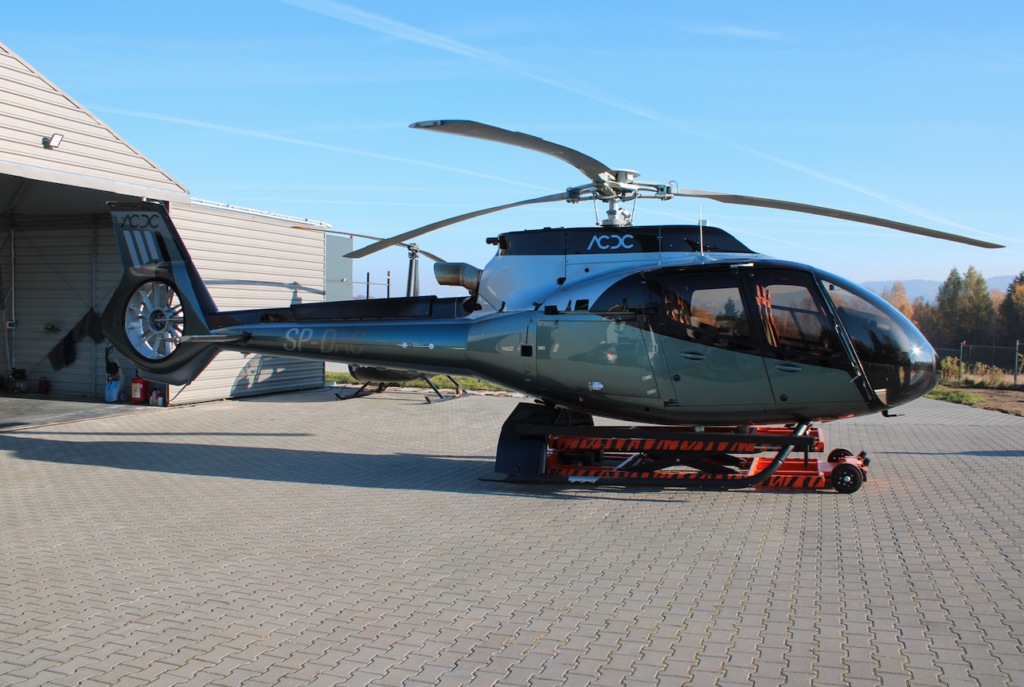
Airbus Helicopters H130 T2 helicopter (formerly Eurocopter EC130 T2), serial number (MSN) 9385. Registration: SP-DAC, registered in Poland. Owned by a private individual.
Airbus Helicopters H-130 / EC-130.
Before we describe the EC-130 helicopter, let us provide some background on the history of the Airbus Helicopters group, the manufacturer of this aircraft.
To gain a proper understanding of this subject, we must examine the French and German aerospace industries.
In the 1960s, the French aerospace industry was highly fragmented. As a result, much of the research and development work was duplicated across various companies. To address this, these firms were consolidated into a state-owned aerospace consortium called Aérospatiale. Established in 1970, Aérospatiale was formed through the merger of three state-owned aerospace manufacturers: Sud Aviation, Nord Aviation, and the Société d’études et de réalisation d’engins balistiques (SÉREB). In doing so, Aérospatiale became the largest aerospace company in Europe. It produced civil and military helicopters, civil and military aircraft, space rockets, military missile systems, and electronic systems. Throughout the 1980s, the company gradually strengthened its cooperation with other firms operating within the European Economic Community, creating specialized divisions for helicopters, aircraft, and various types of missile systems. In 1992, Aérospatiale’s helicopter division merged with the German group Daimler-Benz Aerospace AG (DASA) to form the Eurocopter Group. Subsequently, the Eurocopter Group became part of the EADS conglomerate, and following a reorganization in 2012, it became Airbus Helicopters.
The second player in this sector was the German industry. Following the Second World War, Germany was demilitarized; however, Moscow’s aggressive policies in the 1950s led to the country’s rearmament, supported by the United States. By the 1960s, German firms were manufacturing components for the Fiat G-91 strike aircraft, often operating under the guise of the automotive industry. In 1974, Germany—no longer constrained by such pretenses—conducted the maiden flight of the Panavia Tornado, a combat aircraft developed in collaboration with Italy and the United Kingdom. While the construction of fixed-wing aircraft was prohibited in the Federal Republic of Germany after the war, the ban did not extend to helicopters. In 1961, engineers Ludwig Bölkow and Emil Weiland began developing a light, turbine-powered helicopter. The challenge was significant, as the objective was to create a design superior to existing Western models. In line with the prevailing safety philosophy of the time—which mandated the redundancy of all critical systems—the helicopter was equipped with two engines. It was designed to be robust, simple to operate, and easy to maintain, with a modular configuration that allowed for easy adaptation to various roles, including rescue missions. The German government provided a loan covering 60% of the development costs, leading to the creation of the Bölkow Bo-105.
The Bo-105 was the first helicopter in the world to feature a rigid main rotor system. This type of rotor enables the helicopter to perform an aerobatic maneuver—a loop. It is constructed primarily from glass-fiber-reinforced plastic, resulting in a rotor that is both extremely lightweight and strong, with excellent aerodynamic characteristics. The prototype helicopter equipped with this new rotor made its maiden flight on February 16, 1967. The initial aircraft utilized German-made turbine engines—which proved rather unsuccessful—but plans for the production models included the installation of proven Rolls-Royce Allison 250 series engines. Before full-scale production began, the Bölkow company became part of the Messerschmitt-Bölkow-Blohm GmbH (MBB) conglomerate. This entity later became part of Daimler-Benz Aerospace (DASA). In 1992, the company helped form the aforementioned Eurocopter Group, which continued to manufacture the Bo-105 helicopter until 1997. In the meantime, drawing on the experience gained from the development of the original helicopter, subsequent twin-engine models were built—such as the BK-117 and the EC-130, the latter being the subject of this chapter.
In addition to European companies, companies from all over the world have participated in individual programs, including Singapore Aerospace Technologies from Singapore and Chengdu Aircraft Industry Corporation (CATIC) from China.
In the 1990s, the capital of the Eurocopter group consisted of French, German and Spanish finances. In 1995, the group employed approximately 15,500 employees. It had a turnover of EUR 4.6 billion, an order book of 344 new helicopters and a 52% share in the civil and para-public market (police, medical services, maritime rescue, etc.), 30% of the global share of the helicopter fleet (10,500 helicopters). Eurocopter consisted of 18 subsidiaries. The company had 2,800 customers in 140 countries. In 2001, the company had a 40% share in the helicopter production market, and in the US market as much as 30%. In 2000, Eurocopters Group produced helicopters; BK-117, AS-350 Écureuil / AS-355 Ecureuil 2, H-120 Colibri (formerly EC-120), H-155 Dauphin (formerly AS-365 / EC-155), H-130 (formerly EC-130), H-135 (formerly EC-135), H-145 (formerly EC-145), H-160, H-175 (formerly EC-175), Airbus H-225 Super Puma (formerly AS-332/EC-225 Super Puma), UH-72 Lakota, Tiger, NH-90.
In 2018, Airbus Helicopters had its headquarters in France, in Marignane near Marseille. It employed a total of approximately 17,600 employees. The offer included light single-engine helicopters H-120, H-125, H-130, twin-engine light helicopters H-135, H-145, medium helicopters AS-365, H-155, H-160, H-175, heavy helicopters H-215, H-225, typical Tiger combat helicopters, NH-90.
The military’s interest in medical helicopters led to the development of the NH-90 medical helicopter variant. The helicopter met the guidelines developed by the army and was accepted into service. Since the NH-90 is a large helicopter and therefore expensive, it was decided to use its experience to build a medical helicopter based on a smaller structure. The choice fell on the EC-145 and EC-135 helicopters. Of course, helicopters of this size have a smaller range of possible tasks to perform, but they better meet the needs of civil aviation.
EC-130 / H-130.
The H-130 (formerly known as the EC-130 T2) was unveiled in 2012, though the designation “H-130” has been in use since 1999. This helicopter is a development of the AS-350 model and is powered by a single turbine engine. It comes equipped as standard with a dual hydraulic system—a feature shared across the Airbus “Ecureuil” family, which accounts for 42% of the active Airbus helicopter fleet. This specific system has logged over 332 million flight hours worldwide. The H-130 can accommodate one pilot and six passengers (in a 3+4 cabin configuration) or one pilot and seven passengers (in a 4+4 configuration, utilizing an additional front seat). When four seats are placed in the front, they are staggered with an offset of approximately 20 cm. The pilot typically occupies the front-left seat, while the rear seats are mounted on a slightly raised floor. The cabin volume is 3.70 m³, and there is a baggage compartment capable of holding seven carry-on-sized suitcases. The helicopter features extensive glazing, ensuring excellent visibility from every seat. Beyond passenger transport, the H-130 can be easily adapted for cargo operations, including the carriage of external loads via an under-fuselage hook—a method known as a “cargo swing.” Promotional materials for the aircraft highlight that it boasts the largest cabin in the single-engine helicopter category. Compared to the Bell 407 helicopter, it features a cabin that is 54% larger and a baggage compartment that is 143% larger. It is also quieter, primarily due to the use of a Fenestron. Airbus’s signature Fenestron tail rotor enhances safety for ground personnel and reduces the risk of accidental contact between the rotor and foreign objects or obstacles. The helicopter incorporates an active vibration control system, as well as a diagnostic system for its primary onboard installations.
The helicopter is powered by a single Safran Arriel 2D turbine engine with a free-turbine configuration. The engine is equipped with a next-generation, dual-channel Full Authority Digital Engine Control (FADEC) system, which includes a third, independent, and automatic backup channel. The pilot has access to displays (VEMD) that provide integrated information on flight conditions, engine status, and other aircraft systems.
The maximum cruise altitude is 3,429 m. The service ceiling is 7,010 m. The maximum cruise speed is 237 km/h. The maximum range is 606 km. The maximum flight duration is 4 hours. The helicopter is capable of operating in temperatures ranging from -40°C to +35°C. The fuselage length is 12.64 m. The maximum takeoff weight (MTOW) is 2,500 kg. The maximum gross weight is 3,050 kg. The payload capacity is 1,046 kg. The fuel capacity is 425 kg.
It is powered by a Safran Arriel 2D engine with an output of 710 kW (952 shp). The cruise power is 856 shp (638 kW). The Safran Arriel 2D is a modern turboshaft aero-engine, manufactured by Safran Helicopter Engines (formerly Turbomeca) and certified in May 2011. The engine is used in Airbus H125 (formerly AS350 B3e) and Airbus H130 (formerly EC130 T2) helicopters. It features a dual-channel FADEC (Full Authority Digital Engine Control) system. The time between overhauls (TBO) is 5,000 flight hours. The operating temperature range is from -45°C to +50°C. The maximum operational ceiling is up to 9,000 meters. Throughout its service life, the engine has demonstrated low fuel consumption and high reliability. The engine performed well at high-altitude airports and in hot climates—in what are known as “hot and high” operations. Its low failure rate led to an extension of the intervals between overhauls.
The Airbus Helicopters H-130 (formerly known as the Eurocopter EC-130) is one of the finest, most comfortable, and safest single-engine helicopters in the world, designed for both tourism and executive transport. Derived directly from the proven Ecureuil (AS-350) family, this model was engineered to maximize cabin space and significantly reduce noise levels. Key advantages of the helicopter include its superior comfort within its class; the H-130 features an exceptionally spacious cabin. The aircraft is also remarkably quiet, thanks to its signature enclosed “Fenestron” tail rotor, which operates at a variable rotational speed. The H-130 generates noise levels 7 dB below the strict limits set for the Grand Canyon National Park, earning it a reputation as the quietest aircraft in its category. Regarding passenger safety, the Fenestron design eliminates the risk of the tail rotor blades striking ground obstacles or injuring bystanders. The aircraft is powered by a modern Safran Arriel 2D engine, equipped with a dual-channel digital FADEC (Full Authority Digital Engine Control) system and a third, backup channel, which minimizes the risk of mechanical failure. Furthermore, the helicopter boasts modern avionics and excellent stability. An active vibration control system, combined with an advanced main rotor design, ensures an exceptionally smooth flight and allows the aircraft to remain stable even in challenging weather conditions. However, the EC-130 / H-130 helicopter also has its drawbacks. Purchase and maintenance costs: As a premium-segment product from Airbus Helicopters, the H-130 comes with a high purchase price and costly component servicing compared to simpler, single-engine aircraft. Single-engine propulsion: Despite the exceptional reliability of the Safran Arriel engine, having only one engine precludes this helicopter from certain types of commercial operations. For instance, it cannot perform night flights over large bodies of water or densely populated urban areas, where a twin-engine certification is required. Dimensions: While its wide fuselage is a major benefit for passenger comfort, it requires more hangar space than the more traditional, narrower AS350 helicopter.
A direct comparison of the versions: EC130 B4 vs. H130 (EC130 T2). It is worth noting that two main variants of this helicopter can be found on the secondary market and in active service. The newer version, the H130 T2, introduced key technical improvements. The engine was upgraded from the Turbomeca Arriel 2B1 to the more powerful Safran Arriel 2D, equipped with a FADEC system. The original engine offers less power reserve in high ambient temperatures, whereas the newer engine provides greater efficiency and superior performance in “hot and high” conditions. The older version of the helicopter featured a conventional air conditioning system and standard seats, while the newer model includes an upgraded air conditioning system, an active vibration control system, and energy-absorbing seats.
In May 2026, Airbus Helicopters delivered the 1,000th unit of the H130 series. It was supplied to the African operator Rotorjet Aviation Company, based in Kenya. This milestone places the helicopter among the most popular light, single-engine helicopters in the world, ranking alongside the baseline H125 (AS350) model.
Written by Karol Placha Hetman