
Pińczów 08-06-2026
IL Okęcie WSK Mielec TS-8 Bies.
The TS-8 Bies is a trainer aircraft used by the Polish Army. On July 23, 1955, the TS-8, with the serial number P-1, made its first flight from Okęcie Airport. 242 units were produced. The TS-8 is a single-engine, two-seat, low-wing monoplane with retractable landing gear. The aircraft was developed at the Institute of Aviation in Warsaw. The aircraft was mass-produced in Mielec. The TS-8 Bies is a trainer aircraft designed for basic pilot training, advanced pilot training, and advanced training, incorporating elements of combat training. It is also used for training and blind-sight flights.
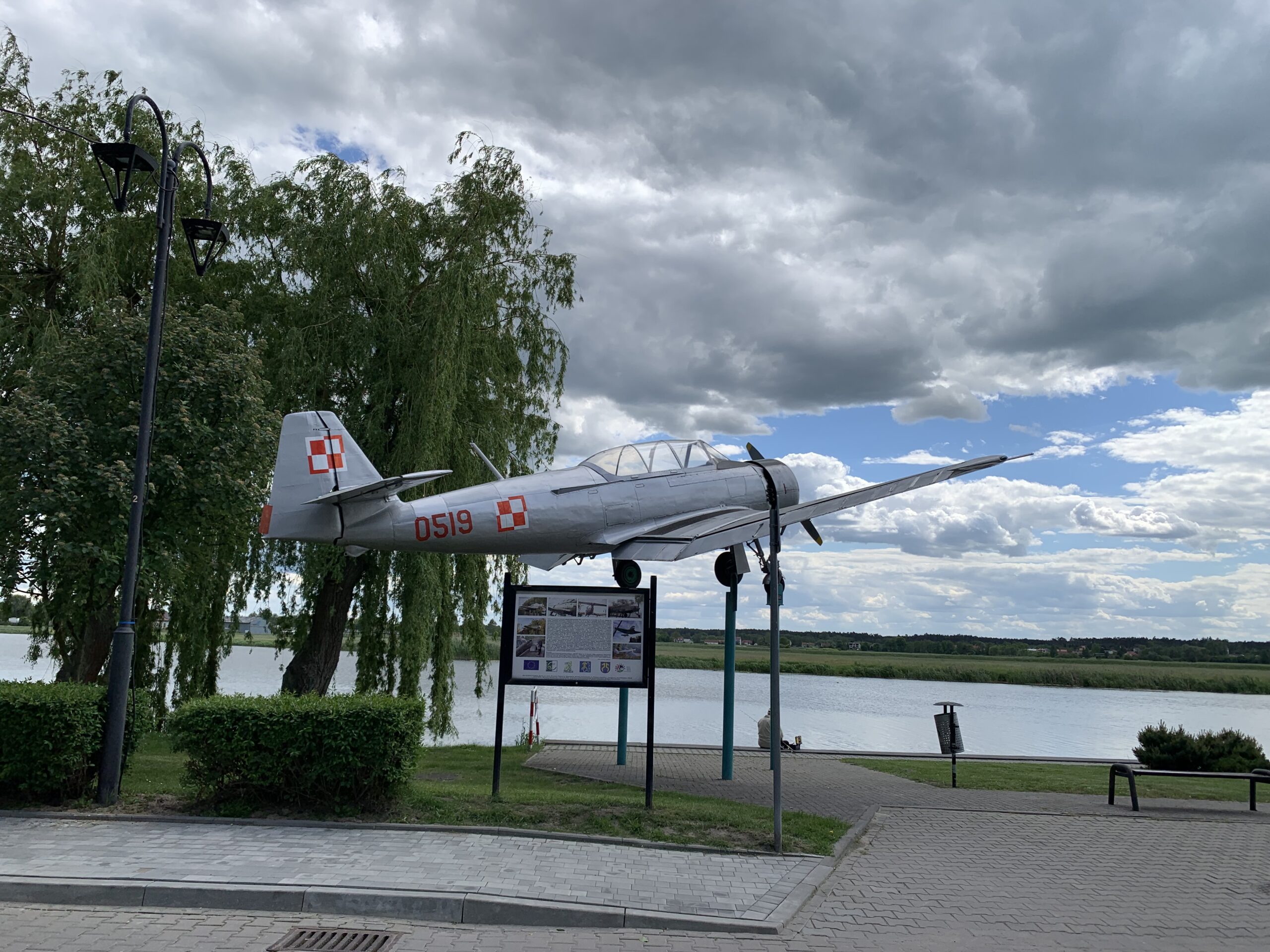
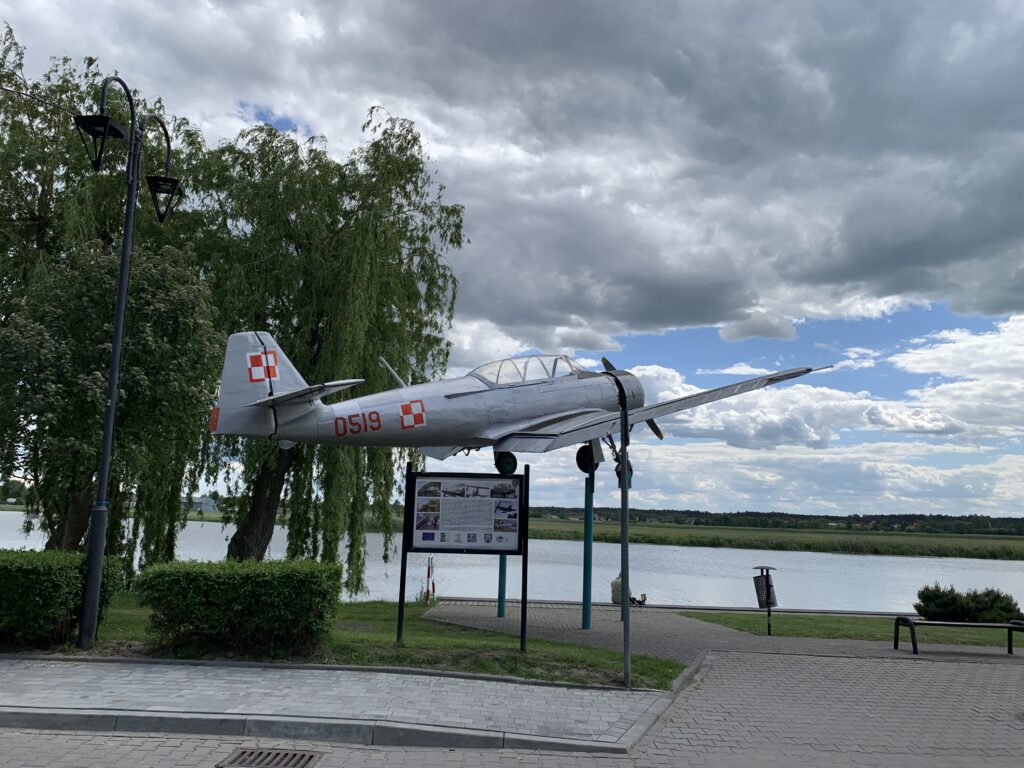
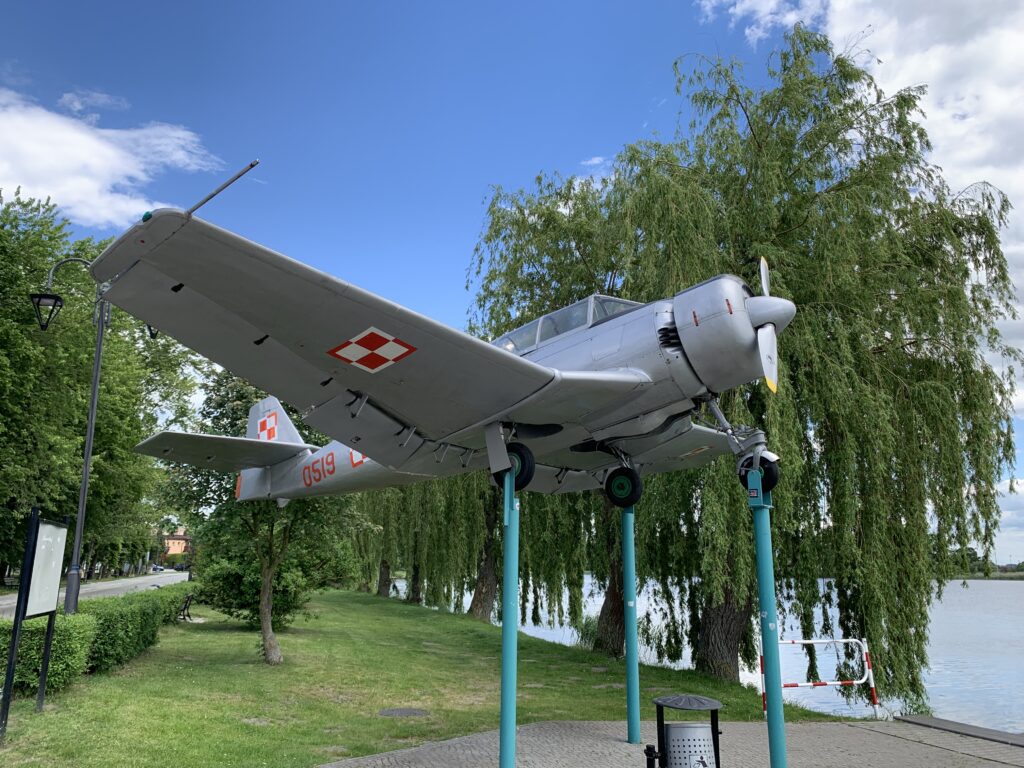
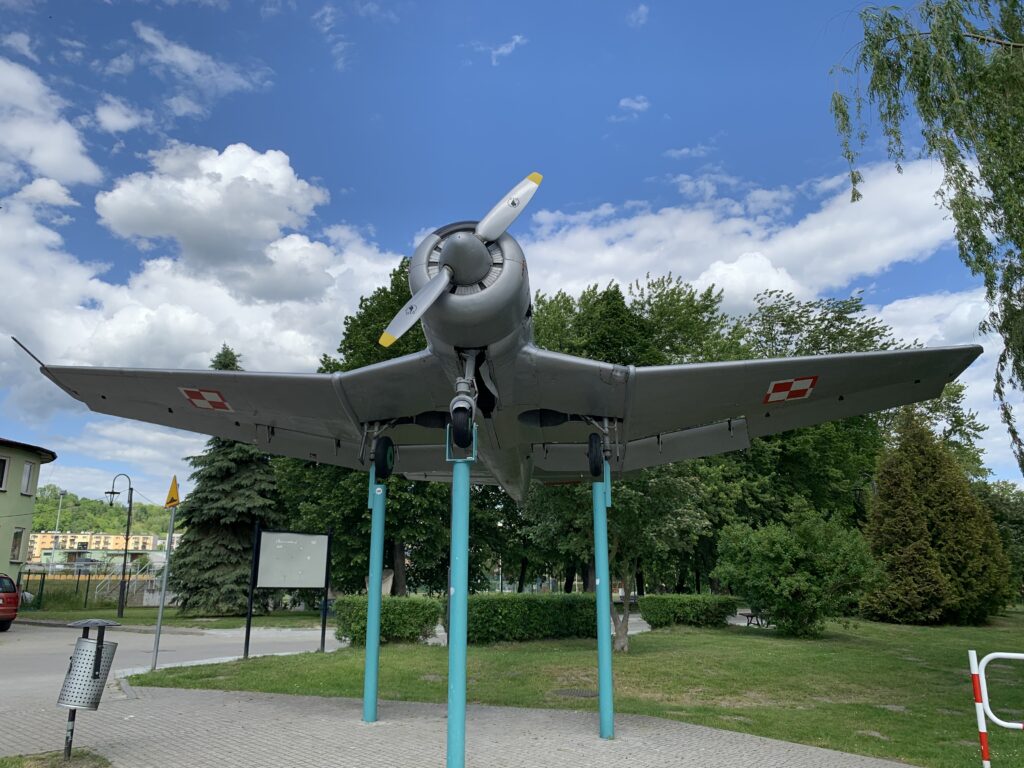
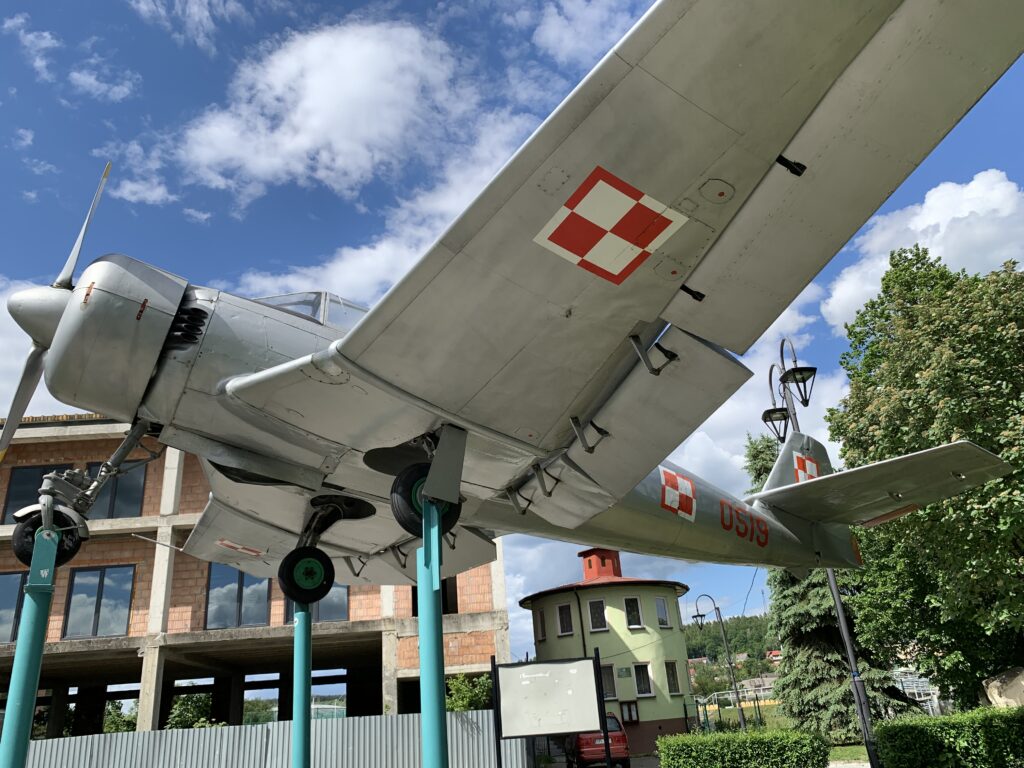
TS-8 Bies Nb 0519.
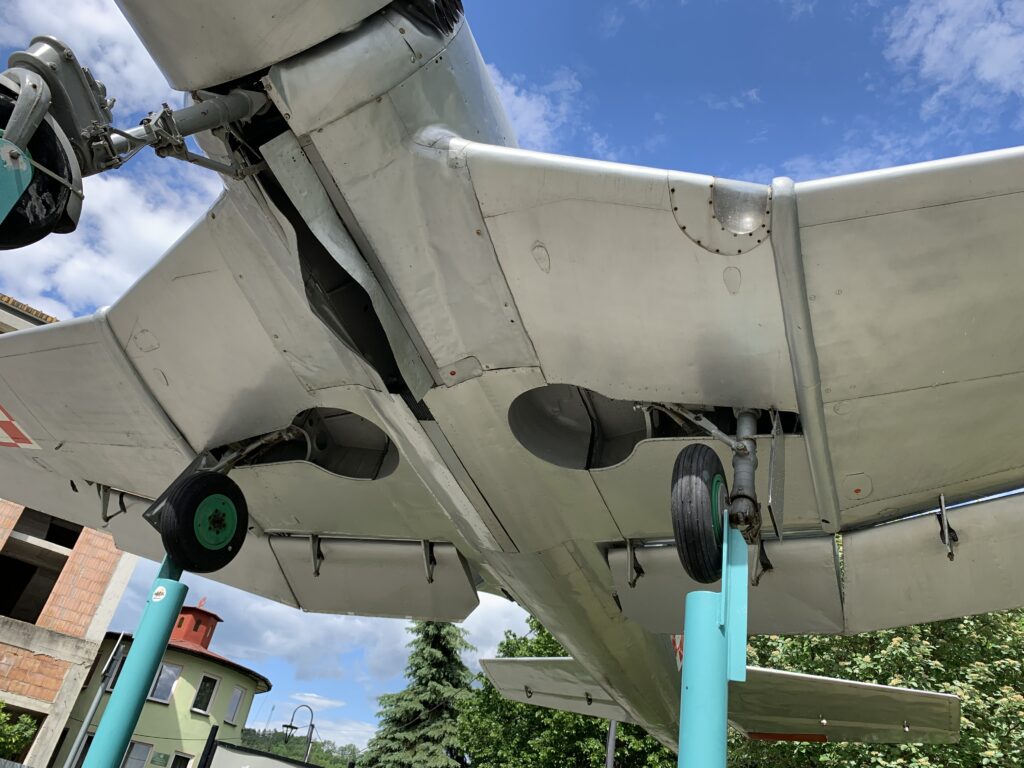
The TS-8 Bies Nb 0519 aircraft is on display in Pińczów. The aircraft is from the 5th production series. It ended its service with the 64th Training Regiment in Przasnysz. The aircraft was acquired in 2017 by Pińczów city councilors and donors. The aircraft was renovated and placed as a technical monument on the Pińczów Reservoir boulevard. On the other side of the reservoir is the Pińczów Airstrip, and a little further on flows the Nida River.
History of the TS-8 Bies design.
Several years after World War II, the concept of building a trainer aircraft in Poland, intended to train pilots from basic to advanced training, before transitioning to combat training aircraft, matured. The aircraft would replace several different types in use up to that time. The future aircraft was to feature the following features: a 250-400 hp (184-294 kW) piston engine; a three-leg landing gear with a retractable nose wheel; full radio equipment; and handling and flight characteristics similar to contemporary fighter aircraft. Such an aircraft would allow for more effective and cost-effective pilot training. The military had long been requesting such an aircraft. Potential deliveries from the West were practically impossible, and the Eastern partner did not possess such a plane. Therefore, the decision was made to build such an aircraft in Poland.
The first Bies project was developed at the Aviation Experimental Workshops in Łódź in the late 1940s. A team led by engineer Tadeusz Sołtyk then prepared a preliminary design for a transitional aircraft, the LWD Bies, with an inline, V-shaped engine of the Argus AS-10 C type, producing 240 hp (177 kW). However, the project was never implemented, as the LWD workshops were disbanded. At the same time, an order was issued to scrap the captured Germanic Argus engines.
The Bies aircraft concept was revived in 1951 by the CSS (Central Aircraft Study) design team in Warsaw. At that time, the CSS engine design team, led by engineer Witold Narkiewicz, designed the WN-2 radial engine, producing 280 hp. In developing the WN-2 engine, the designer based the design on the American Jacobs engine used in twin-engine Cessna Bocat aircraft. A prototype engine was manufactured at the CSS workshops in Okęcie. The aircraft design was never developed because…CSS was dissolved.
It was not until 1953 that, acting under new guidelines, the Institute of Aviation began developing a design for a modern, all-metal, semi-monocoque aircraft powered by a 320 hp (236 kW) WN-3 engine. The new engine was an evolutionary development of the WN-2 engine, which was intended for the previously mentioned CSS project. Modification of the WN-2 engine to the WN-3 took place between 1953 and 1954. After endurance and long-term testing, engine power was increased to 240 kW. Production began at WSK Kalisz, where 330 units were built.
The Institute of Aviation developed three preliminary aircraft designs, each with different design features. These included a short fuselage nacelle, a pusher propeller, and a tailplane mounted on two beams; a conventional configuration, but with a pusher propeller located in the tailplane; and a conventional configuration. After considering the proposed concepts, the conventional configuration was selected. It provided the most optimal training and operational conditions. The first two designs offered the possibility of installing a turbojet engine in the airframe in the future, but were more complex to manufacture and less aerodynamically advantageous.
The relatively large diameter of the engine meant that the designers initially significantly narrowed the fuselage immediately behind the engine. However, it turned out that such a cone created significantly greater aerodynamic drag than continuing the bulging fuselage and narrowing it only after the cockpit. The fuselage became spacious, making it easy to design a comfortable cabin. The fuel tanks were located in the lower fuselage, just behind the main landing gear bay. Since it was intended as a training aircraft, concerns arose that the young pilot would forget to extend the landing gear and land on his belly, crushing the tanks. Tadeusz Sołtyk therefore designed a longitudinal central wall at the bottom, with a skid-like structure to prevent damage to the tanks. The solution proved effective, and there were never any accidents caused by landings without the landing gear extended.
The wing was divided into a center wing and outer sections. The center wing and outer wings are connected by flanges made of angle iron and bolted together. The connected flanges are covered with a sheet metal cover. This connection initially caused problems for the designers, but these were overcome with additional reinforcement. During this time, the team consoled themselves with the fact that the wings of the B-17 Flying Fortress had been tested no fewer than 21 times. During the tests, it was also discovered that the outer center wing protruded significantly beyond a typical railway platform. When engineers Jerzy Zięborak and Ludwik Natkaniec got lost in mid-flight above the clouds and ran out of fuel, they made an emergency landing near Częstochowa. The outer wings were dismantled and the aircraft was loaded onto a railcar. However, the center wing protruded beyond the railcar. Traffic on the Częstochowa-Warsaw route had to be halted during the plane’s transport.
During the design, in addition to structural considerations, special attention was paid to adapting the structure for future production. The aircraft was divided into individual prefabricated segments, including equipment and installations, and these segments were then joined using riveting.
The preliminary design and mock-up of the aircraft were completed in the spring of 1954. In the case of the TS-8, a mock-up of the entire aircraft was not built. The tailplane and outer wing sections were omitted. Pictures of the instruments were pinned to the dashboards to allow for easy repositioning. A mock-up commission was established in mid-1954, and its work resulted in a positive opinion. Only the nose landing gear was ordered to be modified by changing the strut attachment above the shock absorber. The mock-up commission’s report was approved by the Air Force Commander on June 14, 1954.
Work on documentation development, static tests, and construction of the first prototype took two years. The Bies prototype was built at the Experimental Production Plant at the Institute of Aviation. Four prototypes were ordered. The first, designated P-0, was designed for static tests.
The aircraft proved heavier than the design. Designed for 1,095 kg, the final weight was 1,295 kg, an 18 percent increase. However, this proved to have no significant impact on the aircraft’s performance. The aircraft received the appropriate approval for test flights in early July 1955, and the aircraft was registered as a military aircraft and received the appropriate checkerboards.
As an aside, towards the end of the Bies design development, a preliminary design for the 4-seat IL Goniec business jet was developed, representing a development version with an extended fuselage and a cabin accommodating two seats side by side.
Flight Tests.
On July 23, 1955, the TS-8 aircraft with the serial number P-1 made its first flight from Okęcie Airport. The test pilot was engineer Andrzej Abłamowicz. The flight was performed without retracting the landing gear. The aircraft carried additional measurement equipment and had additional pitot tubes mounted on wingtip booms. It had additional air intakes on the upper surface of the engine cowling. After some time, the aircraft was registered with the IKCSP and assigned the registration SP-GLF.
In 1956, two more prototypes were completed: the P-2, registration SP-GLH (also with pitot tube booms), and the P-3, registration SP-GLG. The first of these first flew on March 13, 1956, and the second on August 18, 1956. Three flying prototypes significantly accelerated development. The prototypes were equipped with two-bladed wooden fixed propellers, type B1, then B2, and after two failures (the first at ITWL, the second at IL), the propeller was changed to type B3. The prototypes periodically flew with Hamilton Standard adjustable metal propellers, borrowed from the Cessna UC-78.
The P-2 and P-3 prototypes were equipped with under-wing bomb dispensers or attachment points (on the right side) for a 12.7 mm machine gun pod.
The first prototype passed; A full cycle of retractable landing gear tests, WN-3 engine tests, performance measurements, and longitudinal stability measurements were performed. 260 flights were completed in 115 hours. Initial flights revealed insufficient longitudinal stability with the center of gravity at its extreme. The only possible solution was to enlarge the horizontal tail. Its span was increased from 3.82 m to 4.22 m, increasing its area by 22 percent.
The second prototype was used to measure stability with the enlarged horizontal tail, and to test aerobatics, spins, stalls, and dives. It completed 140 flights in 80 hours.
The P-2 was sent for state trials. Further tests were conducted on the P-1 and P-3 at the Aviation Institute to improve the aircraft’s quality. Defects were identified during the tests and systematically corrected. Furthermore, the state commission recommended additional changes and improvements to the production aircraft to improve operating conditions.
The cockpit was carefully designed and complied with current regulations. A large canopy provides excellent visibility, particularly horizontally, over a 360-degree radius. In an emergency, the canopy (limousine) can be easily removed. The canopy’s construction is indestructible and will not crush in the event of an aircraft rollover.
During state trials, it was revealed that the aircraft demonstrated excellent flight characteristics. It is well-handled, performing all high-speed maneuvers correctly. It has excellent stability and controllability, facilitating blind flights. The aircraft performs well during taxiing, boasting a short takeoff and a short takeoff roll. The TS-8 Bies is undoubtedly a successful trainer aircraft, entirely of Polish design. The state commission concluded its work by issuing a type approval allowing the aircraft to be operated in military schools and aviation units as a basic trainer aircraft.
The aircraft proved to be very safe. The most significant failure was the loss (falling away) of an engine due to a cowling failure caused by broken propeller blades. However, pilot Ludwik Natkaniec managed to land safely. This occurred on September 13, 1957. While accelerating into a combat turn, the pilot felt vibrations. He abandoned the planned maneuver and closed the throttle, then shut down the engine a moment later. The vibrations continued. First, one section of the engine cowling fell off, then the other, and the engine began to tilt to the left. The engine vibrations were so severe that the controls fell off the dashboard. The gyroscopic aiming device fell, jamming the control stick, which the pilot had to remove. The engine fell off. Because the aircraft was at an altitude that didn’t allow for a safe parachute jump, the pilot had to land. The pilot extended the landing gear, which even improved the control of the severely damaged aircraft. The speed dropped to 90 km/h, but the aircraft continued to fly. It was lighter and the wind was blowing at around 50 km/h. This resulted in a low-speed touchdown. The fuselage was virtually undamaged, and the pilot was unharmed. The engine, propeller, cowlings, and their locks, which were the cause of the accident, were recovered.
Record-breaking flights of the TS-8 Bies.
The TS-8 Bies proved to be such a successful aircraft that, at the initiative of the Flight Research Institute of the Institute of Aviation, attempts were made to break international records. Today (2009), young people refuse to believe that Polish aircraft designs were capable of competing successfully with the West. In December 1956, the aircraft was prepared by removing unnecessary weight, such as the rear seat. A Hamilton Standard adjustable propeller, borrowed from a Cessna Bobcat, was mounted. The record-breaking flight took place on December 28, 1956, from Okęcie Airport. The aircraft was piloted by engineer Andrzej Abłamowicz. After 45 minutes of flight, the aircraft reached an altitude of 7,084 meters. This set the international altitude record in the C-1c class for piston-engine aircraft with a gross weight of 1,000–1,750 kg.
And that’s not all. Early the following year (1957), the P-1 SP-GLF prototype was adapted for speed and distance record-breaking purposes. Much of the aircraft’s instruments and equipment were removed. The pilot was left with only the variometer, airspeed indicator, altimeter, and engine control unit. The radio equipment, position lights, antenna, and other protruding components that created drag were also removed. All gaps, including those between the flaps and wings, were sealed with adhesive tape. These modifications improved the TS-8 Bies’s aerodynamics. An additional 700-liter fuel tank was installed in the second cabin.
On May 14, 1957, engineer Andrzej Abłamowicz took off from Okęcie at 3:30 AM. The aircraft flew the Warsaw-Kołbiel-Tłuszcz-Warsaw triangle route 25 times. It spent 12 hours and 49 minutes in the air, covering a distance of 2,884.5 km. This set a new international closed-circuit distance record for C-1d class aircraft weighing 1,750–3,000 kilograms. Simultaneously, national speed records were set for distances of 500, 1,000, 1,500, and 2,000 km.
Two weeks later, on May 30, 1957, IL test pilot Ludwik Natkaniec took off from Okęcie Airport at 3:12 a.m. to attempt to break the closed-circuit speed record. The flight was conducted along the Warsaw-Białystok-Lipce Reymontowskie near Skierniewice route, and then to Warsaw. The attempt was successful, setting an international speed record of 317 km/h (197 mph) over a closed circuit of 2,000 km (1,200 mi), for a C-1c class with a gross weight of 1,000-1,750 kg (2,200-3,750 lb). During this flight, national speed records for 500 and 1,000 km (317 mph) were also broken.
Setting these world records was a significant milestone, demonstrating a significant leap forward in quality compared to Soviet designs and confirming that the Polish aviation industry is capable of building world-class aircraft. At the same time, the WN-3 engine, designed by engineer Witold Narkiewicz, demonstrated its capabilities with a good airframe. It must be said that the TS-8 Bies was very fortunate to have such a high level of innovation, and to have it up and running on time.
Further flight tests.
There were other emergency situations, which nevertheless confirmed the aircraft’s high level of safety. On one occasion, a deployed main landing gear leg failed to lock into place. The pilot landed on two wheels and, at the last moment, touched the runway with his wing, slightly damaging the wing.
On March 31, 1957, a test flight was conducted by TS-8 Bies, number 18708. The crew consisted of pilot Antoni Szymański and mechanic Feliks Batorski. The flight took place near Góra Kalwaria. While executing a loop at an altitude of 1,700 meters, the aircraft malfunctioned, causing the engine to stall. Several attempts to restart it were unsuccessful. Fortunately, the propeller was level, increasing the chance of a safe belly landing. The pilot immediately decided to land with the landing gear closed, as there was no suitable landing strip in the area. The landing was successful, with only minor damage to the aircraft. The meadow where the landing took place was only 50 meters long. This first belly landing demonstrated the aircraft’s well-designed design.
On July 19, 1957, the WR-1A’s propeller blades sheared off. The aircraft made an emergency landing at Gocław Airport. The accident could not be reported in the press, so the report stated that the propeller had fallen from the aircraft’s trunk and that the finder was requested to return it. The propeller was found in the village of Las near Gocławek. This propeller helped determine the cause of the failure.
TS-8 Bies Advertisement
As early as 1956, advertising for the TS-8 Bies began. In 1956, the third P-3 prototype was exhibited at the 25th Poznań International Fair (MTP) in Poznań. On August 26, 1956, the aircraft was demonstrated in flight during a flight show at Okęcie Airport. In April 1957, the aircraft was exhibited at the Leipzig International Fair in East Germany.
In early May 1957, the P-2 was prepared for display at the 22nd International Astronautical Salon in Paris. The aircraft received its original paint scheme. An additional 80-liter detachable fuel tank was mounted under the left wing. An additional VHF sword antenna was placed on the fuselage’s dorsal surface, leaving the HF wire antenna pole on the windshield. On May 21, 1957, pilot-engineer Andrzej Abłamowicz and mechanic J. Słowik flew to Paris via Okęcie – Berlin – Brussels – Le Bourget. The TS-8 Bies aircraft was the first Polish aircraft exhibited in Paris since 1938. The aircraft generated considerable interest, participating in static displays and flights. The exhibition ran from May 24, 1957, to June 2, 1957. Of course, no contract was signed, but it was a highly successful presentation, as the eyes of the free world once again turned to Poland.
Also in 1957, the P-2 prototype was demonstrated at the 2nd Warsaw Air Show, held in the square next to the Arsenal from September 7 to 15, 1957.
In 1958, the TS-8 Bies aircraft was demonstrated in Hungary and Romania. Andrzej Abłamowicz was also the pilot.
The third production aircraft, version BI, number 18703, was exhibited from August 30, 1958, to September 8, 1958, at the 3rd Warsaw Air Show at Victory Square in Warsaw. Also in 1958, another production aircraft was presented at the Wrocław Air Show from September 13, 1958, to September 30, 1958, at the Pilczyce airport.
Production of the TS-8.
Serial production of the aircraft began in early 1957. The first series, known as a test or demonstration series, consisted of 10 aircraft, built at WSK Okęcie. The aircraft were designated TS-8 BI. They differed in details from the prototypes. They also had mounting points for two 50-kilogram bombs mounted under the wings. A 12.7 mm UBK machine gun with a 300-round ammunition supply was mounted in the center wing on the right side of the fuselage. A gyroscopic sight was installed in the cockpit. A camera gun was mounted in the left wing, in place of the searchlight. Navigation equipment included an RSI-6K on-board radio with a wire antenna and an RPKO-10M radio half-compass.
The first aircraft made its maiden flight on May 30, 1957, piloted by Mieczysław Miłosz. Antoni Szymański also participated in the flights, representing the Ministry of National Defense. Zdzisław Cypelt and Jan Okulicz. All 10 aircraft were delivered for trial operation to military schools and aviation units. Based on the experience gained, minor changes were made to improve operational performance.
In the winter of 1958, a single TS-8 aircraft flew to the CCCP in the Krasnoyarsk region for testing in harsh winter conditions. A quirk of the weather at the time was that the temperature in Krasnoyarsk was higher than in Warsaw.
Mass production of the TS-8 Bies began in 1958 at WSK Mielec. This was made possible by a reduction in production of Lim-class fighters. WN-3 engines were mass-produced at WSK Kalisz from 1955 to 1960. The TS-8 Bies aircraft in Mielec were designated TS-8 Bies BII, differing from the BI variant in the following details: the HF radios were changed to VHF, with a centerboard mast, the wire antenna post was removed, the radio half-compass was replaced with an automatic radio compass, and the fixed B3 propeller was replaced with a wooden adjustable WR-1 propeller, designed by engineer Wiktor Roth at IL. Due to the increased weight of the radio-navigation equipment, the machine gun and bomb nodes were eliminated. However, the gyroscopic sight and camera gun were retained, allowing for gunnery training. The rear canopy was slightly reprofiled, giving it a smaller bulge. The flaps that concealed the main wheels in the retracted position were omitted.
The first Mielec-built aircraft was numbered 1E-0101 and made its maiden flight on August 23, 1958, piloted by engineer Tadeusz Gołębiewski of the Mielec factory.
Towards the end of production, the TS-8 Bies BIII variant appeared, of which only a few were built. This variant added a radio altimeter, a marker for passing over a radio beacon, and a heated windshield. The TS-8 BIII, number 1020, was first shown at the Aviation Industry Exhibition, held at Victory Square in Warsaw from September 21, 1961, to September 30, 1961.
The last aircraft built in Mielec flew on February 7, 1961, and was numbered 1E-1021. A total of 229 aircraft were built in Mielec in 10 series. The test pilots were Tadeusz Gołębiewski, Zygmunt Korab, Zbigniew Dzwonowski, Leszek Stęch, Adam Gruba, and Michał Skowroński. Czesław Meder, Władysław Liwiński, and Zbigniew Ostrowski conducted acceptance flights on behalf of the Ministry of National Defense. The aircraft were delivered to military units by pilots from the factory. The TS-8 Bies is the first Polish post-war aircraft with a Polish engine produced in large numbers.
Operation of the TS-8.
TS-8 BII aircraft were gradually delivered to officer flight schools and units of the Air Force, the Home Air Defense Force, and the Navy. From 1958, the TS-8 was introduced at the Dęblin Air Force Training Center during the second year of training, where practical training from the basics of piloting was conducted. The aircraft was then used for a wide range of tasks: basic training, learning and mastering piloting, advanced pilot training, gunnery and bombing training, navigation flights, blind pilot training, and even liaison flights.
The TS-8 became known for its participation in numerous air shows and exhibitions. At the turn of the 1950s and 1960s, it became the primary training aircraft in the Polish Military Aviation. It gained recognition and popularity among both young and experienced pilots. The aircraft significantly contributed to raising the level of pilot training and improved aviation safety.
Unfortunately, the aircraft failed to conquer foreign markets outside of Poland. Only two examples were sold to the Indonesian Air Force. The aircraft were adapted for tropical operation and were stationed at Bandung Airport. Contrary to rumors, the aircraft performed very well there. The engines did not overheat.
The TS-8s were not used long in the Polish Military Aviation. This was due to the emergence of another excellent design by Tadeusz Soltky’s team, the TS-11 Iskra jet. TS-8s were gradually withdrawn from military units from the mid-1960s. Because they still had a long service life ahead of them, several dozen were transferred to regional aeroclubs. Most TS-8s were transferred to aviation training centers, where they were used for training during Level II Military Aviation Training camps (LPWII). Between 1966 and 1975, the military transferred 101 aircraft to the Polish Air Force. The first, number 1E05-10, received registration SP-CMA, and the last, 1E09-20, received registration SP-EFK. TS-8s were used at the Higher Officer Aviation School until 1976, and the last official flight of this type was performed in Dęblin on November 23, 1976. TS-8s continued to perform liaison flights for the Polish Army well into 1978.
Three prototypes remained at the Institute of Aviation and were used for various experiments. For example, tests were conducted with a propeller made of glass laminates. Spin tests were also conducted. The first prototype, P-1, registration SP-GLF, was donated to the Museum of Aviation and Astronautics in Kraków, now the Polish Aviation Museum. A TS-8 BII, no. 1E03-09, also arrived there. The P-2 and P-3 prototypes were decommissioned on September 27, 1972.
Currently (2026), there are still a few airworthy examples in Poland. They fly thanks to the enormous dedication of aviation enthusiasts. They prove that aviation is not for the brave, but for the stubborn. We can almost regularly admire TS-8 Bies aircraft at various air shows.
Unfortunately, on May 27, 2004, during the Picnic in Góraszka, a TS-8 Bies BI, registration number 1E-0401, SP-YBE, crashed, burying both pilots, Bartosz Cynek and Zbigniew Korneluk. Honor their memory!
TS-8 Bies Design
The TS-8 Bies is a trainer aircraft designed for basic pilot training, advanced pilot training, and advanced pilot training, incorporating elements of combat training. It is also used for training and blind flights. The TS-8 is a single-engine, two-seat, low-wing monoplane with retractable landing gear.
Its semi-monocoque construction is made of metal, primarily duralumin, riveted, and has recessed lugs. The aircraft was designed with a modular design. Individual components were manufactured together with their installations and equipment. This facilitated assembly, provided access from both sides, and significantly shortened the production cycle. The entire modules were then assembled into a single unit.
The wing is single-spar, three-section, with a double-trapezoidal planform. The NACA 23012 airfoil was used. The wing has a flattened “W” configuration. The wing is aerodynamically and geometrically twisted. It features a semi-monocoque structure with a working skin reinforced with stringers. The skin is made of 0.6-1.5 mm thick duralumin sheet with an anti-corrosion coating and clear anodized. The center wing is connected to the outer wings by flanges made of angle iron bolted together. The connected flanges are covered with a sheet metal strip cover. This connection initially caused problems for the designers, but these were overcome with additional reinforcement. The slotted ailerons are mass-balanced. A trim tab is placed on the right aileron. The ailerons are fabric-covered. The slotted flaps are pneumatically actuated. Flap deflection for takeoff 10 degrees and 30 degrees for landing.
Thanks to the relatively large engine diameter, the fuselage became quite spacious, allowing for the design of a comfortable cabin. The fuselage is semi-monocoque, with stringers and ribs. It is covered with duralumin sheet metal, protected against corrosion by clear anodizing. The cross-section is oval. The first cabin is intended for the student, the rear for the instructor. The cabin is a double-helmet. The windshield is extensively glazed and features an anti-rollover structure. A directional radio compass antenna is located behind the cabin, hidden under an organic glass window. Three fuel tanks, the fuel system, and compressed air cylinders are located under the cabin floor. The electrical wiring harnesses are routed in the sides, away from the fuel system, improving safety. Additionally, appropriate electrical plugs are used for quick disconnection to prevent fires.
The tailplane is cantilever with a trapezoidal outline. The stabilizers are covered with sheet metal, and the rudders are covered with fabric. The control surfaces are mass-balanced. Trim tabs are located on the rudder and the right half of the elevator.
The landing gear is a three-leg, retractable nose wheel. All wheels are single. Oil-air shock absorbers. The retraction mechanism is pneumatic. The nose leg is self-adjusting and equipped with a shimmy damper. A bumper is located at the rear of the fuselage to protect against impact with the ground.
The WN-3 engine is a seven-cylinder, radial, air-cooled engine with a takeoff power of 1 x 232 kW (1 x 315 hp) and a sustained power of 1 x 208 kW (1 x 283 hp), without a turbocharger or reduction gear. The engine cowling is a long-chord NACA-type annular cowling. The air intake is regulated by a louvered shutter. The engine is started by compressed air. The oil cooler is a flat spiral located under the engine cowling, in front of the cylinders. Fuel tanks with a total capacity of 240 liters are located in the fuselage. Exhaust pipes without manifold; three on the starboard side, four on the port side of the fuselage. Two-blade adjustable WR-1 propeller, 2.20 m in diameter.
Equipment: R-800 VHF radio, ARK-5 automatic radio compass, SPU-2 on-board telephone, RW-2 radio altimeter, MRP-48 radio beacon overpass indicator, DGMK-3 gyromagnetic compass.
Armament. The TS-8 Bies BI version features a 12.7 mm UBK machine gun mounted in the right wing on a special welded gun carriage. The ammunition box is located in the outer wing. Under the wings are two mounting points for two 50 kg bombs each. The aircraft is equipped with a camera gun in the left wing. A gyroscopic sight is mounted in the front cockpit. The TS-8 Bies BII/BIII versions lacked any armament, but some units were equipped with gun sights and camera guns.
The bomb mounts can be used for additional fuel tanks, provided the fuel system is modified.
TS-8 Bies Specifications:
Wingspan: 10.50 m. Length: 8.55 m. Height: 3.00 m. Wing area: 19.10 m². Empty weight: 1,292 kg. Gross weight: 1,672 kg. Payload 360 kg. Payload 100 kg. Fuel capacity 240 liters. Maximum speed 315 km/h. Permissible diving speed 450 km/h. Climb rate 6.3 m/s. Cruising speed 270 km/h. Landing speed 115 km/h. Maximum range with payload 620 km. Combat radius 300 km. Practical ceiling 5,900 m. Takeoff run 360 m. Landing distance 290 m. WN-3 engine with 1 x 232 kW (1 x 315 hp).
TS-8 Bies aircraft list.
242 TS-8 Bies aircraft were produced.
Prototypes:
TS-8 Bies P-0. For static testing.
TS-8/I, P-1 / SP-GLF. First flight July 23, 1955, pilot Andrzej Abłamowicz.
TS-8/II, P-2 / SP-GLH. First flight March 13, 1956.
TS-8/III, P-3 / SP-GLG. First flight August 18, 1956.
The information series consisted of 10 TS-8 Bies BI aircraft:
BI No. 18701. First flight May 30, 1957, test pilot M. Miłosz.
BI No. 18702.
BI No. 18703.
BI No. 18704.
BI No. 18705.
BI No. 18706.
BI No. 18707.
BI No. 18708. Made a forced landing on March 31, 1958. Pilot Antoni Szymański and mechanic Feliks Batorski.
BI No. 18709.
BI No. 18710.
Mass production began at WSK Mielec, where 229 aircraft were built in 10 production runs. The first was No. 1E-0101, the last was 1E-10-21.
BI II, No. 1E-101. First flight on August 23, 1958. Test pilot Tadeusz Gołębiewski.
BIII, No. 0E+00. First flight February 7, 1961. Last production aircraft.
Written by Karol Placha Hetman