
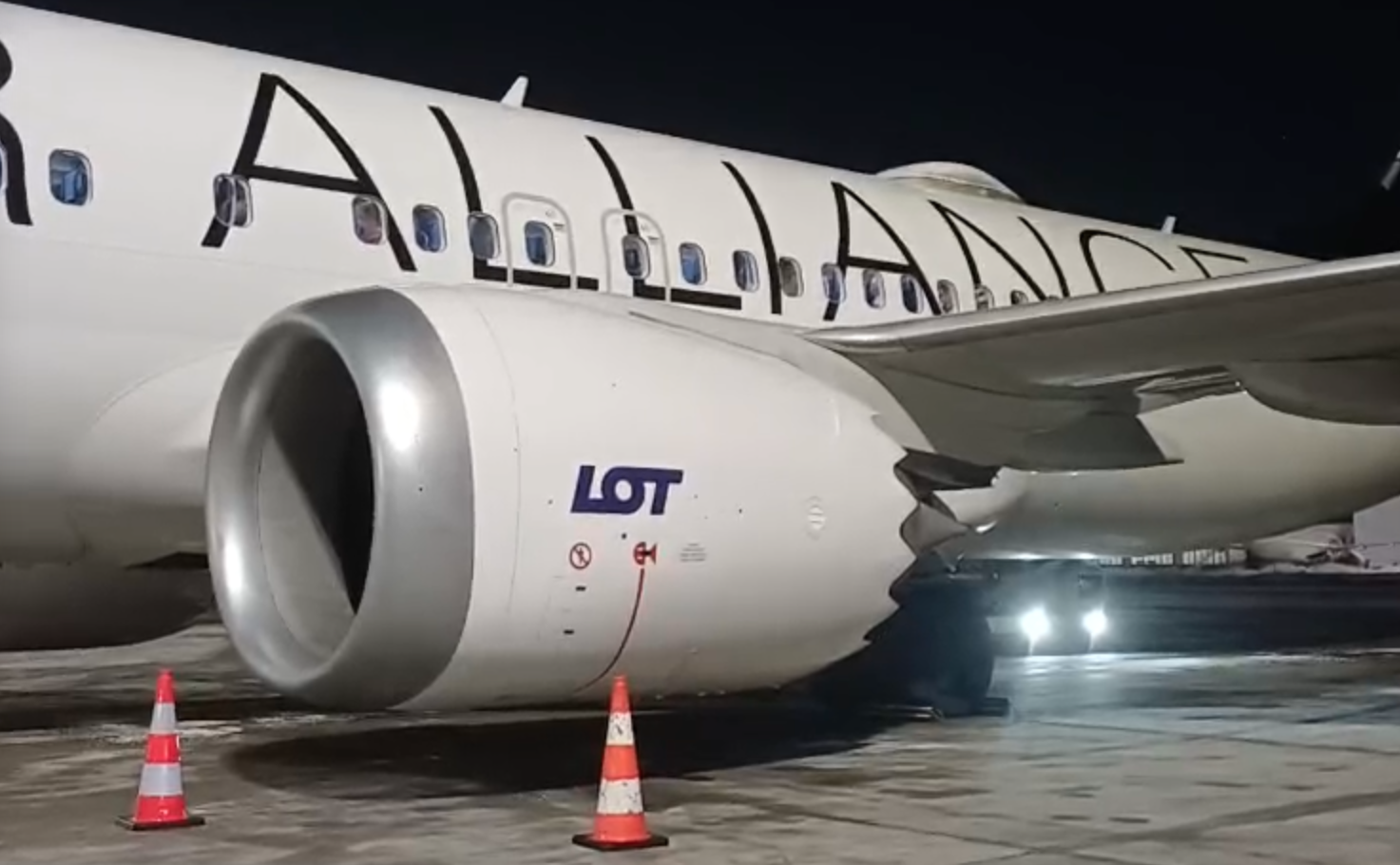
Kraków 2026-02-03
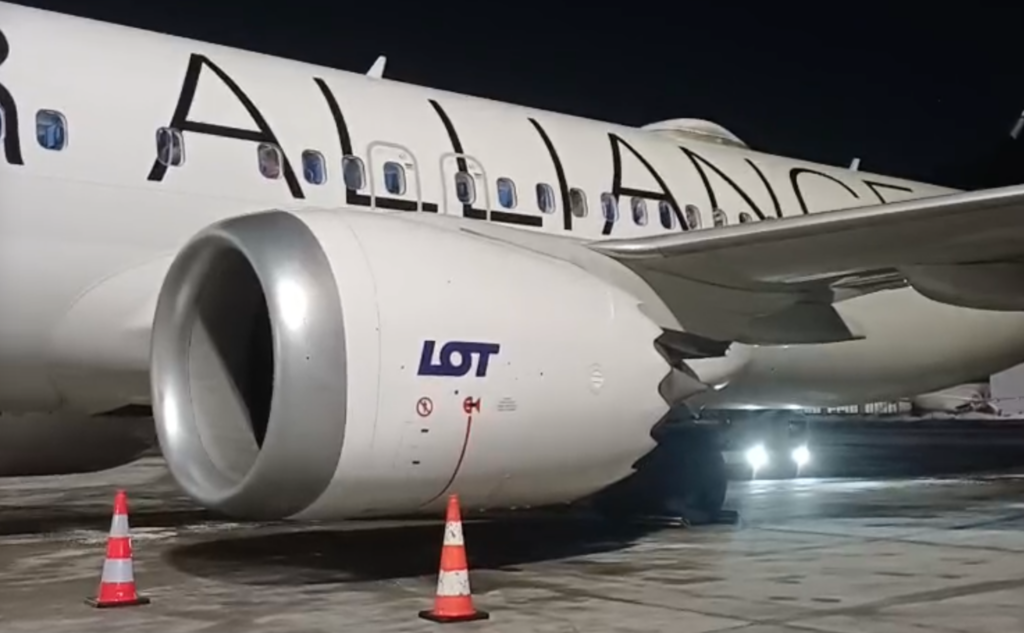
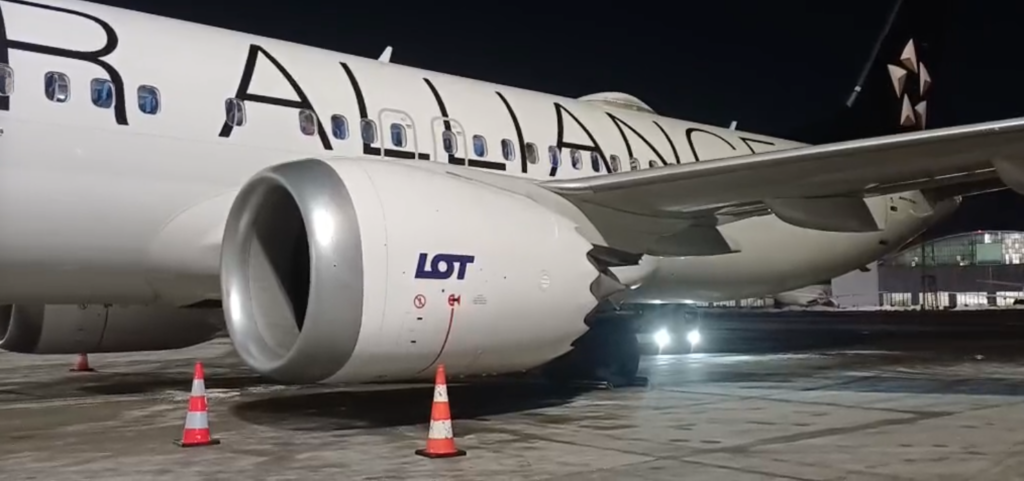
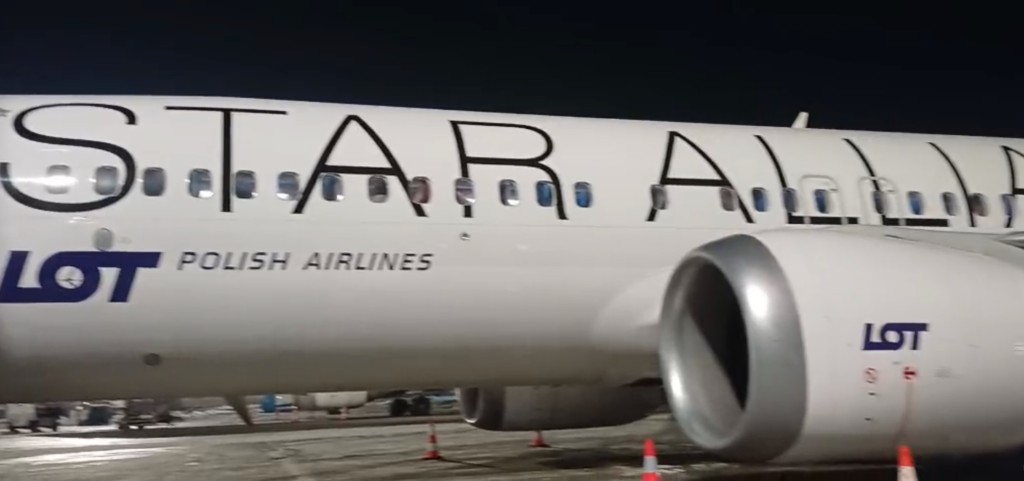
Boeing B-737 MAX 8 SP-LVF. 2026
The Boeing B-737 MAX 8 is one of the most popular passenger aircraft of the 21st century, although opponents consider it controversial due to two crashes. The Boeing B-737 MAX 8 is a narrow-body, medium-range passenger aircraft designed for short and medium-haul routes. The aircraft can carry 162-189 passengers and is widely used by airlines such as Ryanair, LOT Polish Airlines, and many American and Asian carriers. The MAX 8 is praised for its modern LEAP-1B engines, good performance, and low fuel consumption, making it very fuel-efficient.
The aircraft was involved in two disasters: Lion Air Flight 610, a Boeing 737 MAX 8, crashed into the Java Sea on October 29, 2018, killing 189 people. Ethiopian Airlines Flight 302, a Boeing 737 MAX 8, crashed on March 10, 2019. Both tragedies were linked to the MCAS system and certification deficiencies, leading to the global grounding of MAX 8 aircraft for many months. After flights resumed, incidents also occurred, such as the detachment of a door panel on an Alaska Airlines 737 MAX 9, which resulted in an NTSB investigation and criticism of the quality of the production process. Independent expert reports also point to challenges with the safety culture and consistency of procedures at Boeing. The aircraft were re-approved for flight following the issuance of certificates by the European Aviation Safety Agency (EASA) and the FAA. The agencies thoroughly analyzed the modified systems and deemed the 737 MAX 8 aircraft safe for operation after implementing corrections and additional training. The FAA recently restored Boeing’s ability to independently certify the MAX aircraft after strengthening oversight. From 2019 to the present (2026), 737 MAX aircraft have not been involved in any crashes. Some pilots describe the 737 MAX as a safe and well-designed aircraft, comparable to other modern aircraft, after appropriate crew training. Flight experiences have been positive. The aircraft flies smoothly and comfortably, without any technical issues. There are no noticeable safety differences compared to other aircraft. Currently (2026), no passenger remembers the crashes that occurred several years ago.
The Boeing B-737 MAX is the fourth, modernized version of the iconic Boeing B-737 airliner. The previous series consisted of Boeing B-737 NG (Next Generation) aircraft. The most popular of these was the Boeing B-737-800, whose production will end in 2020. What distinguishes the B-737 MAX 8 from the B.737 NG variants are the new winglets at the wingtips. They resemble bird wings, which can cover thousands of kilometers. The new winglets are lighter than the previous ones. The main change in the B-737 MAX 8, however, is the engines. These engines are from the same family that has been used for years, but they enable 15% lower fuel consumption compared to the B.737-800 NG model. They emit 40% less noise and have lower CO2 emissions. A visible change to the engines is the introduction of completely new fans, with wider composite blades, but fewer in number. The passenger cabin has been given a new look. Boeing offers several seat upholstery patterns. The cabin lighting is also modeled after that of the Boeing 787. Polish Boeing 737 MAX 8 aircraft feature a typical single-class layout and have 186 seats.
The MAX program was launched on August 30, 2011. The Boeing 737 MAX prototype first flew on January 29, 2016. FAI certification was granted on March 9, 2017. Deliveries to customers began in May 2017. The list price was $90-125 million. The aircraft is offered in four lengths, the 737 MAX 7, MAX 8, and MAX 9, replacing the 737-700, -800, and -900, and the further extended MAX 10. The aircraft typically offer between 138 and 230 seats. The aircraft have a range of 5,954 km to 7,084 km (3,215 NM to 3,825 NM). Since the program was announced, a staggering 3,954 aircraft have been ordered (2011-2017). In 2017, The Boeing Company announced that it would increase the production rate of the 737 model from 42 per month to 57 per month.
The main driver behind the program was the development of new turbofan engines: the CFM International LEAP and Pratt & Whitney PW1000G. These engines are more fuel-efficient, quieter, and produce lower exhaust emissions. Airbus made a similar decision when launching the Airbus A.320neo program. In 2011, Airbus already had 667 orders for new aircraft. In mid-2011, American Airlines announced an order for 360 aircraft, including 260 Airbus A.320s and possibly 100 Boeing 737 NG aircraft with CFM LEAP engines. The preferential treatment in the US market forced Boeing to develop a new model. On August 30, 2011, the Boeing Board of Directors approved the B.737 MAX program. The basic model was to be 4% more cost-effective than the new Airbus A.320neo. Boeing decided against developing a completely new airframe. Only specific areas were modified. Aerodynamic research took center stage. The tail cone was modified to achieve laminar flow. The tail was lengthened by 46 inches. The vertical tail profile was also modified. The forward fuselage section was lengthened by 30 inches. New winglets were also developed, which became the aircraft’s distinguishing feature. The modification costs were only 10-15% of what it would have cost to develop a new aircraft. Boeing CEO Jim McNerney also revealed that the new aircraft would likely be built in 2030 and would be made of composite materials. It will likely be larger.
The Boeing 737 MAX has a 14% improvement in fuel efficiency compared to the Boeing 737 NG. On August 13, 2015, the first Boeing 737 MAX fuselage was assembled at Spirit Aerosystems in Wichita, Kansas. The aircraft rolled out of the production hall in Renton on December 8, 2015. Four Boeing 737 MAX 8 aircraft, numbered 1A001, 1A002, 1A003, and 1A004, were used in the tests. The tests covered 2,000 flight hours.
CFM International LEAP engine.
The CFM56-7B engine has been modified. The fan has been changed. It now has 18 carbon fiber blades instead of 24 titanium blades. It has a higher external airflow ratio of 9:1 instead of 5:1. It emits 40% less noise. The fan has a diameter of 68 inches (173 cm), up from 66 inches (168 cm) previously. After minor modifications, the ground clearance of the engine nacelle has been maintained at 0.43 m (17 inches). It’s important to note that the Airbus A.320neo has a 2.00 m (78 inch) fan due to its higher landing gear legs. In 2013, Boeing opted for a larger 176 cm (69.4 inch) fan because designers extended the aircraft’s nose landing gear by 8 inches (20 cm). The engine is a twin-shaft design. The low-pressure shaft has a fan, three compression stages, and a three-stage turbine. The high-pressure shaft has 10 compressor stages and two turbine stages. The overall compression ratio is 41:1 compared to 28:1 previously. The engine has a higher exhaust gas temperature before the turbine than before. The engine has a 15% lower total system fuel consumption (TSFC), 20% lower carbon dioxide emissions, and 50% lower nitrogen oxide emissions.
MAX Equipment
Minor changes have been made to the crew cockpit. Rockwell Collins is supplying four 15.1-inch (380 mm) liquid crystal display (LCD) screens, used on the 787 Dreamliner. This has improved pilot awareness of the flight situation. Furthermore, Boeing did not want to make significant changes to ensure the aircraft’s controls were compatible with the Boeing 737 NG.
MAX Airplane Versions
B.737 MAX 7 – The smallest of the family. Equivalent to the B.737-700. Standard seating for 138 passengers. Maximum range 7,130 km (3,915 NM). About 60 units have been ordered to date.
B.737 MAX 8 – Basic version. Equivalent to the B.737-800. Range 6,510 km (3,515 NM). Cruise speed Mach 0.78.
B.737 MAX 200 – A variant of the B.737 MAX 8 with high-density seating for 200 passengers. Ryanair was originally scheduled to order these aircraft.
B.737 8ERX – A version combining the wings and landing gear of the MAX 9 with the fuselage of the MAX 8, with a seating capacity of 150 passengers. The target range is 7,400 km (4,000 NM), making transatlantic flights possible.
B.737 MAX 9 – This model replaces the B.737-900. Certification took place in spring 2018.
B.737 MAX 10 – Because the B.737 MAX 9 received few orders, Boeing proposed an aircraft with a larger wing and more powerful engines. In a single-class configuration, the aircraft is expected to seat 226-232 passengers. The planned range is 6,100 km (3,300 NM). However, the CFM LEAP-1B engines, with 140 kN of thrust, will not be available until 2020. Currently (2017), the program has been suspended.
The BBJ MAX 8 and BBJ MAX 9 are planned business jet versions, with ranges of 11,714 km (6,325 NM) and 13,000 km (7,000 NM), respectively.
It is worth noting that in 2025, the last B-737 MAX 8 aircraft will be removed from the production line, and only new aircraft from the production line will be delivered to operators. Boeing B.737 MAX 8 in Poland.
The first Boeing B.737 MAX 8 aircraft received registration SP-LVA, type code B38M, model 48AF00. Subsequent aircraft received registrations SP-LVB, SP-LVC, SP-LVD, SP-LVE, and SP-LVF. On November 6, 2017, in Renton, SP-LVA was painted in LOT Polish Airlines colors. The aircraft’s maiden flight took place on November 22, 2017. The first LOT Polish Airlines Boeing B.737 MAX 8 SP-LVA arrived in Poland on December 1, 2017, landing at Okęcie Airport. The flight was operated on the Renton-Iceland-Warsaw route. The first aircraft was reassigned to operate on the Warsaw-London route. The next aircraft was reassigned to Madrid. The aircraft primarily serve routes within Europe and to Kazakhstan and Israel. The new aircraft at LOT Polish Airlines have necessitated the hiring of additional pilots and cabin crew. In 2020, LOT Polish Airlines had twice as many pilots as in 2017. Currently (2017), LOT Polish Airlines has approximately 600 pilots. By 2025, this number could reach 1,500. In 2018, LOT Polish Airlines had 51 aircraft: 8 Boeing 787-8 Dreamliners, 9 Boeing 737 family aircraft, 6 Embraer 195s, 12 Embraer 175s, 6 Embraer 170s, and 10 Bombardier Q400s. In 2026, LOT Polish Airlines has 23 B-737 MAX 8 aircraft.
The second largest Polish charter airline is Enter Air. This carrier also acquired Boeing B-737 MAX 8 aircraft. In 2026, the company had 10 B-737 MAX 8 aircraft.
Boeing B-737 MAX 8 SP-LVF.
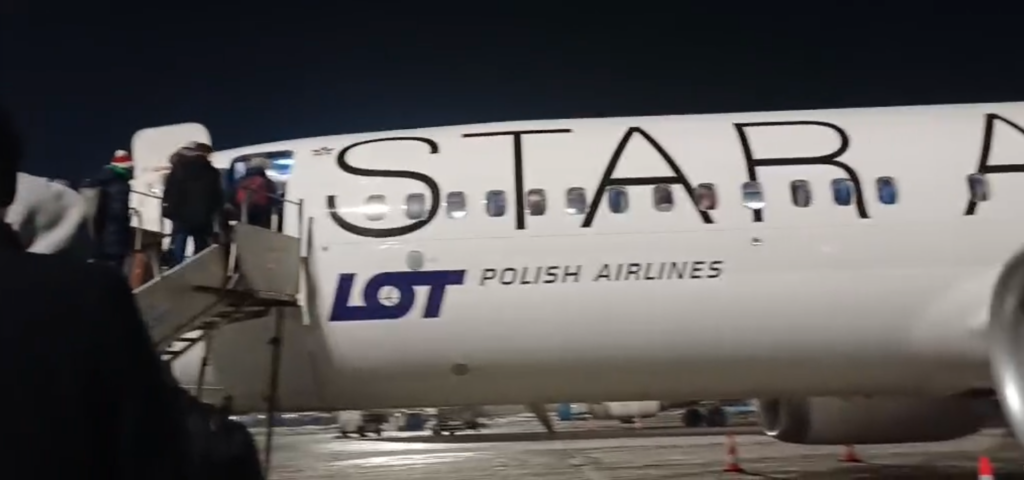
In November 2025, one of the MAX 8 aircraft operated by LOT Polish Airlines was painted in Star Alliance colors. Star Alliance is a global airline alliance, the largest of its kind in the world. Its member airlines cooperate to make flying easier for passengers, with less bureaucracy. Flying on a Star Alliance member offers, among other benefits: Shared connections – easier transfers between different airlines. One ticket for multiple airlines (for example, LOT → Lufthansa → United). Checked baggage is delivered to your destination, even with transfers. Loyalty status is global. For example, Miles & More (LOT/Lufthansa) status also grants privileges with other members. Access to airport lounges worldwide, but with higher status. Star Alliance was founded on May 14, 1997, by five carriers and is the oldest airline alliance. Examples of Star Alliance members include: LOT Polish Airlines (since 2003), United Airlines, Turkish Airlines, Air Canada, ANA, and Singapore Airlines. Currently, in 2026, there are 25 airlines. The alliance serves 190 countries, over 1,200 airports, and over 10,000 daily connections. For comparison: Star Alliance – the largest. SkyTeam – for example, Air France, KLM, and Delta. Oneworld – for example, British Airways and Qatar Airways. Star Alliance currently has 25 carriers. Headquarters: Singapore.
In November 2025, MAX 8 SP-LVF was painted in Star Alliance colors. The Boeing 737 MAX 8 in Star Alliance colors is currently (2025) the third aircraft in LOT Polish Airlines’ fleet, alongside the Embraer 170 and Embraer 175, which fly in the alliance’s colors.
SP-LVF LOT POLISH AIRLINES BOEING 737 MAX 8. Serial number 43320. Number 7276. Aircraft registrations during testing: N1786B, N1781B, N6067U. The aircraft is over 7 years old. The aircraft was built in December 2018. Configuration CY186. Delivered to Warsaw on a flight on December 12/13, 2018. The aircraft entered service on December 15, 2018. It was grounded on March 12, 2019. Stored in Warsaw until May 29, 2020. Then based at Lublin LUZ airport until March 5, 2021. The aircraft returned to service after modernization on March 26, 2021.
Written by Karol Placha Hetman