
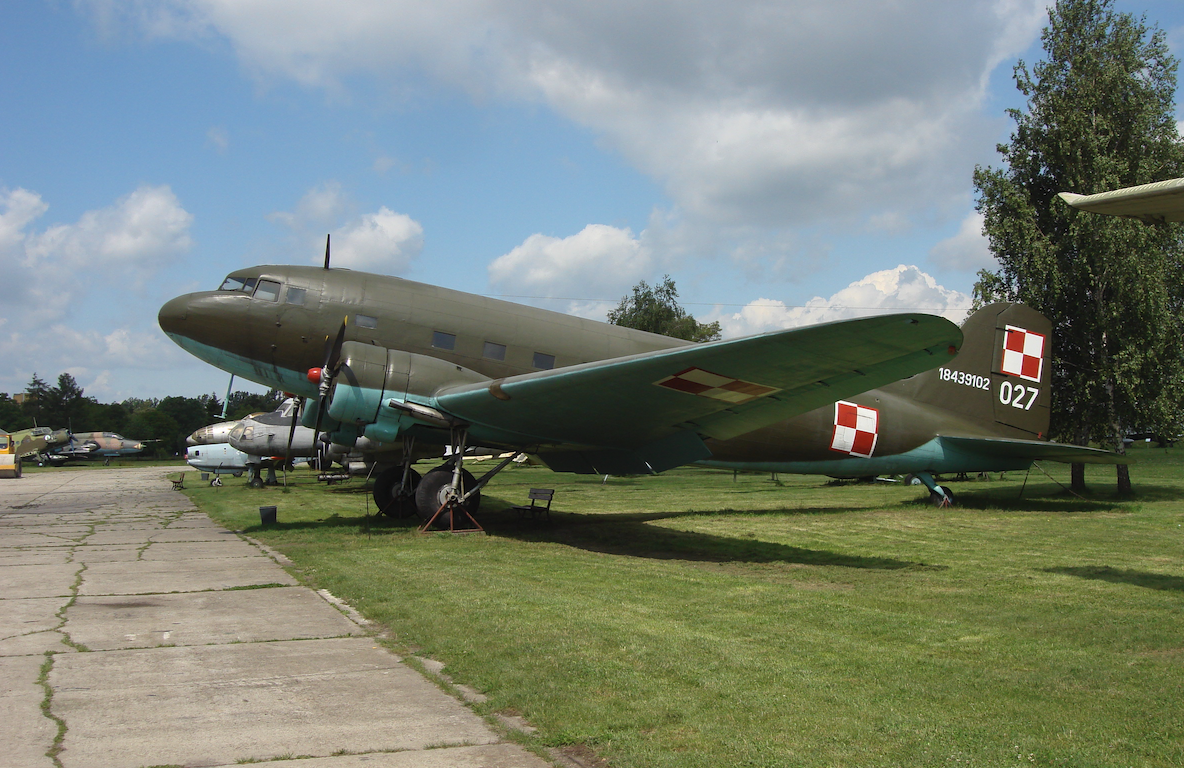
Kraków 2008-10-16
016b Section April 1945.
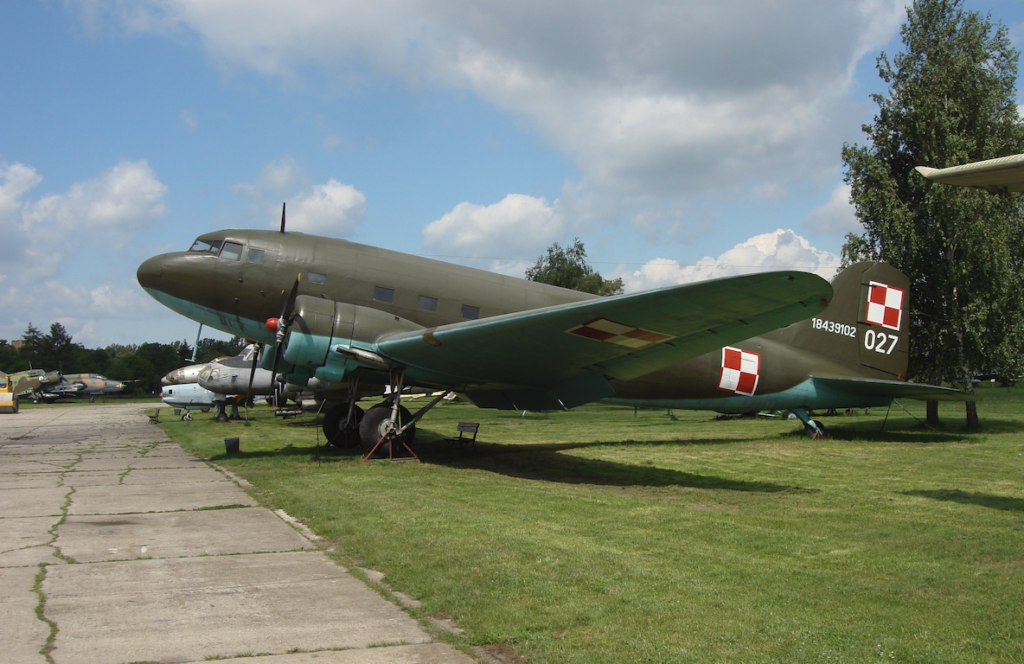
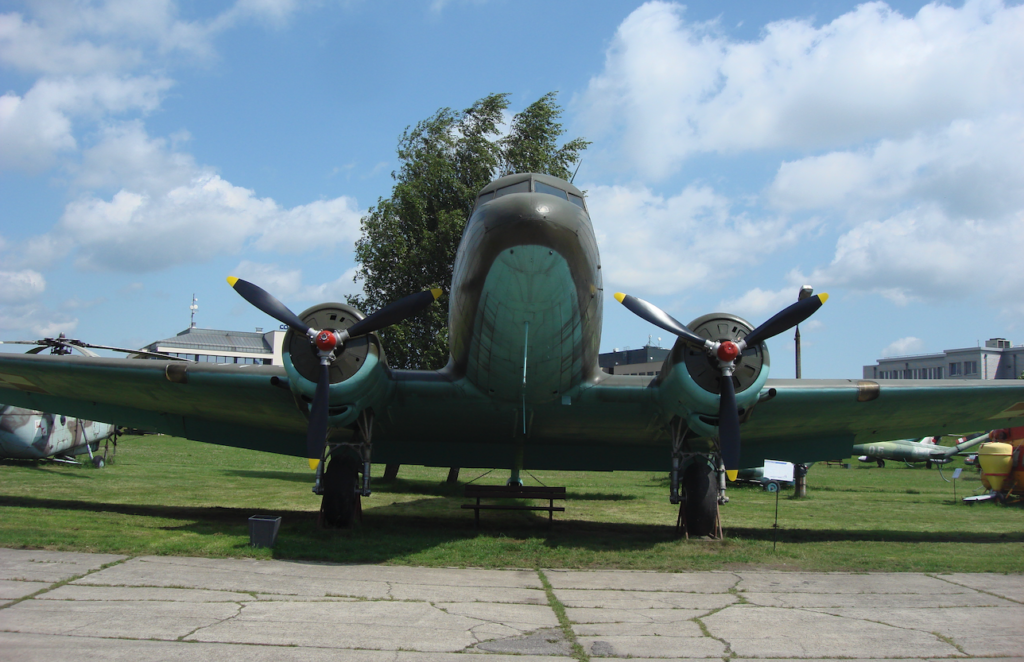
The Lisunow Li-2 is a twin-engine transport aircraft, developed in many variants and versions. The basic versions are passenger and cargo versions. It has a classic metal construction, a low-wing, cantilever monoplane.
Straight, three-piece wings attached to the lower fuselage. The center wing is permanently attached to the fuselage with the engine nacelles. The outer sections of the wings are removable. The structure is all-metal (duralumin), spar-type with working skin. The wing outline is straight in the center section and slightly tapered towards the tips, with rounded tips. The thick airfoil provided good lift at low speeds, enabling takeoffs and landings from short, unpaved runways. The wings were very robust, designed to carry heavy loads, even in military versions (transport, airborne, bomber). Fuel tanks were located in the wings. Wing mechanization included slotted flaps on the trailing edge (large, effective at low speeds), and ailerons on the outer wings.
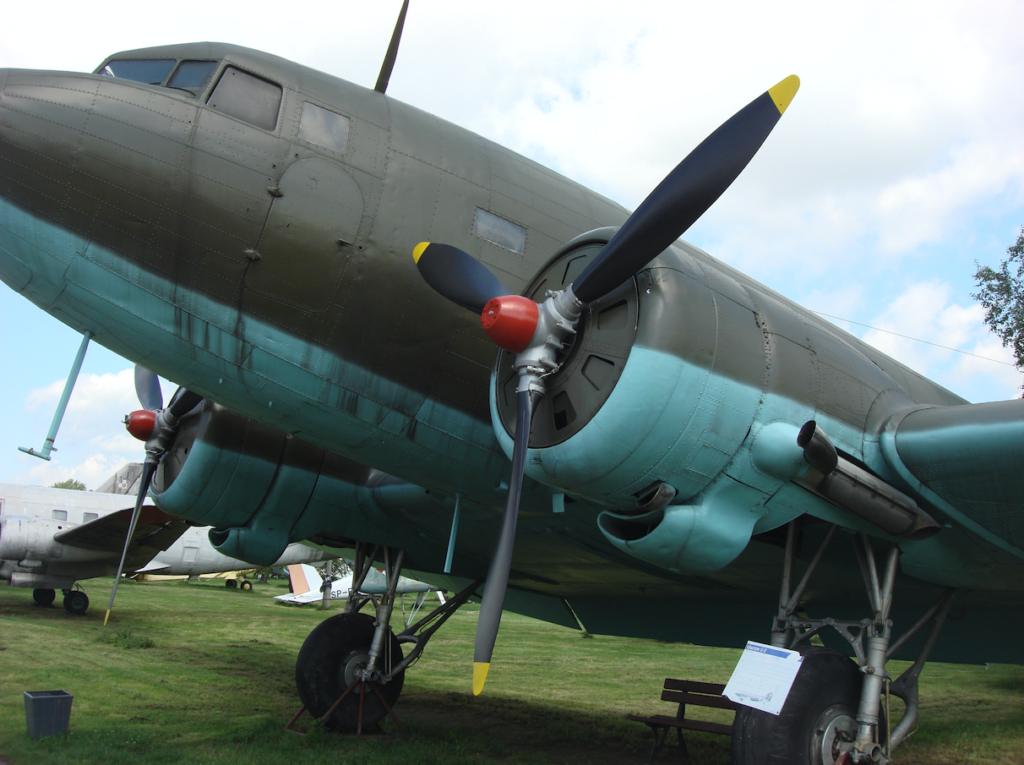
The fuselage of the Lisunov Li-2, similar to the American DC-3, featured a classic, all-metal semi-monocoque design, suitable for both passenger and cargo transport, as well as military applications. The non-pressurized fuselage has an oval cross-section with a slightly flattened bottom, which improved ground stability and facilitated the installation of a cargo floor. The semi-monocoque structure features ribs and stringers, and a duralumin skin to partially support the load. The fuselage is composed of three sections. The forward section houses the crew cabin; the pilot, co-pilot, and navigator/radio operator in military versions. The middle section is the cargo area or passenger cabin. The cargo hold accommodates a maximum of 24 seats, arranged 2-1. In the Li-2, the cargo hold door is located in the rear of the fuselage. In the transport version, a larger cargo door is located on the port side, with a smaller passenger door within it. In Douglas DC-3 versions, the cargo door is located on the starboard side. The side windows are rectangular. In military versions, some windows are blanked off or have a machine gun mount installed. In some versions, a gun turret is mounted on the fuselage’s dorsal surface. The rear of the fuselage supports a classic tail unit. The cargo hold floor in the transport version is reinforced and equipped with cargo tie-down points. In the transport and landing versions, folding metal benches are placed along the sides. These versions usually have doors on the starboard and port sides. Two lines are suspended from the ceiling for attaching parachutes. A toilet is located at the rear of the fuselage. Some aircraft are equipped with small emergency exit doors from the cockpit. Most aircraft lack soundproofing or insulation on the walls, much less wall panels. The interior reveals ribs, stringers, and sheet metal from the outer skin. Curtains are hung over the windows, not for aesthetic appeal, but to maintain secrecy.
The passenger aircraft were equipped with individual seats in a 2-by-1 configuration. The seats had no headrests, but did have armrests. There were 21 or 24 seats in total. The walls were lined with light-colored plastic carpeting. Thermal and acoustic insulation foam was placed between the outer sheet metal and the panels. The ceiling housed lamps and passenger information system speakers. Sunshades were hung in the windows. Above the windows were string-mesh shelves for passengers’ small luggage.
The tailplane is classic, with rudders and stabilizers separated. The stabilizers are fabric-covered.
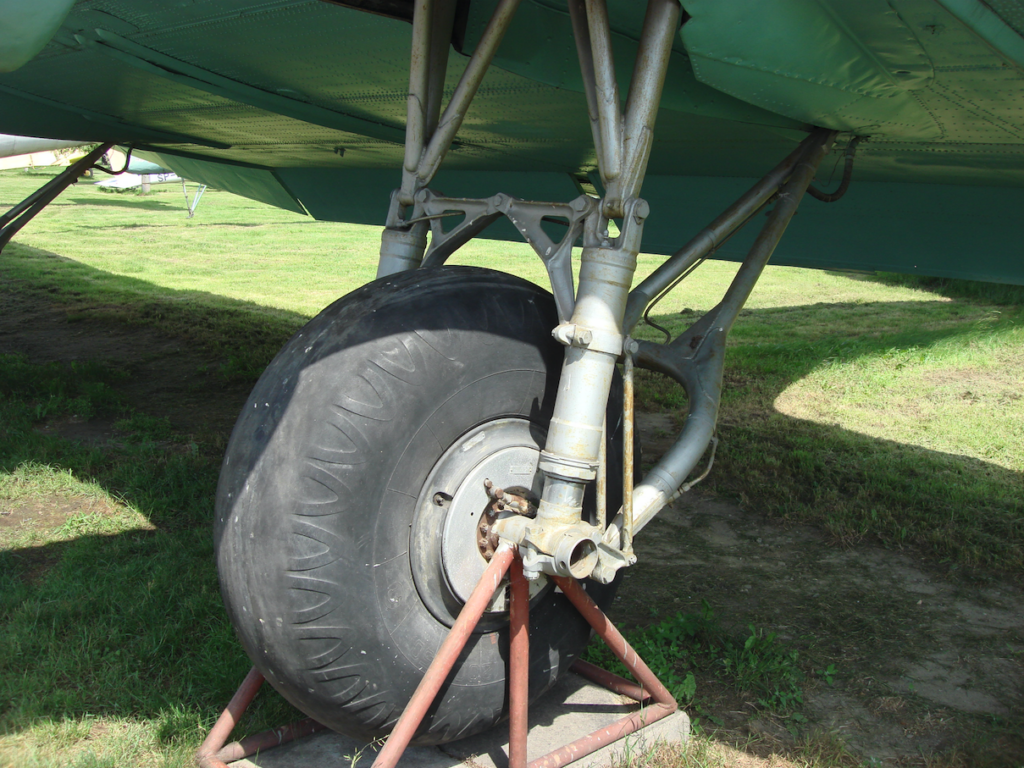
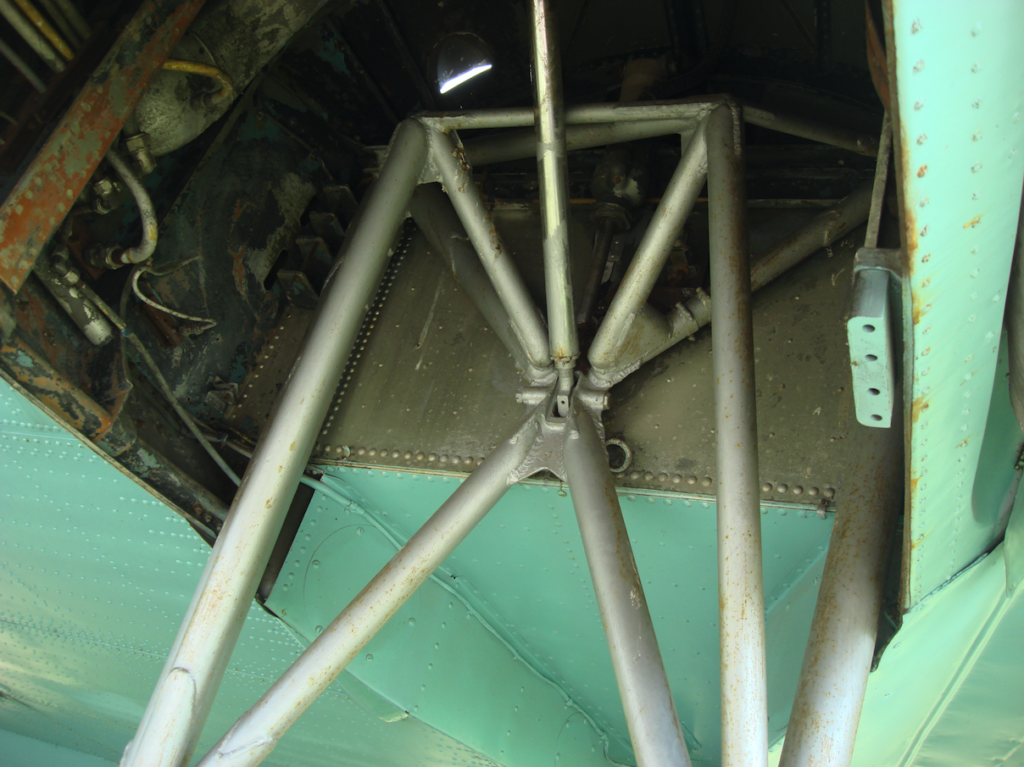
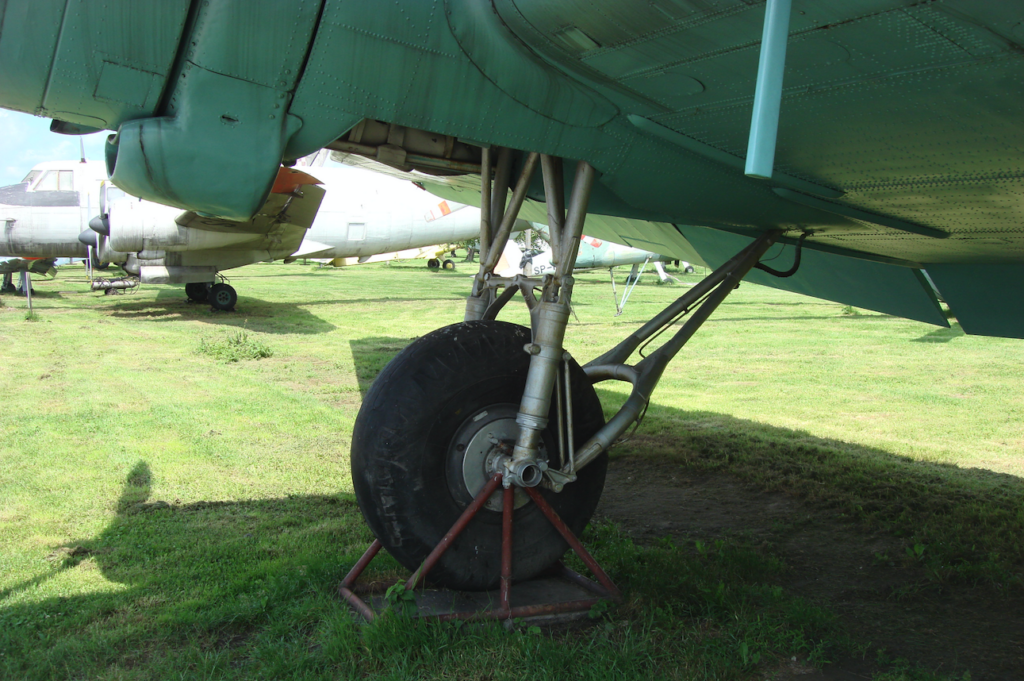
The landing gear has a fixed tailwheel. The main landing gear has single wheels on a twin leg. The landing gear retracts into compartments in the engine nacelles, and the wheels partially protrude from the outline.
Equipment.
The cockpit is equipped with dual controls for two pilots. The third seat is occupied by the navigator. The view from the cockpit is good. The windshields are equipped with wipers and washers using rubbing alcohol. The instrument panel was painted green, and the analog instruments, in the form of clocks, have black dials and white needles and lettering. Between the pilots’ seats is a panel for engine controls and other controls, including the elevator trim. The pilots’ seats have bucket seats for seat-type parachutes. The cockpit walls are lined with upholstered soundproofing and thermal insulation, painted blue. A partition with a door separates the cockpit from the cargo hold. Standard cabin equipment includes a first aid kit, fire extinguishers, a hatchet, and a shovel.
The aircraft’s flight equipment was basic. It included an airspeed indicator, altimeter, variometer, magnetic compass and gyrocompass, artificial horizon, turn indicator, and engine operating indicators (RPM, oil pressure, temperature, fuel). A radio station for communication with the ground and other aircraft. Autopilot in some versions. Cockpit heating and ventilation. Oxygen system for the crew.
Engine.
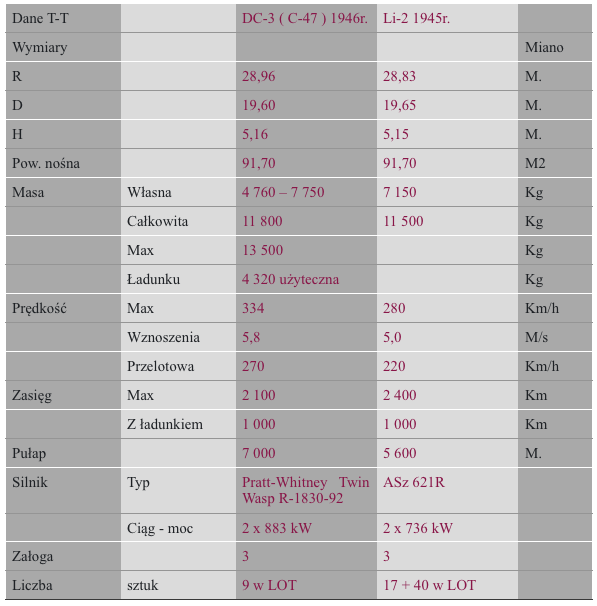
The DC-3 (C-47) was powered by 14-cylinder, twin-radial, air-cooled Pratt-Whitney Twin Wasp R-1830-92 piston engines with a takeoff power of 2 x 883 kW (2 x 1,200 hp). The power of these engines ensured a virtually uninterrupted takeoff in the event of engine failure. The DC-3 aircraft used Hamilton-Standard propellers, 3.5 meters in diameter.
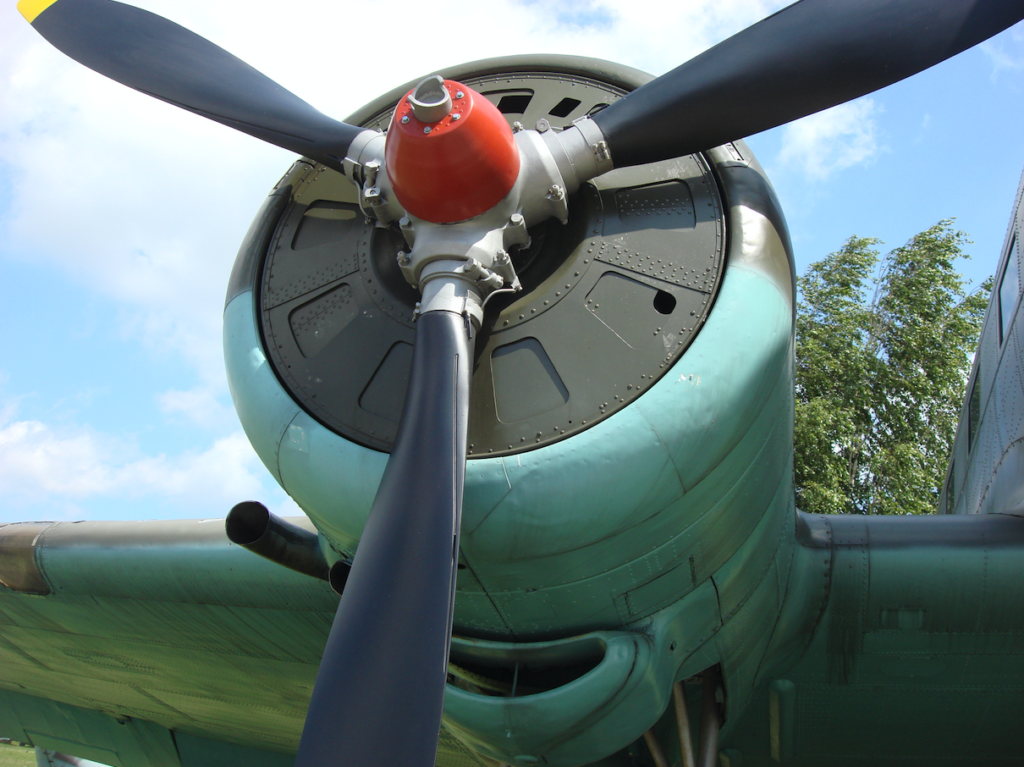
The Li-2, on the other hand, was equipped with smaller engines, significantly compromising safety. The engines used were license-built Wright Cyclone R-1820 air-cooled, 9-cylinder single-star engines with a power of 2 x 736 kW (2 x 1,000 hp), designated in the CCCP initially M-1820 and later M-62 / ASz-621 R. The Li-2 propellers were metal, 3-blade, type AW-7N-161 with a diameter of 3.5 m.
Written by Karol Placha Hetman