
Blizna 2026-05-13
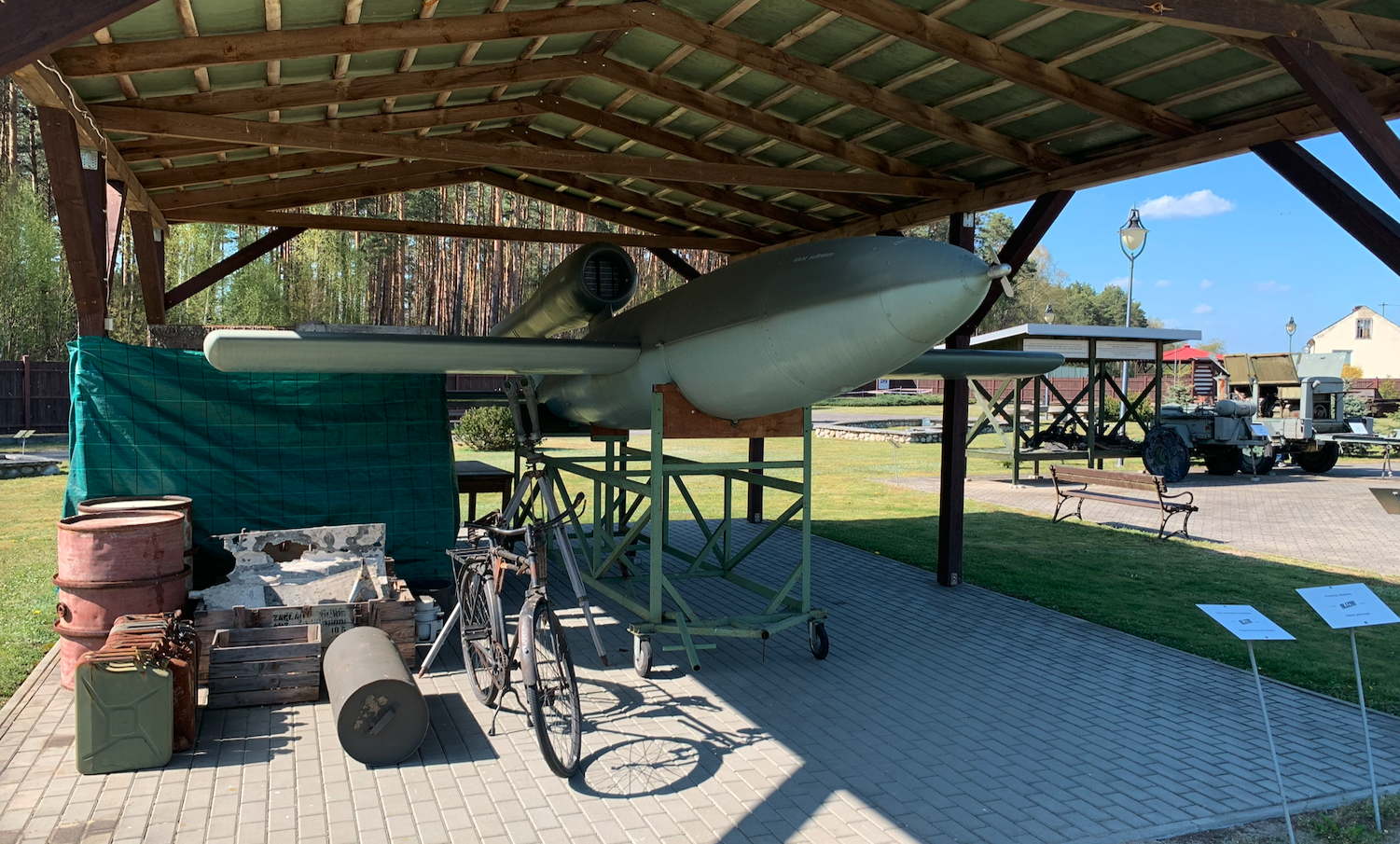
V-1 missile.
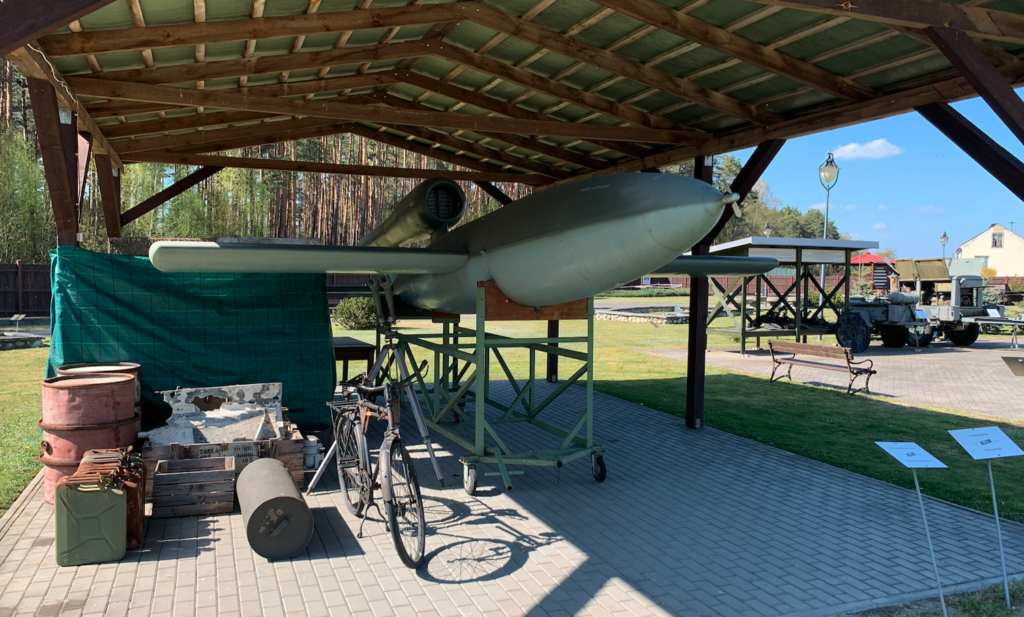
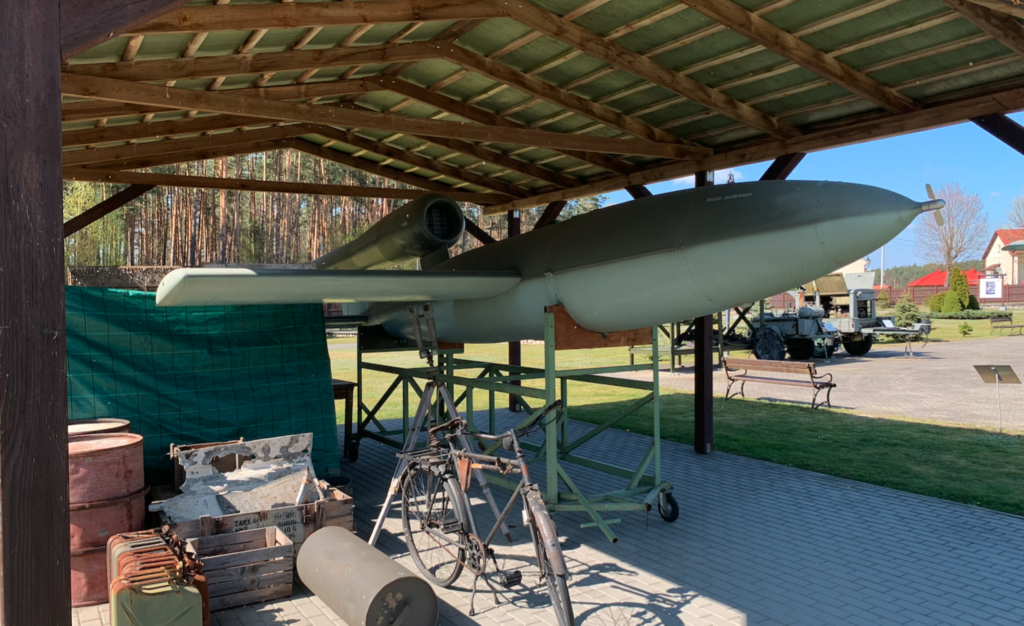
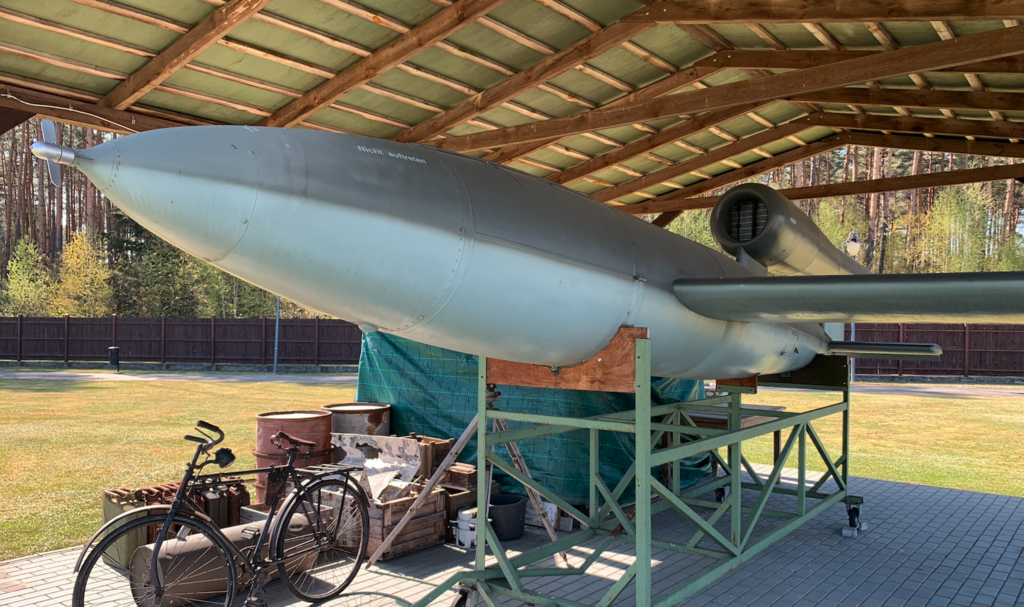
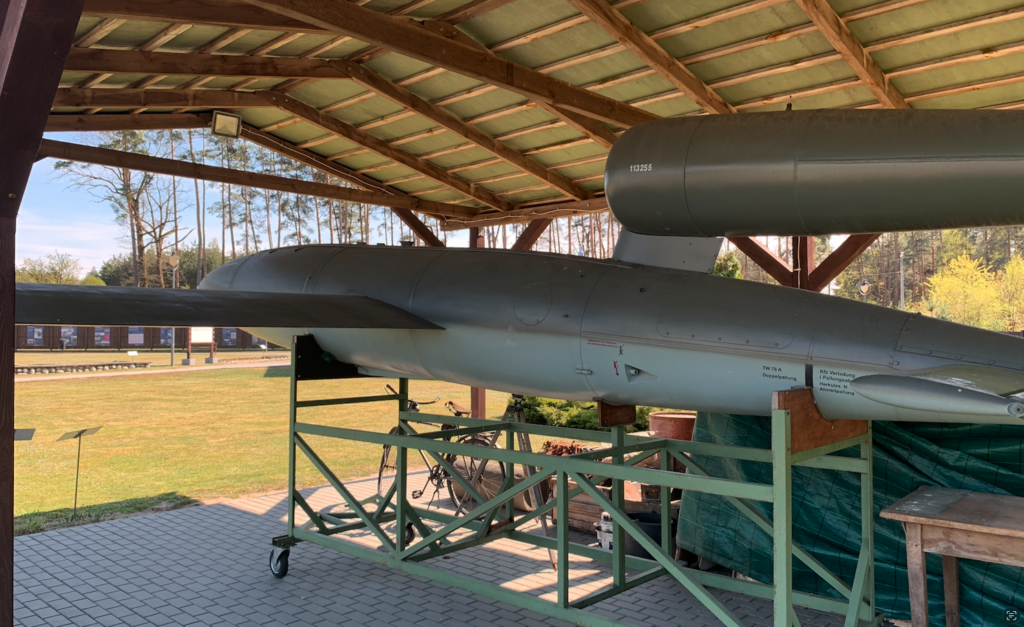
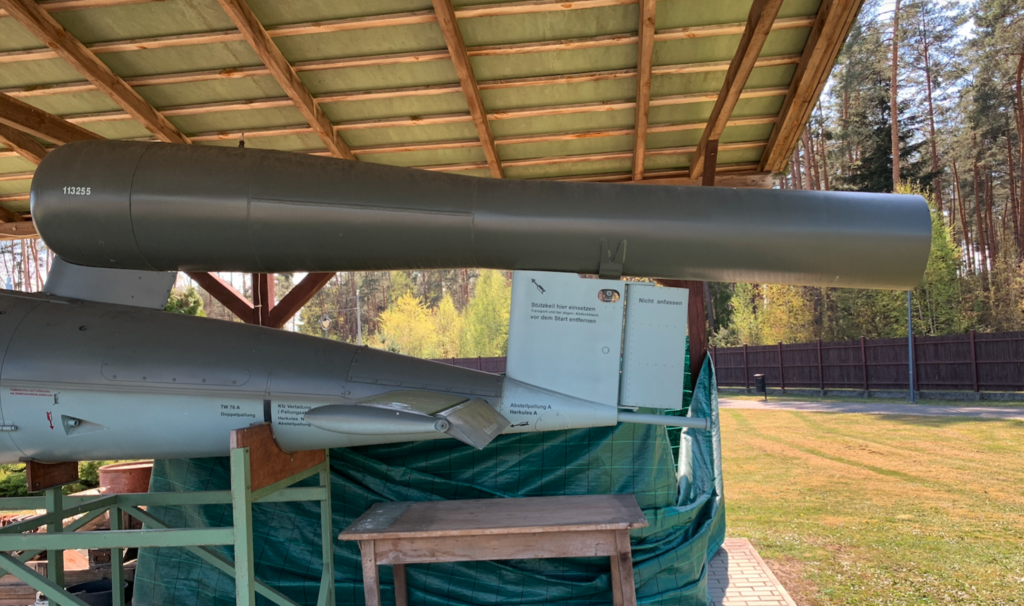
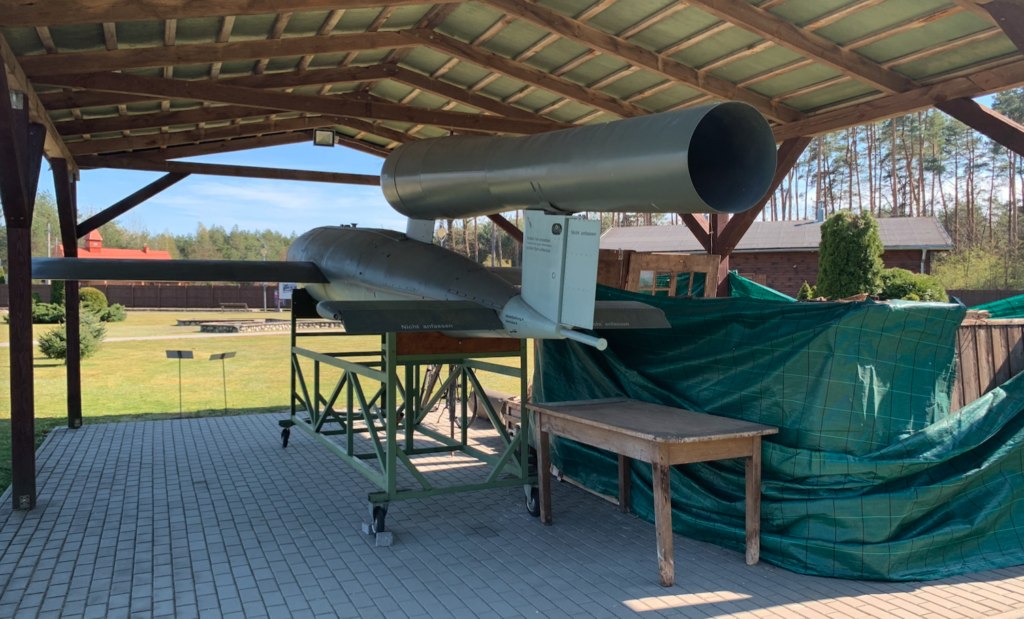
The V-1 is a flying rocket missile developed and used by the Germans during World War II. A model of this missile is located in the Blizna Historical Park named after the Home Army Intelligence. Blizna Historical Park is a museum and open-air historical museum located in the village of Blizna in the Podkarpacie region, primarily dedicated to the history of the German V-1 and V-2 rockets from World War II. The park is located in the Podkarpackie Voivodeship, northeast of Dębica, 25 km away. During the German occupation, an SS missile range was established here. V-1 flying bombs and V-2 rockets were tested here. The site is associated with the courageous actions of the Home Army. Home Army soldiers captured rocket fragments and handed them over to the Allies. They also organized Operation Most III, during which fragments of the V-2 rocket were flown to Great Britain. This was a huge intelligence success for the Home Army (AK). Blizna is a place of historical remembrance: the determination and arrogance with which the Germans sought to eliminate other European nations. This remains unchanged.
V-1 is an abbreviation of the Germanic Vergeltungswaffe-1, meaning retaliatory weapon No. 1. What kind of retaliatory weapon was this, since it was the Germans, along with their Muscovite brethren, who invaded the Poland and started World War II? The V-1 missile’s actual company designation was Fieseler Fi-103. It was an automatically controlled, unmanned jet-powered aircraft, also known as a flying bomb. Nowadays, the missile is also referred to as a cruise missile. The missile’s dimensions were: length 7.90–8.33 m, wingspan 5.40 m, projectile diameter 0.84 m. Total weight was 2,180–2,200 kg, including 830 kg of explosives and over 600 kg of liquid fuel. The missile had a maximum range of 300 km. Maximum cruising speed was 650 km/h. Flight ceiling up to 3,000 m.
The V-1 missile’s weakest characteristic was its speed of 650 km/h, which allowed it to be caught by fast fighter planes. Its flight altitude of up to 3,000 meters was also within the range of anti-aircraft artillery. As a result, V-1 missiles were destroyed by both fighter planes and anti-aircraft artillery. The missile’s accuracy was also poor. The latest versions of the missile had a dispersion of +/- 8 km.
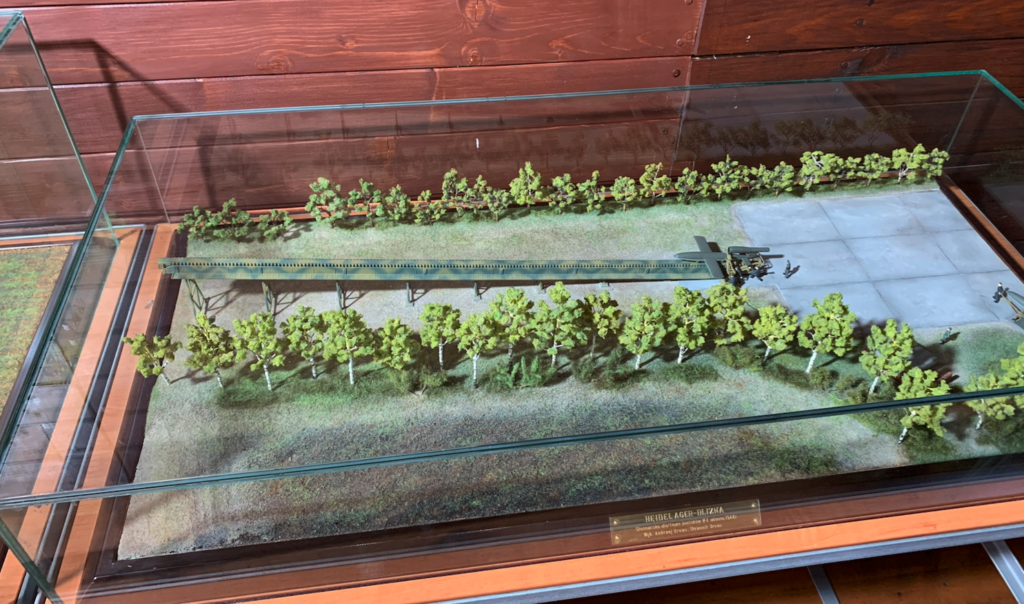
The V-1 missile was launched from a ramp 48 to 55 meters long, set at a slight upward angle. The launch was assisted by a steam catapult. The catapult pressure was 120 atmospheres. In two seconds, the missile reached a speed of 350 km/h. Already on the ramp, the main engine, a pulsejet, ignited, which powered the missile throughout the flight. The flight lasted approximately 35 minutes. The main engine was of a very simple design and was made of materials that ensured its single use.
In April 1944, Flak Regiment 155 arrived at Blizna (Blizna training ground) and conducted V-1 missile launch tests. Two launch pads, along with support facilities, were already prepared. Both ramps were oriented in the same direction. Home Army intelligence determined that the Germans had used only one of them, and it showed signs of wear. It was also determined that approximately 40% of the V-1 missiles fired from Blizna did not reach their target. The missile was used on the front lines from 1944 to 1945.
The missile had a main engine, the Argus As014 pulse jet. This provided a maximum speed of 645 km/h. At an altitude of 760 m, the speed was 576 km/h. The missile’s actual range was 257-286 km. The missile was controlled by an electronic device (tube-based) that was programmed before launch. A turbine was located in the missile’s nose, which kept track of kilometers traveled. The missile had a conventional warhead. The explosive was called “Amatol 40”; 50% dinitroanisole or dinitrobenzole, 35% ammonium nitrate, and 15% hexogen. The warhead weighed 850 kg. Inside the missile were a compass, a bottom fuse, a detonator, a warhead, a liquid fuel tank, compressed air cylinders for the control system, a mileage counter, an engine fuel regulator, and a gyroscopic autopilot.
Following a major Allied air raid on the Peenemünde missile facility on the night of August 17-18, 1943, the Germans dispersed production of individual V-1 missile components throughout German territory and occupied countries. The “Riese” complex, located in the Sudetenland, was likely intended to be the production site for these missiles as well. The first V-1 missile tests were conducted at the Peenemünde training ground on October 28, 1942. The aforementioned Allied air raid significantly delayed development of the missile. The first V-1 missile bombardment took place on the night of June 13-14, 1944. Of the 10 missiles, only 4 reached the British Isles. The missiles’ flight from the French coast to London took 20-25 minutes. In total, 6,046 V-1 missiles were fired by the end of 1944. However, 1,681 V-1 missiles crashed shortly after takeoff. V-1 missiles were also fired from aircraft. It is estimated that Germans produced around 30,000 V-1 missiles.
Written by Karol Placha Hetman