
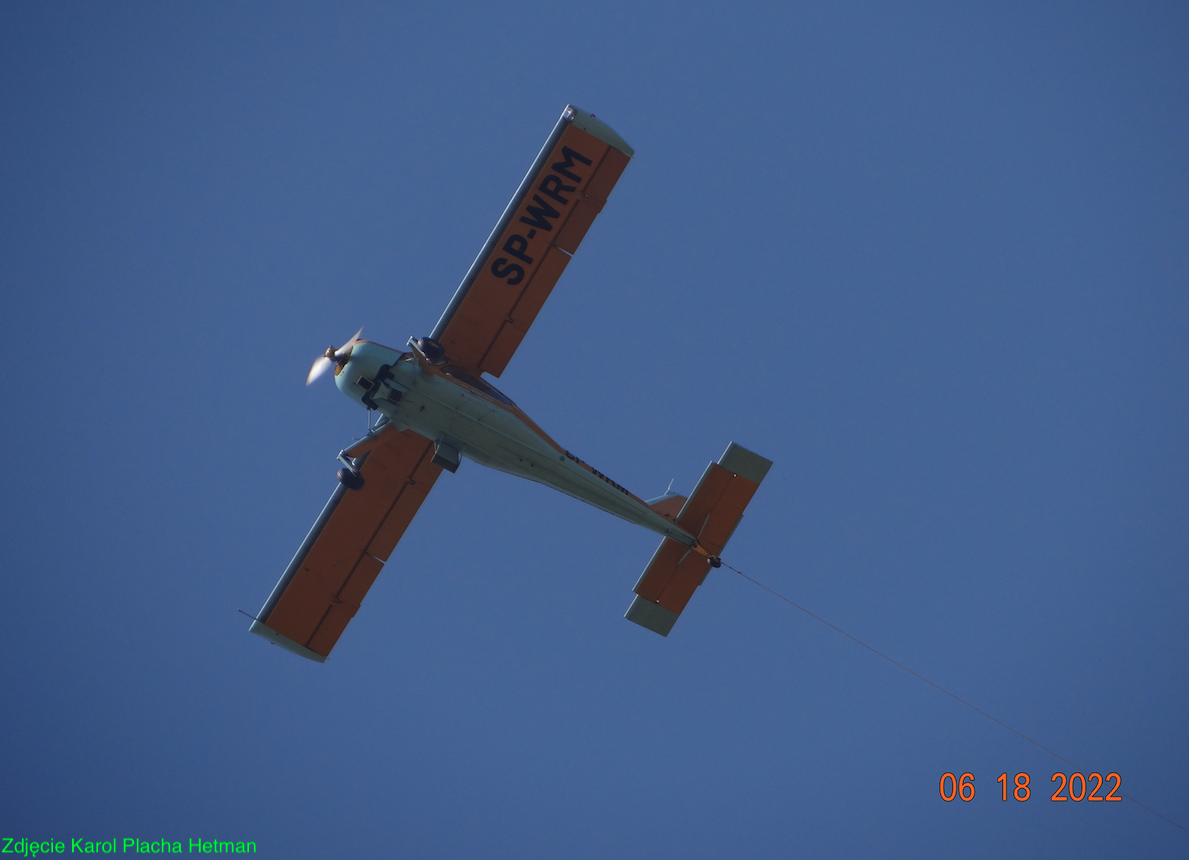
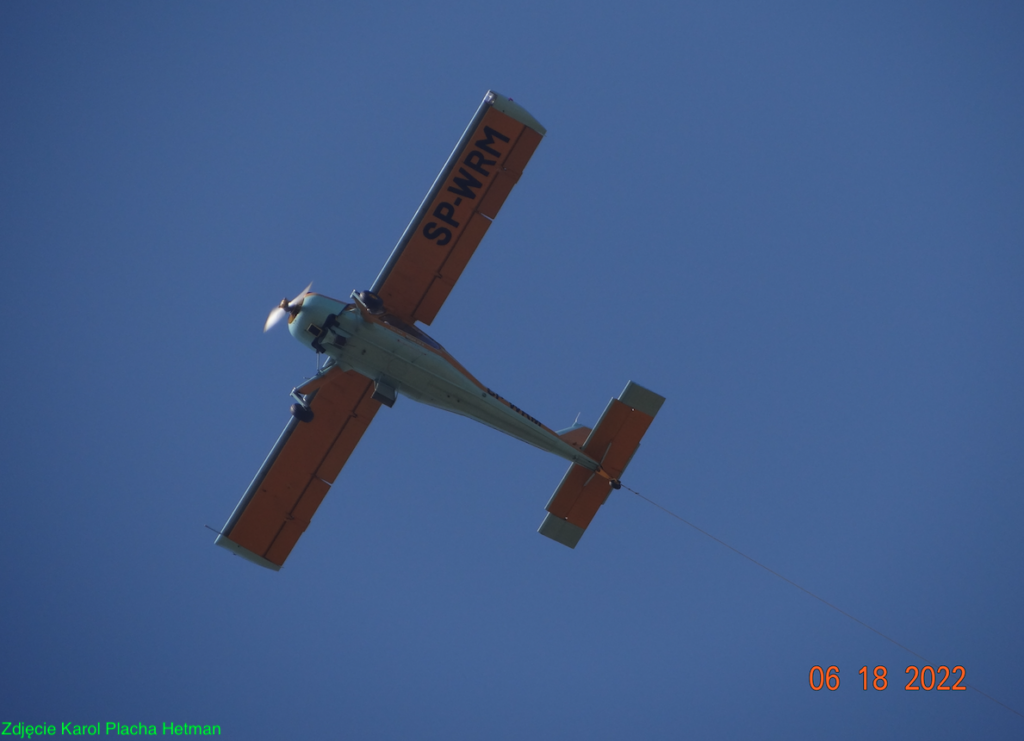
Pińczów 2023-02-14
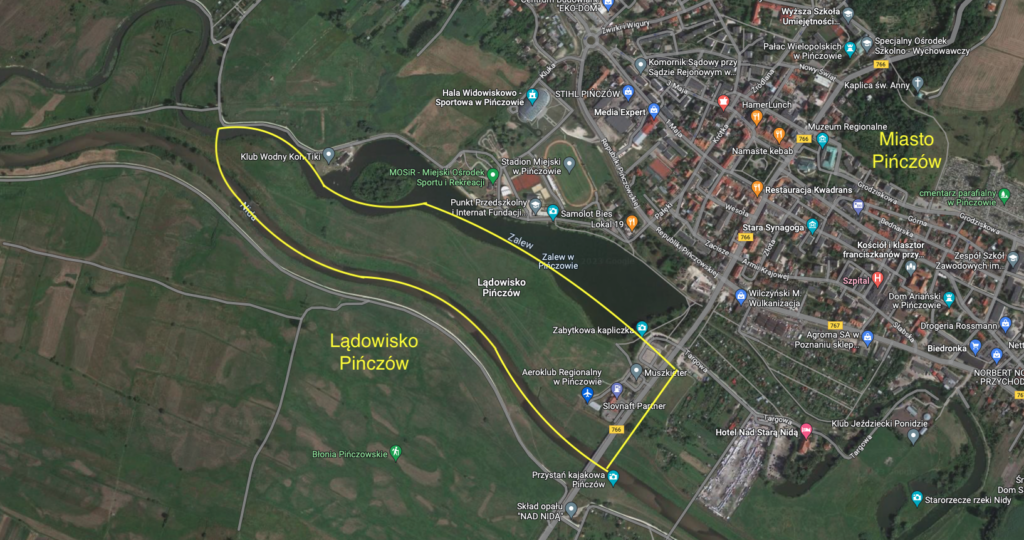
Pińczów sports airport.
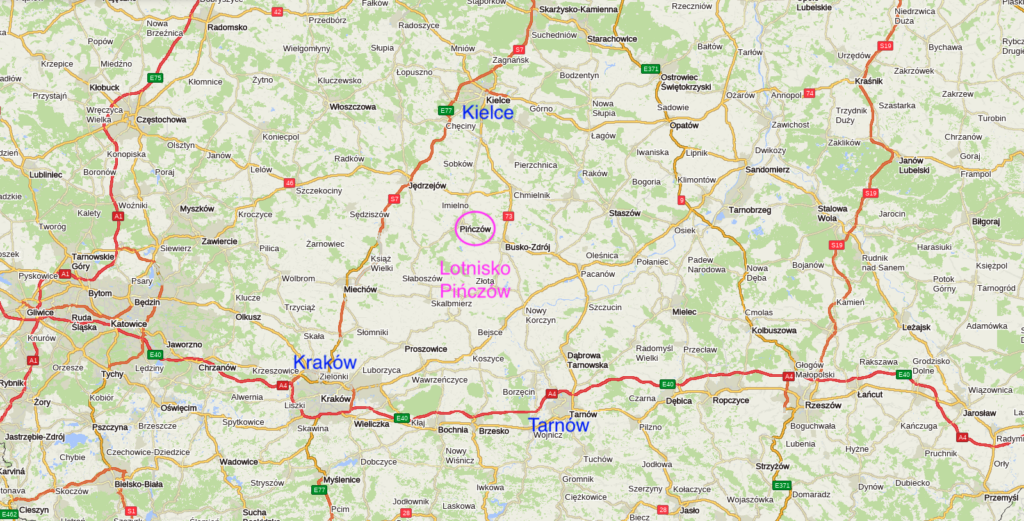
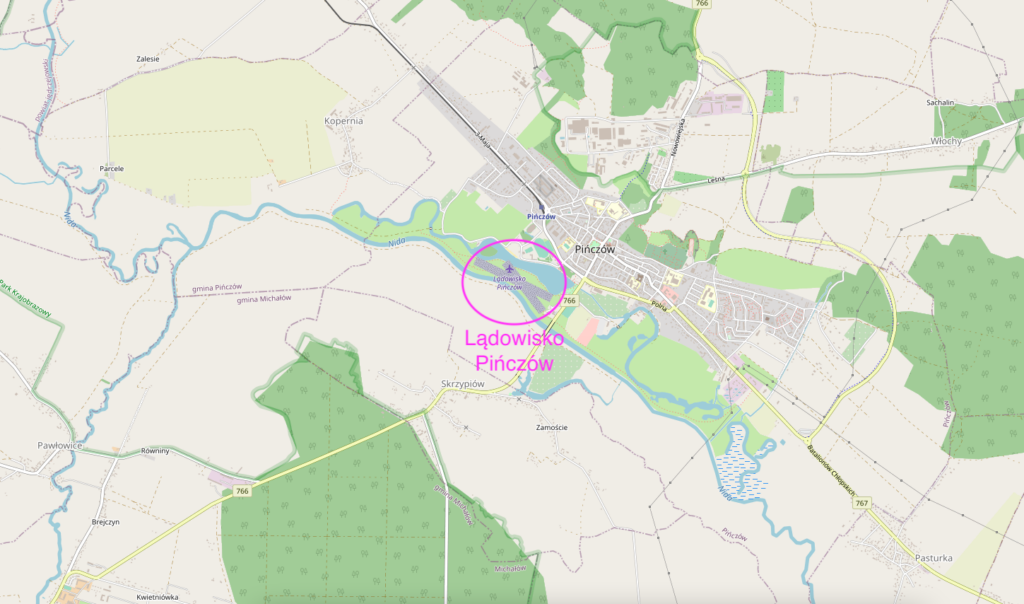
Geographic coordinates: 50.517N 20.517E. Elevation 186 m (610 ft).
The town of Pińczów.
Pińczów is a town in the Świętokrzyskie Voivodeship, Poland, the seat of Pińczów County and the urban-rural commune of Pińczów. Pińczów was a private noble town, chartered in 1428. The town’s population in 2018 was 10,946. Distances from Pińczów to: Busko-Zdrój – 16 km, Wiślica – 25 km, Kielce – 40 km, Kraków – 80 km, Sandomierz – 100 km, Częstochowa – 116 km, Warsaw – 220 km. Voivodeship Road No. 766 from Morawica to Węchadłów runs through the town. Voivodeship Road No. 767 leading to Busko-Zdrój begins here.
Geographically, Pińczów lies south of the Świętokrzyskie Mountains, in the Nida Landscape Park. To the north, the city rests on the slopes of the hills that comprise the Pińczów Garb (Grub Pińczowski). Many locations offer expansive panoramas, revealing the entire area encompassed by the Nida River Landscape Park. Pińczów lies on the banks of the Nida River, which flows through vast meadows to the Vistula. The area boasts numerous architecturally significant religious monuments, including the Pauline and Reformed Order monastery complexes. The first traces of settlement date back centuries before Christ. Pińczów was bypassed by major trade routes, which is why a distinctive culture and harmony between humanity, nature, and history developed here. The Świętokrzyski Literary Trail runs through the town.
The settlement’s development began in the 12th century, when a limestone quarry was established here—the Pińczów quarry. To protect the miners, a stronghold and later a castle were built. The settlement’s final name was established in the mid-15th century. No information about the first owners has survived, but the estate later belonged to the Oleśnicki family. The Oleśnicki family brought the Pauline Order to the settlement. King Władysław Jagiełło granted the settlement city rights in 1428. The town was granted the right to hold weekly and annual fairs, on religious holidays. Residents engaged in agriculture, viticulture, and cattle and sheep breeding. In the 16th century, the town was a strong center of the Reformation (Calvinists and Arians). The Pauline Order was expelled from the town, and the buildings were used to house the Pińczów Gymnasium, followed by the Sarmatian Gymnasium. A printing house was established. In Pińczów, between 1556 and 1563, the scholarly community completed a complete translation of the Bible into Polish. This was the second in history, after the Catholic Leopolitan Bible, but the first due to its direct translation from the original texts: the Old Testament from Aramaic and Hebrew, and the New Testament from Greek. In Pińczów, the Reformation ended in 1586, when Bishop Piotr Myszkowski of Kraków purchased the town. The Pauline Fathers returned to the town, and the Pińczów high school adopted the curriculum of a Polish parish school. The Myszkowski family adopted the Gonzaga coat of arms and surname. In 1601, the Myszkowski family obtained permission from the Polish Parliament to establish a Family Ordinance. At the beginning of the 17th century, the castle was rebuilt and the Chapel of St. Anne was built. During the 17th century, many foreigners settled in Pińczów. The most numerous immigrants were from Italy, who opened stonework workshops using the Pińczów stone quarried nearby. Scots, French, Germans, and Jews also arrived. During the Swedish Deluge, King Charles XII of Sweden established his headquarters in the castle. Military operations during the Kościuszko Uprising led to the town’s decline. After the Third Partition of Poland, Pińczów found itself under Austrian rule, and after the Congress of Vienna in 1815, under Russian rule. In the 18th century, the Wielopolski Palace was built. A food industry flourished in Pińczów, including cheese production. In the 19th century, the Rosenberg cloth factory, a cotton factory, and a dyeworks were established.
Pińczów is home to the Pińczów Wąski railway station, which is part of the Świętokrzyska Commuter Railway.
Pińczów sports airstrip.
The Pińczów airport was established in 1932 as part of the Air and Anti-Gas Defense League. The Air and Anti-Gas Defense League (LOPP) was a mass Polish paramilitary organization established in 1928, following the merger of the State Air Defense League, founded in 1923, and the Anti-Gas Defense Society, founded in 1922. The league aimed to promote sports, transport, and military aviation. The organization operated until the outbreak of World War II in 1939. A glider school was established in Pińczów in 1932.
But Pińczów has a longer aviation tradition. In 1784, the “Gazeta Warszawska” reported: “…during the ceremonies marking the beginning of the school year, two balloons, each two feet in diameter, were released in Pińczów. In the autumn of that year, people also enjoyed constructing and releasing balloons on the estate of Margrave Franciszek Wielopolski.”
In 1973, the Pińczów airfield reopened for air sports. However, due to a lack of adequate funding, the establishment of an aeroclub was not possible. In the early 1990s, a branch of the Kielce Aeroclub was established in Pińczów to train glider pilots. Theoretical training was conducted at the Municipal Sports and Recreation Center. The Pińczów Aeroclub was founded in January 1994, and was one of the few aeroclubs focused on powered hang gliders.
For several years, the Pińczów Aeroclub has been organizing the Polish PPG (Powered Paraglider) Championships, precision flying competitions, and modeling competitions. Training at the Pińczów Aeroclub is provided by the certified paragliding school, SLR “AEROKRAK.” Paragliding and hang gliding training is offered for all levels, as well as training for additional qualifications such as powered paragliding (PPG), powered paragliding (PPGG), winch flight training, for launch directors, and winch operators.
The Pińczów airstrip has an ICAO code – EPPC. The airstrip belongs to the Regional Aeroclub in Pińczów. The airstrip is approved for flights by powered hang gliders, airplanes, gyroplanes, towed hang glider flights behind a powered hang glider or ULM, and towed paraglider flights behind a stationary winch. Radio communication – Pińczów Radio – 122.600 MHz.
The landing site has two runways. The first is 700 m x 30 m, in the direction of 115/295, with a dirt surface – grass. The second is 550 m x 20 m, in the direction of 142/322, with a dirt surface – grass. There is a hangar at the airport where aircraft can be stored.
The airport is used by the Polish Medical Air Rescue (LPR). For helicopters, there is a paved heliport with access for ambulances from the nearby hospital. The heliport is circular with a diameter of 15 m. The surface is asphalt. The landing site is equipped with approach lights in the direction of 035/215. Night landings are assisted by the fire department.
The landing site address: Regional Aeroklub w Pińczowie, ul. Legionistów 26A, 28-400 Pińczów, Phone +48 668 409 128.
Written by Karol Placha Hetman