
Blizna 2026-05-13
V-2 missile.
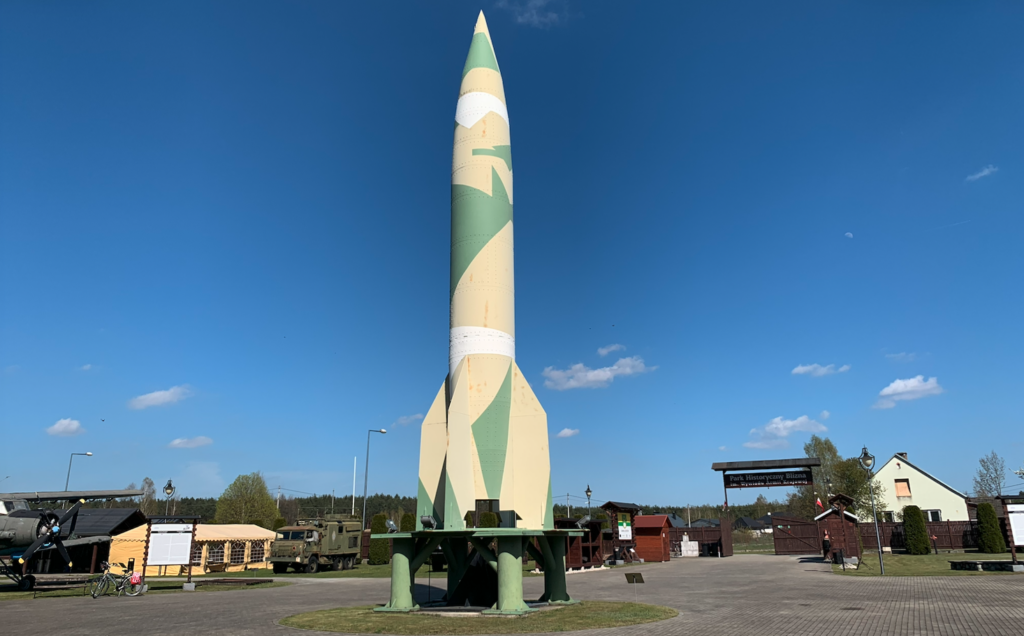
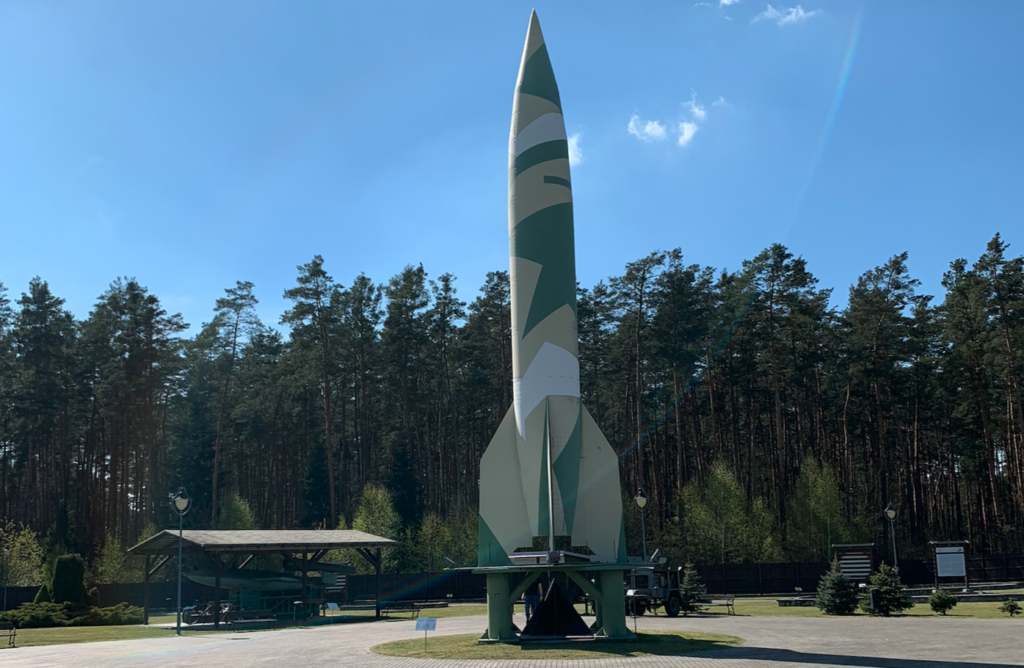
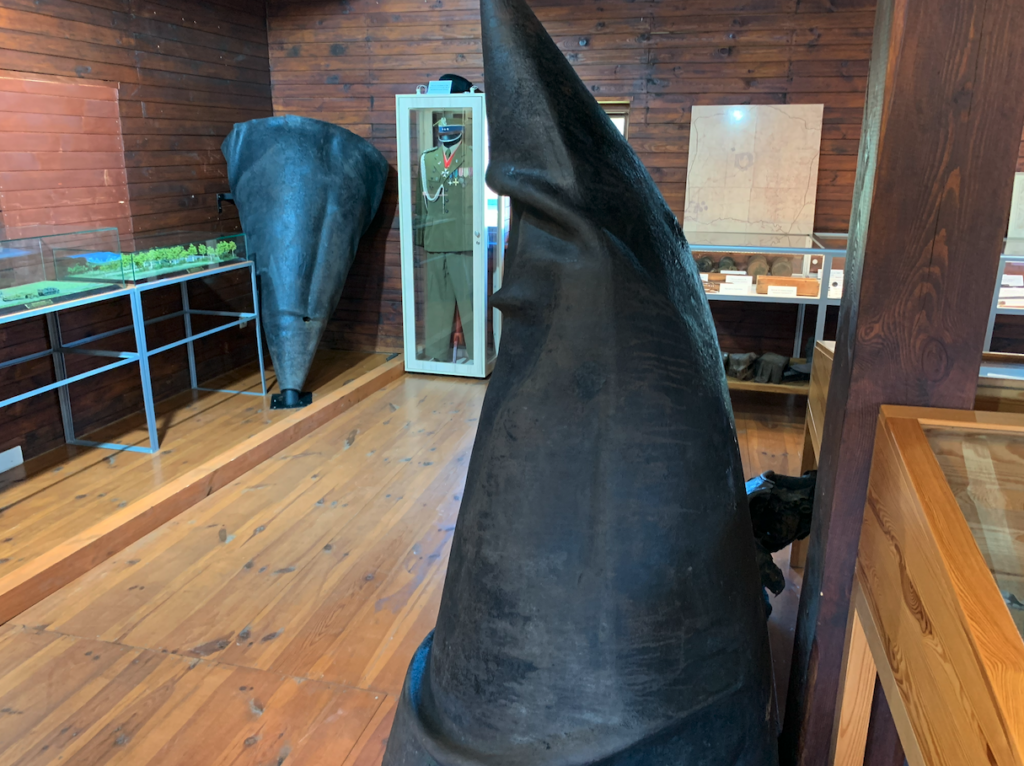
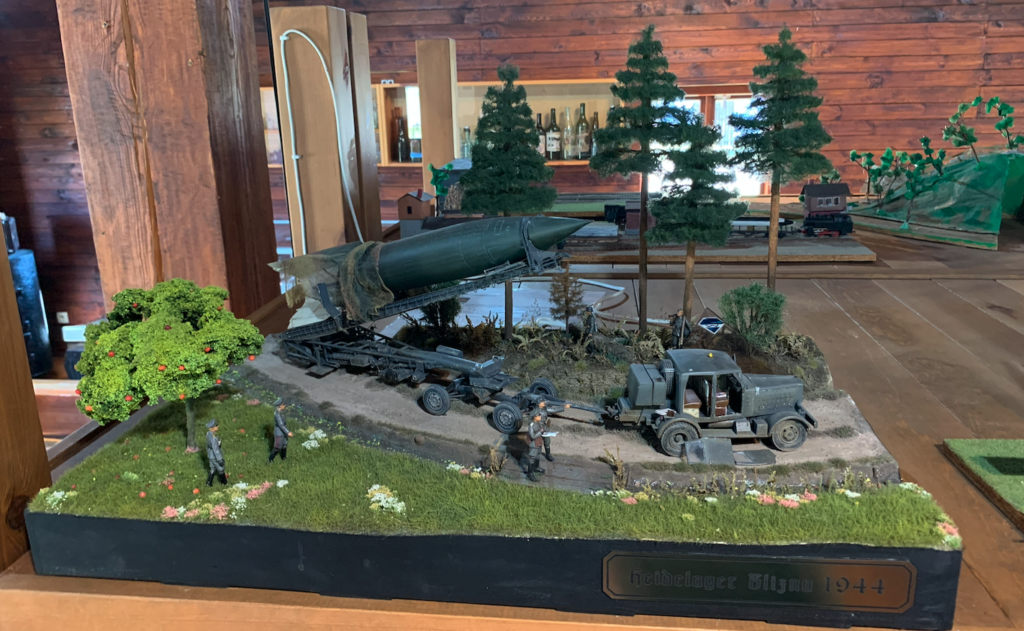
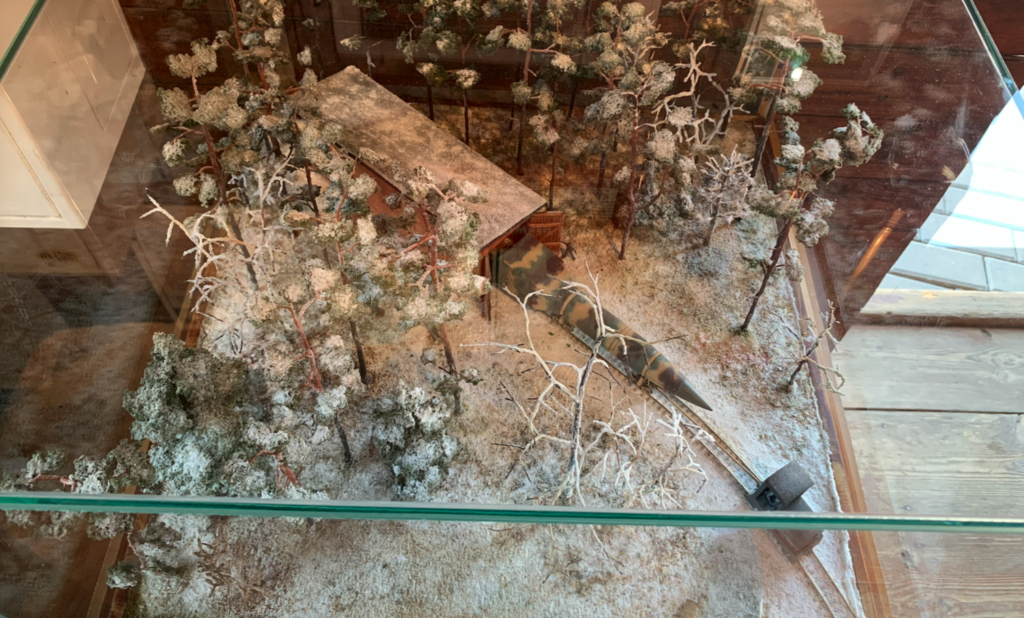
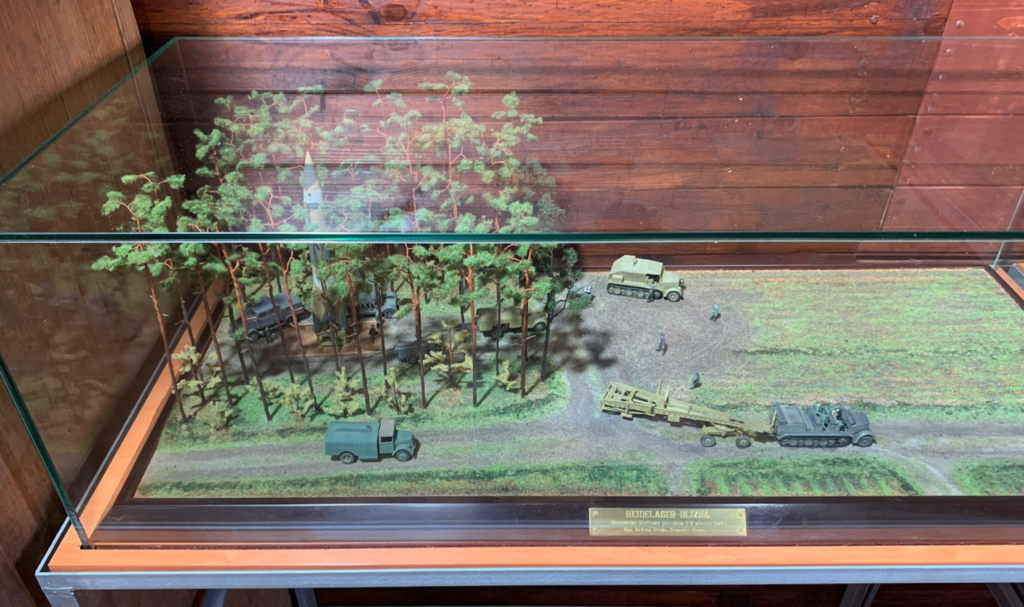
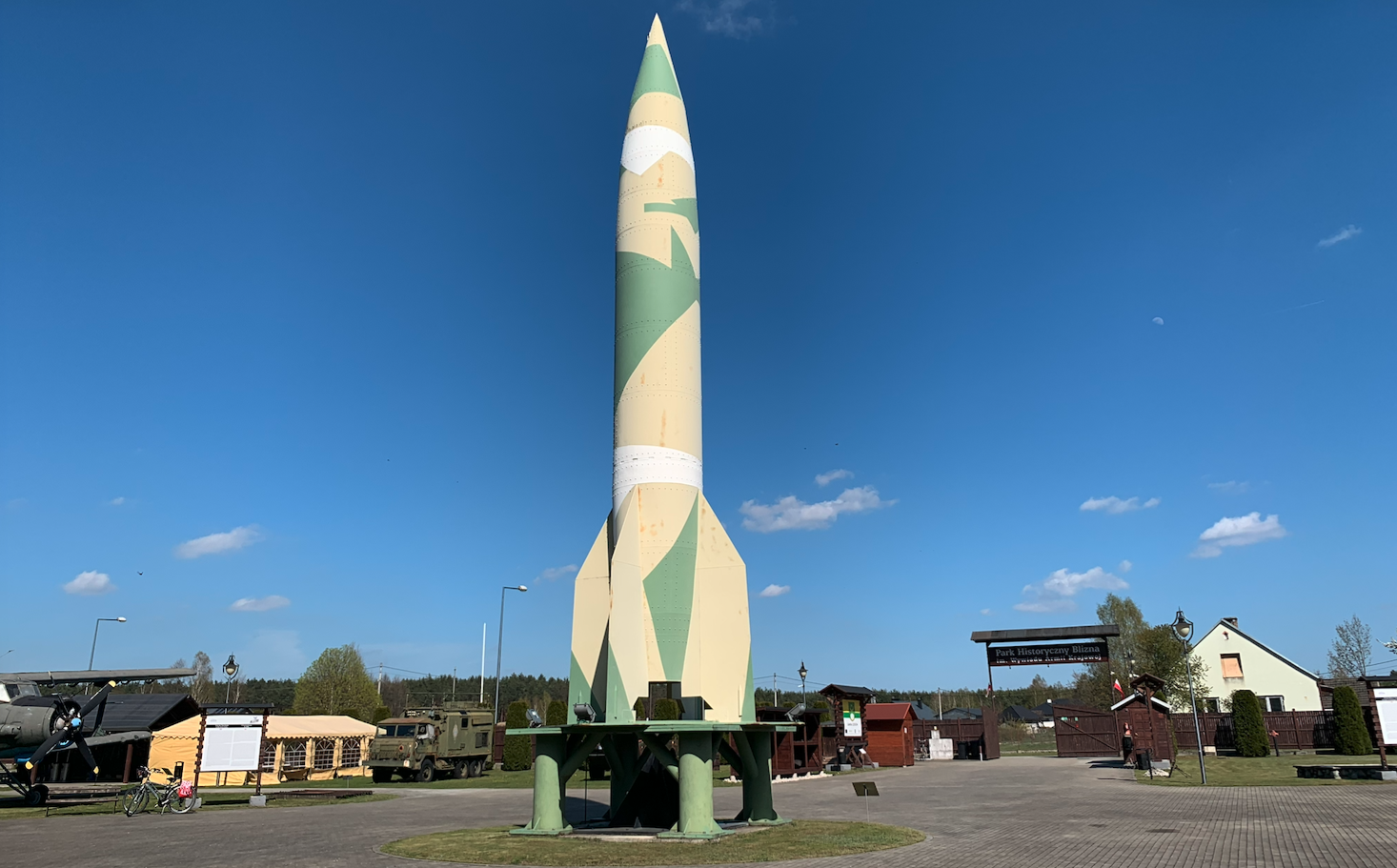
The V-2 is a missile developed and used by the Germans during World War II. A model of this missile is located in the Blizna Historical Park named after the Home Army Intelligence. The Blizna Historical Park is a museum and open-air historical museum located in the village of Blizna in the Podkarpacie region, primarily dedicated to the history of the Germanic V-1 and V-2 rockets from World War II. The park is located in the Podkarpackie Voivodeship, northeast of Dębica, 25 km away. During the German occupation, an SS missile range was established here. V-1 flying bombs and V-2 rockets were tested here. The site is associated with the courageous actions of the Home Army. Home Army soldiers captured rocket fragments and handed them over to the Allies. They also organized Operation Most III, during which fragments of the V-2 rocket were flown to Great Britain. This was a huge intelligence success for the Home Army (AK). Blizna is a place of historical remembrance; the determination and arrogance with which the Germanic forces sought to eliminate other European nations. This remains unchanged. The Germanic forces called the missile Vergeltungswaffe-2; Retaliatory Weapon No. 2. What kind of retaliation was this, since it was the Germans, along with their Muscovite brethren, who started World War II by attacking the Poland.
The V-2 was a Germanic rocket designed and used by the Germans during World War II, from September 7, 1944, to March 27, 1945. Launch took place from a ground-based launcher, from a vertical position. The V-2’s basic parameters were: length 14.26 m, diameter 1.65 m, tail span 3.56 m, and takeoff weight 12,825 kg–13,000 kg. The rocket was powered by a single-stage, liquid-fueled rocket engine with a thrust of 25,200 kgf. The engine accelerated the rocket to supersonic speed in 80 seconds. Maximum speed was 2,900 km/h–5,500 km/h. The ballistic range was 320-380 km. The payload (warhead) weighed 975 kg. Accuracy, or rather dispersion, was 6,400 m. The last examples had a dispersion of 1,600 m.
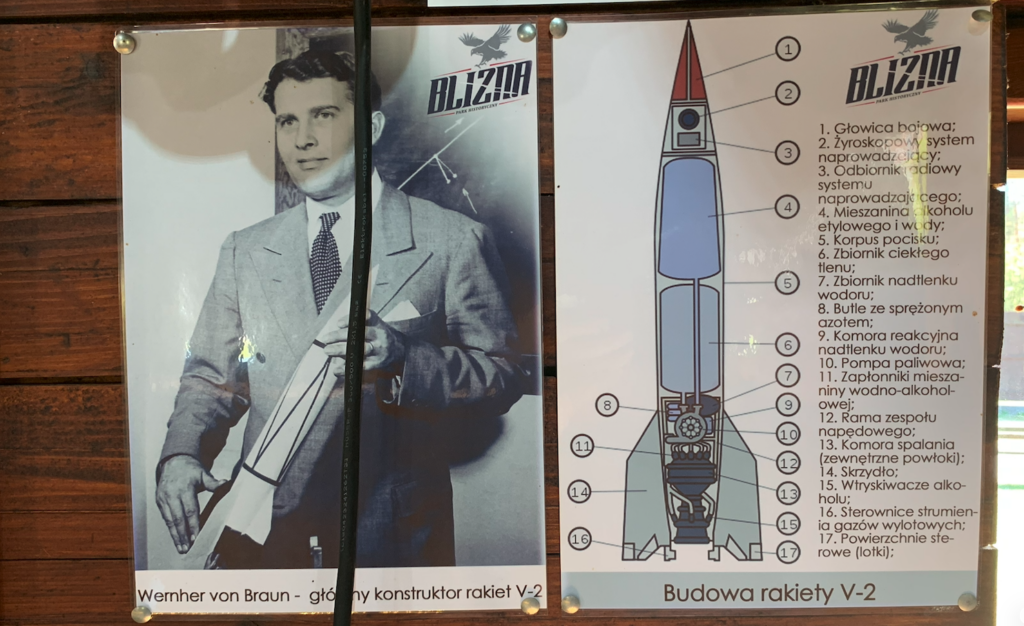
Basic components of the V-2 missile: warhead, gyroscopic guidance system, radio receiver for the guidance system, tank – a mixture of ethyl alcohol and water, missile fuselage, liquid oxygen tank, hydrogen peroxide tank, compressed nitrogen cylinders, hydrogen peroxide reaction chamber, fuel pump, water-alcohol mixture igniters, power unit support structure, combustion chamber, alcohol injectors for the engine nozzle, exhaust gas flow control, and tailplane with ailerons.
The missile was initially designated A-4 (Germanic designation Aggregat 4). Work on this weapon of destruction began in the late 1930s and was led by engineers Hermann Oberth and Wernher von Braun. The Germans allocated enormous financial resources to the program. In 1937, a new research center was built on the island of Usedom near the village of Peenemünde. The first successful launch of the A-4/V-2 rocket took place on June 13, 1942, but the rocket exploded after flying 1,300 meters. A completely successful test took place on October 3, 1942. After a major Allied air raid on the Peenemünde facility on the night of August 17-18, 1943, the Germans decentralized production of individual components for the V-2 and V-1 missiles. The combat units of the V-2 rockets delivered to the Wehrmacht were unsuitable for use due to the poor quality of the components used in assembly. The rocket was uncontrollable and missed its target by many kilometers. Initially, approximately 500 V-2 rockets were produced per month, but they could only be used as a terrorist weapon.
The V-2 rocket’s field tests were moved from Peenemünde to the Pustki-Blizna area, at the SS “Heidelager” training ground in the Sandomierz Forest. The first rocket at the new training ground was fired on November 5, 1943. Home Army Intelligence seized many V-2 rocket components, including unexploded warheads. As part of Operation “Most III,” many rocket components and detailed reports were sent to Great Britain.
In the summer of 1944, the Germans were forced to close down the Blizna training ground and move the tests to the Tuchola Forest near Wierzchucin, the “Heidekraut” (Heath) training ground. Approximately 265 rockets were fired there. Since January 1945, the Germans have not test-fired a single rocket.
The primary purpose of the V-2 missiles was to bombard cities in Great Britain. For this purpose, the Germans had prepared launch shelters on the French coast of the English Channel (the Éperlecques region) for launching the rockets. The destruction of a significant portion of the launch sites by Allied aircraft forced the Germans to prepare for the launching of V-2 rockets from mobile launchers. The Allied invasion of Normandy in June 1944 prevented further attacks. The last rocket was fired on March 27, 1945.
Written by Karol Placha Hetman