
Kraków 2010-02-26
016c Section 1 June 1945
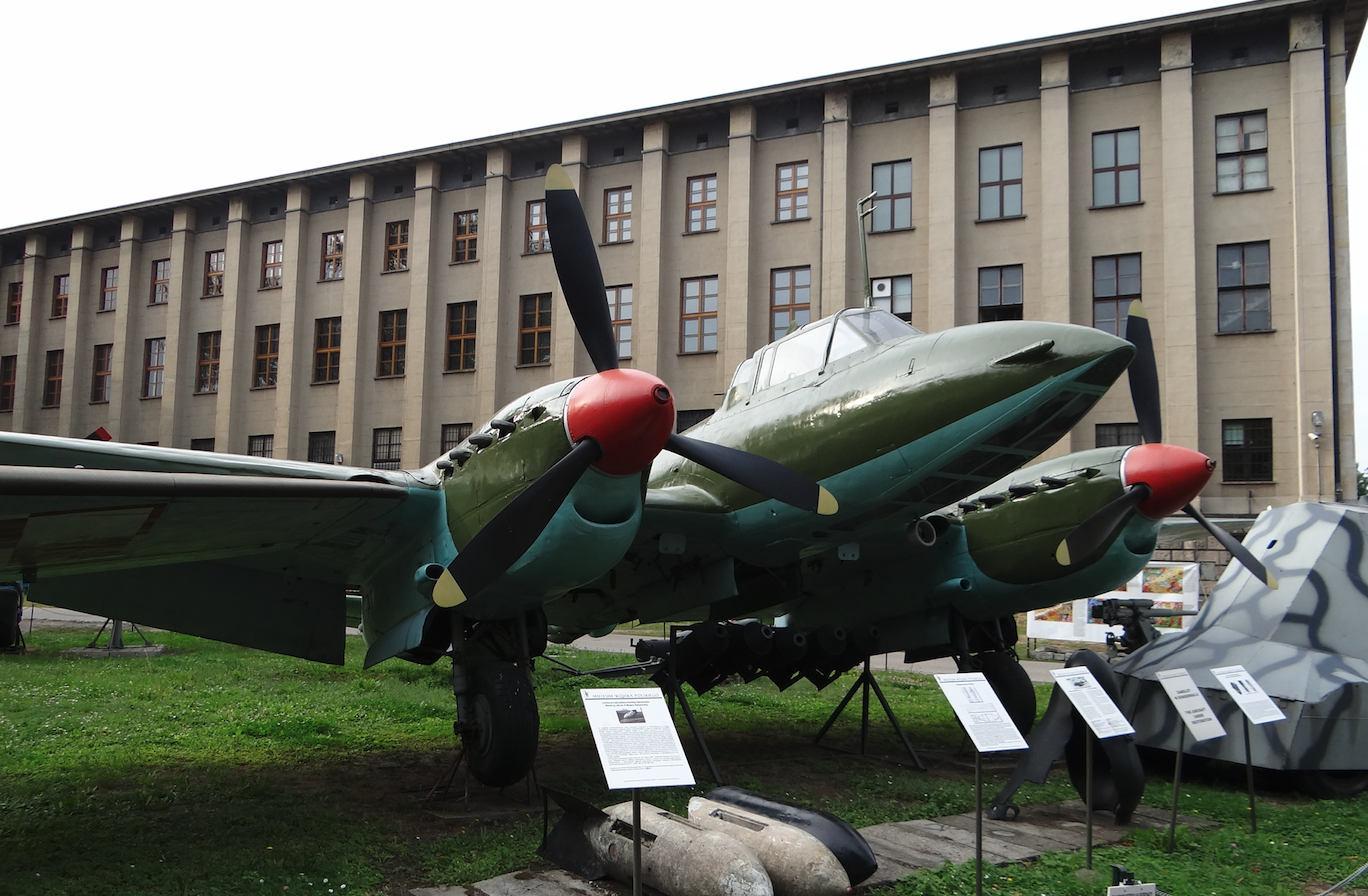
Petlakow Pe-2. Polish
History
The Pe-2 was a dive bomber used during World War II. After the war, it was relatively quickly retired due to its outdated design, poor tactical and technical parameters, and low failure rate.
Development of the structure.
The consolidation of communist power in the CCCP resulted in the development of the already economically weak state being further limited. Agriculture and industry were neglected. To crush any counterrevolution, the Bolsheviks had to rearm. Stalin, who was a land commander, had no understanding of aviation, let alone naval power. His army’s armament was focused solely on land operations. It is therefore not surprising that at the outbreak of World War II, the Soviet air force was neglected.
At this point, we must make another important point. Muscovites still attribute the beginning of World War II, which they call the “Patriotic War,” to June 22, 1941, when Germanic forces attacked them. They consider the Soviet attack on the Republic of Poland on September 17, 1939, as securing only their own interests. They teach their children this principle in schools today. Thus, in 1939, the Muscovites lacked a modern air force, especially a bomber. It quickly became apparent that it was necessary to begin developing bomber aircraft. This led to the creation of, among other things, the Pe-2, which had its origins in the WI-100 high-altitude fighter.
The VI-100 high-altitude fighter.
In 1938, searching for “enemies of the people,” the NKVD arrested numerous aircraft designers. One of them was Vladimir Mikhailovich Petlyakov, a talented designer working at the TsAGI Institute. However, Vladimir Petlyakov was not sent to an ordinary prison. A design bureau, CBK-29 (OKB-29), was established for him, where, together with his colleagues, also arrested, he was ordered to build a high-altitude fighter. Work on the aircraft was conducted under guard, with the NKVD constantly monitoring its progress.
The aircraft was given the codename “100,” and the letters “VI” stood for high-altitude fighter. The task was to build a twin-engine, high-altitude fighter aircraft with VK-M-105 engines, heavily armed, capable of reaching a top speed of over 600 km/h and a ceiling of over 12,000 m. As for the powerplant, the designer had no alternative.
A low-wing, cantilever monoplane of all-metal construction was selected, with retractable landing gear and a pressurized cabin. Cabin pressurization was a novelty for the Moscow designers. Vladimir Petlyakov decided to supply the cabin with oxygen from pressurized cylinders. Therefore, it was not a fully pressurized cabin, but a makeshift solution resulting from a lack of time and experience in this field. Nevertheless, it was expected that cabin pressure equivalent to an altitude of 3,700 m above sea level could be maintained up to an altitude of 10,000 m.
The aircraft was designed as a two-seater: pilot and tail gunner. To minimize weight, it was decided to eliminate certain components, such as the communications radio. This wasn’t difficult, as mass production of onboard radios was still in its infancy at the CCCP.
The WI-100 was designed as a semi-monocoque structure. However, the lack of experience in designing such structures would result in future problems. The fuselage was slim to minimize aerodynamic drag. The cockpits (front and rear) proved very cramped, and it’s easy to imagine that the pilots’ work was very tiring.
Additionally, visibility from the cockpits left much to be desired. The rear gunner, when using the machine gun, would have had to open the cockpit, thus depressurizing it and using an oxygen mask. This solution was cumbersome and ineffective. Attempts were made to mount the machine gun in the aircraft’s tail and control it remotely. However, this project was never implemented, mainly due to rushed operations.
The WI-100 aircraft used WK-M-105 engines with two turbochargers for each engine, either TK-2 or TK-3. Maximum power was 2 x 772 kW (2 x 1,050 hp). Oil coolers were located in the wings, in sections adjacent to the fuselage. The cooling air intake was located in the leading edge of the wings, and the outlets were via adjustable louvers on the upper wing surfaces. This solution was popular and remains in use today. The reason for this is the improved aerodynamics of such designs. Three-blade metal propellers were used, fixed-rotation, with variable pitch control thanks to a hydraulic reducer, built under license from Hamilton-Standard.
The prototype made its first flight on December 22, 1939, with pilots Piotr M. Stefanowski and Ivan Markov. Only years later was it revealed that during this test flight, one of the M-105 engines had failed. The pilot made an emergency landing, and the aircraft bounced several times after touchdown. This was due to improperly selected shock absorbers. The design required refinement.
In the spring of 1940, two more prototypes of the WI-100 were flown. On April 11, 1940, the first prototype underwent state evaluation. Later, another prototype joined the state trials, this being the third prototype. Unfortunately, the third prototype malfunctioned during its eleventh flight, and a fire broke out in the cockpit. The crew evacuated by parachute, and the aircraft crashed. As it plummeted, the aircraft struck the grandstand containing the observers, who were injured as they fled. The results of the state trials were not encouraging. The projected performance was poor. The maximum speed was only 538 km/h (335 mph), instead of the expected 620 km/h (385 mph). The climb rate was poor. It was difficult to suspend the program, as there was no other alternative available.
Dive bomber.
The dive bombing technique was first used by the Americans. The bombing’s high accuracy and therefore effectiveness led to the interest of almost all countries in the concept. The high accuracy achieved with this technique allowed for the destruction of relatively small ground targets – tanks, machine gun emplacements, bunkers, etc. Aircraft used in this way could even, to some extent, replace artillery, which was unsuitable for fighting moving tanks.
The Germanic forces achieved considerable success in this field, and as friendship between the Muscovites and the Germans flourished in 1940, they traded several valuable solutions. The Muscovites even received several Ju-88 dive bombers.
The war in Europe was raging, and its operations were demonstrating the inadequacy of high-altitude fighters. Dive bombers, however, proved necessary. Work at the CCCP was very slow. The SB-2, adapted by A. Arkhangelsky and designated Ar-2, lacked the necessary features for the dive bomber role and was already obsolete. Polikarpov’s SPB aircraft was promising, but a high number of accidents led to a halt in development. Consequently, work on the VI-100 was ordered to be suspended in May 1940, and in June 1940, an order arrived from the Kremlin to build a high-speed dive bomber based on the VI-100. The project was scheduled for completion in 45 days. This was both unbelievable and impossible. The aircraft was designated the PB-100.
PB-100 dive bomber.
The new design increased the crew to three pilots. The pilot was the first. A single person sat behind him, facing away from him; Navigator, gunner, and bombardier. To use the bombsight, he had to squeeze into the forward section of the aircraft. The third pilot, separately enclosed in a private cabin, was the lower gunner. Airtight crew cabins, although initially planned, were abandoned. Vladimir Petlyakov wanted to equip the cabins with a pressurization system. But the aircraft was to be mass-produced, so pressure came from above to simplify the design. The cabins were partially armored. The bomb bay was located in the fuselage. Armament became significantly more diverse.
The fuselage itself is a semi-monocoque structure. However, the frames are sparse; only four beams ran along the length, and there were no longerons. The structural rigidity that was lacking was achieved with slightly thicker skin. As it turned out, this solution was sufficient and proved to be the aircraft’s strong point.
Airbrakes with an AP-1 automatic control were added to more easily recover the aircraft from a dive, based on a signal from the sight, or when certain flight parameters were exceeded. However, the automatic control was unreliable and was eventually abandoned, with the airbrakes controlled entirely manually.
The wing remained a two-spar design. Steel spars were used. The trailing edge featured crocodile-type flaps and ailerons. A different profile was used compared to the WI-100’s wings, reflecting the different flight conditions.
The tailplane was also modified. Most importantly, it received a larger surface area. The control system utilized electric actuators, over 50 in total. However, these were later replaced with hydraulic boosters. The electric system remained only for the fuel pumps, landing gear retraction and extension, and tailwheel control.
The aircraft was equipped with slightly different M-105R engines, which now had no need to struggle with altitude. They were adapted for operation at lower altitudes and were devoid of turbocharging. Their power increased to 2 x 1,100 hp. Over time, as the engines became more powerful, additional bomb bays were installed under the wings. This theoretically allowed the aircraft to carry 1,800 kg of bombs. There was so much space in the nacelles behind the engines that it was decided to use them either for additional fuel tanks or bomb bays for typical 100 kg bombs.
The PB-100 prototype was a redesign of the second WI-100 prototype, and the first flight took place on December 15, 1940. Preparations for series production were already ordered at Factory No. 22 in Moscow. State trials lasted only a month, at the turn of January and February 1941, but this was common practice at the time at the CCCP. The commission issued few comments. Despite several accidents during the trials, the aircraft demonstrated satisfactory flight characteristics.
The aircraft’s designer, Vladimir Petlyakov, was released from prison in January 1941. He even received a medal for his aircraft. The aircraft was redesignated from PB-100 to Pe-2, after its designer. Vladimir Petlyakov died on January 12, 1942, in a plane crash, piloting a Pe-2. He was flying from Kazan to Moscow. During the flight, a skirmish with German fighters occurred. Stalin ordered an investigation. He suspected treason. “How did the German military know about this flight?” Vladimir Petlyakov was succeeded by A. Putinov.
The PB-100 was produced as the Pe-2.
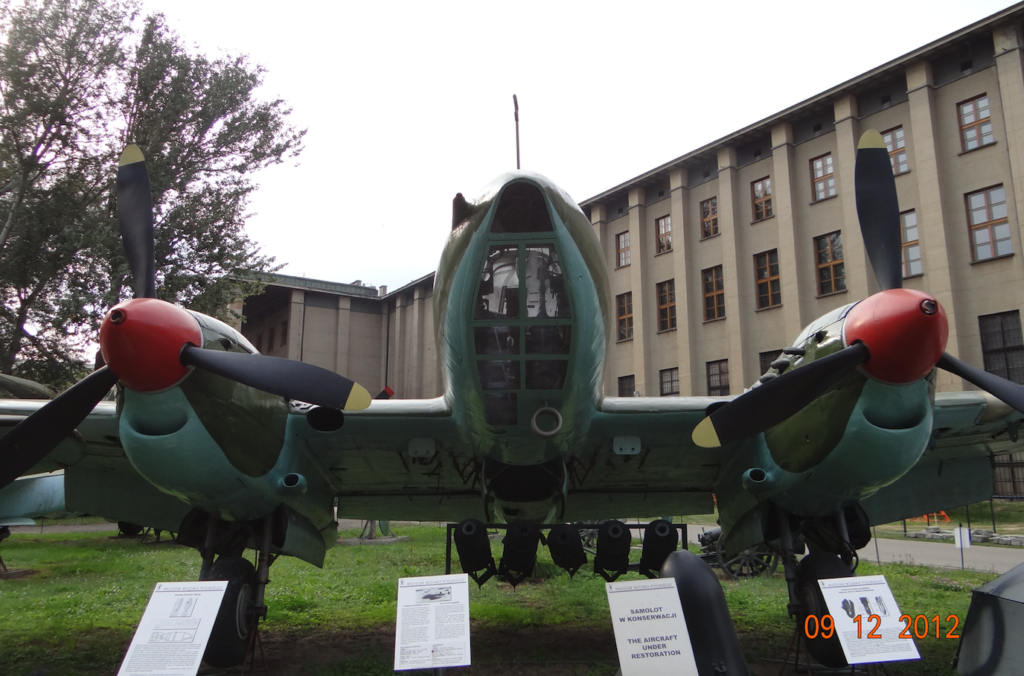
The first production aircraft differed slightly from the prototype. The cockpit was moved slightly forward, and the navigator’s station was located to the pilot’s right. The aircraft’s nose was more glazed, allowing for more precise aiming during a dive. The navigator had a rear-firing ShKAS machine gun at his disposal. Behind them was the gunner/radio operator’s station.
According to many soldiers, the aircraft proved to be a good, and some even claim the perfect, Soviet tactical bomber in World War II. Perhaps. There was no Western design to compare it to. Comparing it to the Mosquito is inappropriate. A total of 11,427 Pe-2s were built.
Serial production of the Pe-2 expanded rapidly, and by the spring of 1941, aircraft of this type were in combat units. Recall that at that time, the Muscovites were enjoying peace, murdering Polish soldiers in Soviet camps and Russifying the occupied eastern part of the Polish-Lithuanian Commonwealth. On May 1, 1941, a regiment equipped with Pe-2s flew over Red Square.
The Pe-2 at War.
On June 22, 1941, the war between the CCCP and the Germans began. The brothers were at each other’s throats. At the outbreak of war, the Soviet Air Force had 458 bombers, 70% of which, or 377, were SB-2 bombers. The remaining aircraft included 22 Ar-2s, 22 Yak-4s, and only 42 Pe-2s. Furthermore, not all newly built Pe-2s reached the front in time. In June 1941, 30 Pe-2s were stranded near Minsk, where they were captured by the 13th Air Division, whose pilots learned to fly them themselves and then used them during combat in what is now Belarus.
The aircraft was affectionately known as the Peshka among the soldiers. It is true that in the hands of experienced pilots, the aircraft was a formidable weapon. But such pilots were few and far between on the front. Criticism was leveled at the difficult takeoff, compounded by poor visibility. The takeoff and landing procedures were significantly more difficult than in the older SB-2s.
Besides learning to fly, the pilots also had to master the new technique of dive-bombing, which further exacerbated the situation. As a result, instead of diving into the enemy, they dropped bombs blindly from level flight. They were also disadvantaged by the fact that no training aircraft with duplicate controls and a seat for an instructor were produced. Compounding this was the fact that a significant portion of the CCCP air force personnel were young and inexperienced soldiers with few flight hours, and many experienced commanders were killed during Stalin’s purges. For example, in the Leningrad Military District, over half of the pilots graduated from flight schools only six months before the outbreak of war on the Eastern Front.
Despite these difficulties, the Pe-2s fought successfully in the first months of the war, adhering to the principle “if not quality, then quantity.” The fast and relatively agile aircraft could successfully operate even during daylight hours when the enemy had air superiority. We should probably say “had to,” as there was practically no other option. And without fighter support. For example, on October 5, 1941, Second Lieutenant Gorslikhin’s crew engaged nine Bf-109 fighters and shot down three of them.
Accumulated combat experience necessitated certain design changes. It turned out that the four ShKAS machine guns did not provide adequate defense against German fighters. The weapon simply jammed frequently. Ultimately, the decision was made to replace the ShKAS machine guns with 12.7 mm UB (UBT) machine guns, which also brought the expected increase in firepower. The UB machine gun was a highly effective weapon, due to its considerable mass and high muzzle velocity. The replacement of machine guns also occurred over time on aircraft already in service.
Pe-3 fighter.
The Pe-2’s decent performance and the lack of a sufficiently fast and well-ranged fighter resulted in the Kremlin’s decision to build fighter aircraft based on the Pe-2. The design changes were minor. The bomb bay was eliminated, and over time, an additional fuel tank was installed in its place. The crew was limited to two pilots. The lower gunnery position was removed. The aircraft was armed with 20 mm cannons and two 12.7 mm machine guns in lower and upper gunnery positions, as well as guides for 132 mm rockets. Twenty-three examples of this aircraft were built.
Pe-2: Successive Variations.
It should be noted here that it’s difficult to discuss successive versions of the Pe-2. In literature, authors often cite the Pe-2 and Pe-2 FT versions. However, the problem is that the aircraft was built at multiple plants. Various subcontractors were used. Different materials were even used, and new systems were installed at different times. Even the shape of some airframe components changed. Thus, aircraft even from the same production series had significant differences.
By the end of 1941, Pe-2 production steadily increased, reaching 1,626 aircraft by December 1, 1941, some of which were Pe-3 fighters. These were assembled at four plants, numbers 22, 39, 124, and 125. After the famous evacuation of factories beyond the Urals, these were relocated to Kazan, where an entire complex dedicated to the production of these aircraft was established.
During production, the external appearance and the materials used changed. By the end of 1941, the nose glazing was reduced, and the tail section was constructed of wood instead of steel. In both cases, these materials (organic glass and steel) became strategic.
Front-line units needed new aircraft. By early 1942, the Kazan plant was producing 13 aircraft per day. By March 1942, Factory No. 22 alone had produced 108 Pe-2s, and by December 1942, 210. This production was not matched by the quality.
Modifications continued. The ShKAS machine gun used by the radio operator was replaced with a portable version, allowing the operator to switch it from one side to the other in about thirty seconds and fire through ports designed for this purpose in both sides.
Additionally, a snow landing kit was developed for the Pe-2, which included removable skis bolted to the landing gear legs. However, this kit did not see widespread use.
The RPK-2 radio compass was replaced by the more modern RPK-10, but wartime difficulties associated with its production necessitated the use of an older type of radio compass. The RPK-10 radio compass was installed only on aircraft designated for reconnaissance. The electrical and fuel systems also underwent some changes. M-105 RA engines were installed, with continued efforts to improve its sealing. Work was also underway to improve shock absorption and airframe integrity to minimize fire hazards.
The steadily increasing number of Pe-2 aircraft on the front line allowed for the use of new combat tactics. Among other things: In place of the previous formations of three or nine aircraft, large formations of 30-70 aircraft appeared, attacking using the “mill” tactic, which involved forming a giant inclined circle with the bombers, each covering the other with machine gun fire and diving toward the target one after the other.
In 1942, a variant commonly known as the Pe-2 FT was developed. Perhaps one of the most visible changes was the introduction of the MW-3 rotating gunner’s turret, developed by Mozartovsky and Vyenividov. It was manually rotated, but with a built-in aerodynamic fin. The seat in which the navigator-gunner now sat also rotated.
Other changes included: The fuel tanks were lined with a self-sealing material, a rubber material that, when shot through, swelled upon contact with fuel, sealing the opening. Additionally, the empty space above the fuel tanks was filled with engine exhaust, dramatically reducing the risk of explosion and fire.
During this period, a photo reconnaissance version with extended range, designated the Pe-2 R, was also developed. The large number of Pe-2s built and the crisis on the Eastern Front gave the designers time to develop a training version, designated the Pe-2 UT. Most of the aircraft were converted Pe-2s. It was one of the most unusual training aircraft. The second cockpit was located in a separate compartment behind the navigator’s cockpit. This was occupied by the student pilot. Visibility from this cockpit was extremely limited, but it gave the new pilot at least an idea of the aircraft’s response to the controls. It is clear that the development of this version was guided by the idea of minimizing costs.
Around 1943, Vladimir M. Myasishchev, later the designer of the largest strategic bombers in the CCCP, was appointed to head the team working on the Pe-2, replacing A. Putinov. His task was to adapt the Pe-2 to the changing front. The Germans were introducing increasingly better and faster fighters. However, the Pe-3’s performance actually declined. This was due to the increasingly poor quality of the raw materials used and the poor assembly quality. At that time, assembly was performed primarily by women and minors with little technical knowledge, experience, or skill. However, the designers had no control over this. They concluded that performance could only be improved by increasing the engine power. Two-speed turbochargers were once again reintroduced. The engines became more powerful and received the designation M-105 PF. Their power increased to 2 x 1,210 hp. Fighter aviation also benefited, as these engines were installed in Yak-1 and LaGG-3 aircraft. These engines were optimized for operations at low and medium altitudes, resulting in increased speed but a simultaneous reduction in maximum altitude. The new engine’s disadvantage was that the Pe-2’s propellers were adapted to the older engine type and could not utilize the new powerplant’s full potential. Nevertheless, the engine change should be considered beneficial, as on the Eastern Front, aircraft operated at low and medium altitudes, and there the Pe-2’s performance improved.
By early 1943, the Pe-2 had become the primary bomber in the Soviet Air Force. Older SB-2s were transferred to flight schools or assigned to transport duties. Most Ar-2 and Yak-4 aircraft were destroyed in combat.
In the summer of 1943, the Pe-2 participated extensively in the Battle of Kursk. Their high bombing accuracy made them an effective weapon. In just one day, July 16, 1943, the pilots of one of the corps, consisting of 115 aircraft, destroyed 55 tanks, 229 cars, 11 anti-aircraft positions and 3 field guns, as well as a number of heavy machine gun positions.
In 1943, a new variant of the Pe-2 was designed, with two M-82 radial engines producing 1,540 hp. The increased power allowed for a slight increase in speed and ceiling. At the same time, changing the engines in production aircraft could have temporarily halted production, which Stalin refused to allow. After a trial run of 135 units, production of this variant was discontinued. These aircraft were used to form the independent 99th Reconnaissance Regiment.
Since the powerplant’s capabilities had been exhausted, the designers were instructed to focus on aerodynamics. Work began in early 1944, when Soviet superiority over the German forces was already clear, and victory was only a matter of time and the loss of millions of lives.
The aircraft’s overall silhouette was smoothed. New, more streamlined cowlings were installed at the front of the engines. The pitot tube was moved to the nose. The arrangement of the underwing beams was also changed to accommodate underslung armament, and new propellers designated WISz-61P were installed. These changes resulted in a speed increase of approximately 30 km/h compared to aircraft manufactured in 1943.
Some aircraft began to use the DAG-10 grenade launcher, carrying a supply of 10 AG 2 grenades. Their purpose was interesting, as they were not used to attack ground targets, but against enemy fighters. The grenades were fired by the radio operator, braked by a small parachute, where they fell for 3-5 seconds, then exploded in the path of pursuing fighters.
Naval aviation used Pe-2s against ships and vessels. Although their short range and limited navigational equipment made the task difficult, considering the conditions in small waters such as the Baltic Sea and the Black Sea, they performed their mission quite well. Their main successes included the sinking of the German cruiser Niobe and numerous sinkings of transport ships carrying strategic raw materials from Scandinavia to the Reich.
743 Pe-2 bombers participated in the Berlin operation. The Pe-2’s last combat mission in Europe took place on May 7, 1945, and consisted of bombing the runway (RWY) at Siraw Airfield, where several German aircraft were preparing to escape to Sweden.
Production of the Pe-2 ceased in December 1945. A total of 11,247 aircraft of this type were built, more than any other Soviet bomber. Despite their large numbers, they were quickly withdrawn from active service after the war and replaced by the more modern Tu-2. However, this only applied to Red Army regiments. They were pressed into service with allied armies until 1960. Pe-2s were used in Bulgaria, Yugoslavia, China, Czechoslovakia, and Poland, as discussed below.
The Pe-2 was the most widely produced Soviet bomber during World War II. It saw combat on all fronts, fulfilling bombing, reconnaissance, and even fighter missions. It was also used by naval aviation units. The Pe-2 was a successful aircraft, but on a scale similar to the CCCP, where human life was not, is not, and will never be of value.
The Pe-2 in the Polish Military Aviation.
In October 1944, within the CCCP, the formation of the 1st Bomber Aviation Division of the 1st Polish Army began, based on Soviet units. The division was to include three bomber regiments. Mounting difficulties, and above all, a shortage of aircraft, pilots, and mechanics, effectively hampered this process. The Polish Bomber Aviation did not manage to participate in World War II combat.
After the end of hostilities, the Polish Air Force experienced a significant reduction in its military. According to Polish plans, bomber aircraft were to remain solely with the 7th Dive Bomber Regiment. However, this did not prevent the Russians from selling over 100 Pe-2 bombers to the Polish side. It is also unknown how many Soviet aircraft remained in their units in Poland. As of June 1, 1945, the Polish Army had 100 bombers, and by early 1946, the 1st Mixed Air Corps had 92, the Military Pilot School had 12, and the Reserve Air Regiment had 2. Therefore, according to available information, June 1, 1945, is considered the date of acceptance of Pe-2 aircraft into the Polish Air Force.
According to the plan, the second phase of demobilization of soldiers from the Polish Army began at the beginning of 1946. The basis for this was Order No. 019/org of the Supreme Command of the Polish Army dated January 22, 1946. Based on this, Major General Pilot Fyodor Polonin (Soviet) issued an organizational order dated January 24, 1946, ordering the disbandment of the 1st Bomber Aviation Division and the creation of the 7th Independent Dive Bomber Aviation Regiment based on the 3rd Bomber Aviation Regiment and the remaining disbanded units. The town of Leźnica Wielka was designated as the base. The organizational concept of the Polish Air Force was as follows: the 1st, 2nd, and 3rd Fighter Regiments, the 4th, 5th, and 6th Attack Regiments, and the 7th Bomber Regiment.
All personnel of the 7th Independent Dive Bomber Aviation Regiment were practically trained. The pilots were exclusively citizens of the CCCP. Only a portion of the flight crew were Poles, serving as navigators or gunners. They were trained at the CCCP from the fall of 1944 to September 1945. The same was true for the technical personnel. Only a portion of them were Poles, who joined the units in April 1945 after graduating from the aircraft mechanics school in Volsk-on-the-Volga, Saratov Oblast. Among the Polish personnel were a dozen or so women who performed compulsory military service. To complete this picture, it’s important to note that no command positions were held by Polish citizens.
At the beginning of 1946, it was decided to gather all the Pe-2 aircraft at a single airfield and assess their technical condition. The aircraft in the worst condition were transferred to the Temporary Warehouse for Aircraft Equipment Maintenance and Storage in Polska Wieś near Opole by November 1946.
The primary objective was to train as many Polish pilots as possible, an extremely difficult task. In addition to training flights, the Pe-2 aircraft were successfully utilized for the benefit of the economy of the devastated country. From February 19-22, 1946, the crews cleared ice jams on the Vistula River near Grudziądz. Eighty high-explosive bombs, weighing a total of 11,000 kg, were dropped. A similar operation was carried out in March 1947.
Pe-2, Po-2, and Yak-9 aircraft in flight were displayed to the residents of Warsaw during a parade on May 9, 1946. Among other things, 19 Pe-2 aircraft flew over the area.
The lack of reconnaissance aircraft meant that, from August 1946, Pe-2 crews were tasked with photographing various areas of Poland. Initially sporadically, then on a regular basis. The first such assignment was completed on August 11, 1946, photographing the Modlin area.
On August 22, 1946, Lieutenant Colonel Pilot Szczepan Ścibor, a former squadron commander in the 305th Bomber Squadron of the Polish Air Force (PSP) in Great Britain, became the first Polish commander.
On September 1, 1946, to commemorate the 600th anniversary of the city of Bydgoszcz and the outbreak of World War II, an air show was organized at the Inowrocław airport. One of the events involved attacking ground targets with Pe-2 aircraft in a formation, diving at a 60-degree angle.
Polish pilots flying the Pe-2 have been around since October 1946, when the first ten pilots, promoted on October 21, 1946, at the Dęblin Air Force Base, took command of the 7th Air Force Regiment. But let’s not delude ourselves into thinking the Soviets had gone home. What’s more, in December 1946, Soviet advisors were introduced in all air units. At least six advisors were assigned to each component of the Regiment. This ranged from the advisor to the Regiment Commander to the advisor to the Assistant Commander for on-board equipment. It’s true that by early 1947, most of the soldiers were Polish, but the most important positions were still held by Russians.
In April 1947, the 7th Air Force Regiment was transferred to Ławica Airport. The redeployment of the Pe-2 aircraft from Leźnica Wielka took place between April 12th and 14th, 1947.
Until 1949, despite several Pe-2 accidents and crashes, all operations were completed without fatalities. Much of the credit for this went to the Soviet pilots, who were mostly World War II veterans. The Polish pilots were young, with limited flight time, and therefore less experienced. They had to put in a lot of work to improve their skills. Most of these accidents were caused by WK-M-105 engine failures, which began to make Polish pilots reluctant to fly the Pe-2.
On May 17th, 1949, the Pe-2 crew performed the flight: Warrant Officer Stefan Czapla, pilot, with 200 hours of flight time; Senior Sergeant Cadet Roman Kułak, navigator; and Gunner/Radio Operator Corporal Stefan Dąsal. The flight was conducted at an altitude of 400 meters, following a rectangular route. Before reaching the fourth turn, the pilot initiated the turn too early, and the pitch angle increased to 70 degrees. The aircraft lost lift and struck the ground. The pilot and navigator died instantly, while the gunner/radio operator suffered serious injuries. The cause was not determined. The aircraft was believed to have entered the turn too abruptly, but a failure of the left engine is also possible, which would explain the apparent premature initiation of the turn. Pe-2 flights were suspended until May 25, 1949. This tragedy contributed to the cessation of dive bombing exercises.
The morale of the flight crew improved with the start of deliveries of new Tu-2 aircraft on October 10, 1949. The Pe-2s were practically relegated to photographic reconnaissance. Bombing training was conducted solely by dropping bombs from level flight, a task for which the Pe-2 was not well-suited due to the lack of suitable bombsights.
By early 1950, the 7th Airborne Reconnaissance Aircraft Regiment (SPLBN) no longer had any Pe-2s, and the aircraft were transferred to the 21st Reconnaissance Aviation Regiment and the 30th Naval Regiment. However, due to a lack of suitable personnel in these units, the 7th Airborne Regiment (SPLBN) performed its duties in their respective units. At that time, the Regiment was renamed the 7th Bomber Aviation Regiment (PLB).
During this time, photographs were taken of, among other things, former German military facilities in western Poland, including airfields at Kluczewo, Chojna, and others. The crews gained valuable new experience. One of them was that even in summer, with temperatures exceeding 20 degrees Celsius, winter gear had to be worn to avoid freezing in an unheated aircraft.
On September 23, 1950, the Pe-2 crew, consisting of Second Lieutenant pilot Zdzisław Piatczyca, Second Lieutenant navigator Jerzy Janik, and Gunner/Radio Operator Kazimierz Łosicki, were flying a mission for the 30th Polish Navy. Presumably due to a sudden deterioration in weather, the crew lost their bearings and the plane crashed, burying the pilots.
The Pe-2 fleet declined rapidly. From over 100 aircraft in 1946, only about 20 remained in 1950. At that time, Pe-2 aircraft were stationed only at Ławica Airport, performing flights for the 21st PLZ, and at Słupsk Airport, from where they performed flights for the 30th PL MW.
The catastrophic condition of the Pe-2 aircraft, the lack of spare parts, and above all, new engines, did not result in the decision to withdraw the aircraft from service. Flights continued, so further tragedies were not uncommon. And the talent of Polish mechanics had nothing to do with it.
Another disaster occurred on January 16, 1951, burying the entire crew. The cause was the simultaneous failure of both engines.
On June 10, 1952, another disaster occurred, this time in the center of Poznań. The cause is as above. It was the worst disaster in the history of Polish Military Aviation involving civilians. Ten people died. It is now notorious because the communists covered it up for 56 years. We wrote about this disaster in a separate article in the tragedies section.
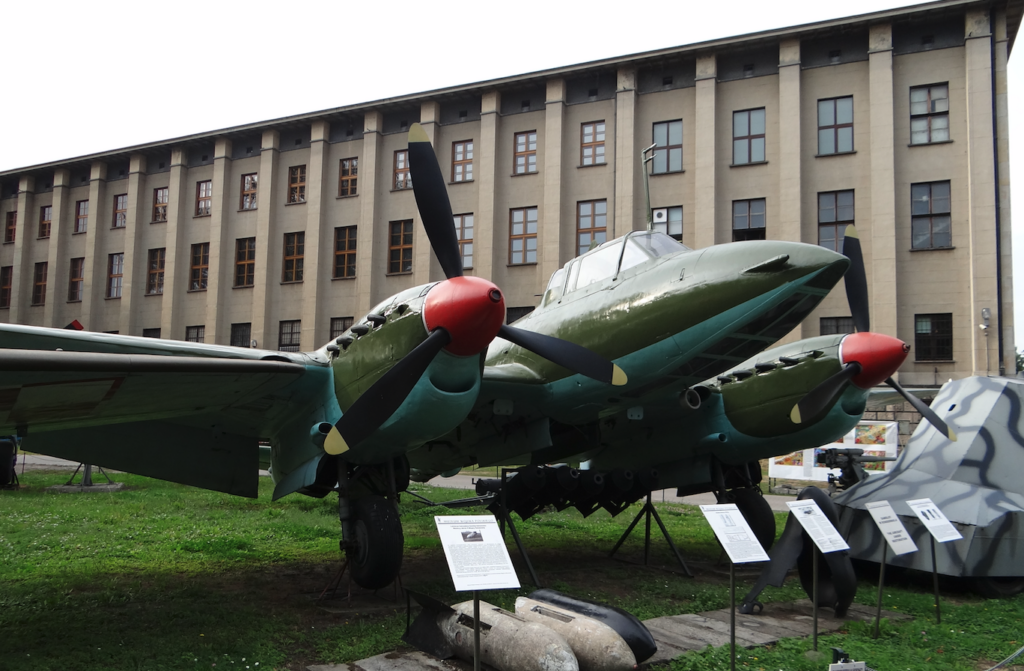
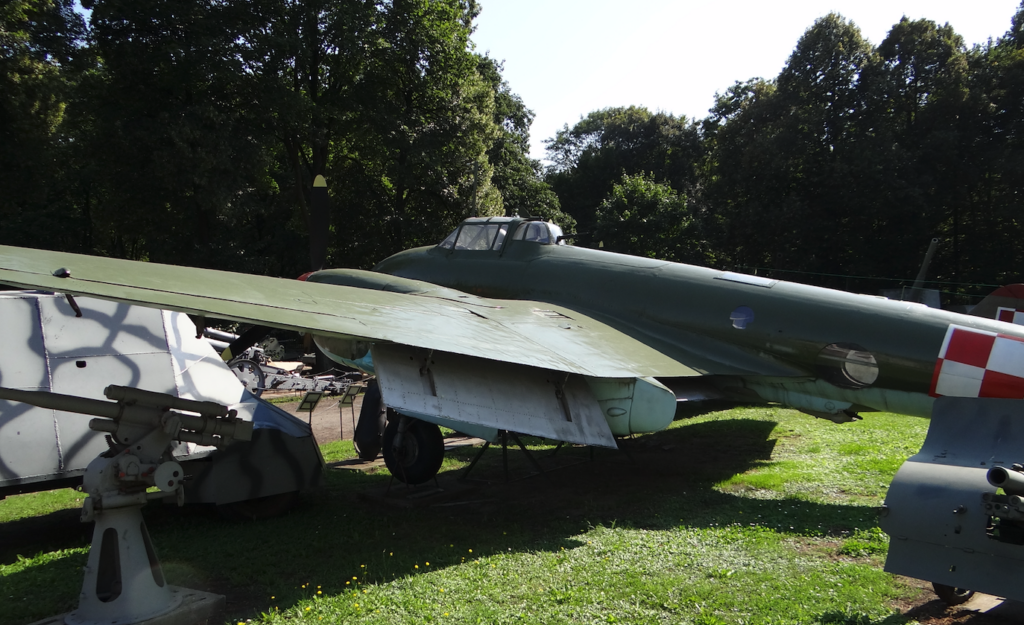
According to available information, the Pe-2 aircraft were withdrawn from service in 1953. And that’s where the history of the Pe-2 in the Polish Army ends. The aircraft departed ingloriously, quietly, perpetuating a negative opinion of Soviet technology in Polish society. The enormous number of aircraft built and its successes during World War II on the Eastern Front have nothing to say about this. A single example can be seen at the Polish Army Museum in Warsaw.
Construction
The Pe-2 is a cantilever, low-wing, all-metal bomber with two engines and retractable landing gear. It had a three-man crew. The aircraft dive-bombed. During mass production, wood was often used in the rear fuselage instead of steel.
The wing is straight with rounded tips, a double-spar design. A typical 1930s outline. Steel spars. Crocodile-type flaps and ailerons are on the trailing edge.
The fuselage began with the nose, which was glazed in the lower section. This contained the bombsight operated by the navigator-gunner, who usually sat behind the pilot. Next were the cockpits for the pilot and navigator-gunner. Initially, the navigator-gunner had to move the machine gun from one window to another to fire the machine gun. Starting with the Pe-2 FT, a movable turret was installed. The bomb bay was located in the fuselage. Behind the bomb bay was the lower gunner-radio operator’s station, which sat in a separate cabin. The fuselage was slim to minimize aerodynamic drag. The fuselage itself was a semi-monocoque structure. However, the frames were sparse, with only four longitudinal beams running along it and no longerons. The structural rigidity was maintained by slightly thicker skin. As it turned out, this solution was sufficient and proved to be the aircraft’s strong point. The cockpits proved extremely cramped, and visibility left much to be desired. The maximum ceiling was unattainable due to the lack of a pressurized cabin. Pilots used oxygen masks for high-altitude flights. The cockpit was equipped with a variety of flight aids. The pilot had an artificial horizon and an RPK-2 radio compass. There was no autopilot, but this did not diminish the Pe-2’s combat capabilities, which were intended to operate in close proximity to the front, and therefore, within short distances of friendly airfields. The cockpit was armored with 9 mm armor around the pilot and 6 mm armor around the navigator. Airbrakes with an AP-1 automatic system were added to the fuselage to facilitate recovery from a dive upon a signal from the bombsight or when certain flight parameters were exceeded. However, the automatic system proved unreliable and was eventually abandoned, in favor of fully manual control of the airbrakes.
The tailplane was in an H-arrangement. Horizontal, straight, with significant lift. Vertical, twin, oval-shaped tailplanes.
The three-spoke landing gear, a classic arrangement for aircraft of the 1930s, retracts into nacelles behind the engines. The tail wheel is steerable.
The control system used electric actuators. Over 50 in total. However, they were later replaced by hydraulic amplifiers. The electric system remained only for the fuel pumps, landing gear retraction and extension, and tailwheel control.
Pe-2 aircraft engines.
Two Klimov WK-105 R/RA 12-cylinder V-type piston engines, producing 2 x 820 kW (2 x 1,100 hp). Later, turbocharged engines were installed, with two-speed turbochargers. The engines became more powerful and received the designation WK-M-105 PF. Their power increased to 2 x 1,210 hp.
Three-blade metal propellers were used, constant speed, with variable pitch control thanks to a hydraulic reduction gear, built under license from Hamilton-Standard.
Oil coolers were located in the wings. Cooling air intakes were located in the leading edge of the wings, and exhausts were provided through louvers on the upper surface of the wings.
The engines were essentially a successful design. However, poor manufacturing and low-quality materials caused numerous operational problems. Oil leaks were common. The cooling system was inefficient, often leading to overheating. Finally, during operation, it lost power almost overnight.
Pe-2 Armament
4 7.62 mm ShKAS or 12.7 mm BT machine guns, or a combination of these.
Theoretical payload capacity was 1,600–1,800 kg, including 1,000 kg of ordnance.
The aircraft could carry various types of bombs, from fragmentation and high-explosive to special bombs (chemical, illuminating), with a maximum weight of 1,000 kg. The largest bomb the Pe-2 could carry was the FAB-500, which was stowed in the main bomb bay. In addition, a small 100 kg bomb, positioned closer to the tail, could also be carried in the bomb bay. As previously mentioned, the bomb bay could carry 600 kg of ordnance in various configurations, with the remaining 400 kg of bombs slung externally from the fuselage. The maximum dive angle was set at 70 degrees.
T-T Pe-2 specifications:
Pe-2; Wingspan 17.13 m, Length 12.66 m, Height 4.00 m, Empty weight 5,950 kg, Gross weight 7,536 kg, Maximum weight 7,600 kg, Payload weight 1,000 kg, Maximum speed 540 km/h, Maximum ground speed 451 km/h, Climb rate 7 minutes at 5,000 m, Range 1,315 km, Ceiling 8,800 m. M-105 R/RA engines. Power 2 x 1,100 hp. Crew 3 pilots.
T-T Pe-2 FT specifications:
Pe-2 FT; Wingspan 17.13 m, Length 12.66 m, Height 4.00 m, Empty weight 6,000 kg. Gross weight 7,600 kg. Maximum weight 7,800 kg. Payload 1,100 kg. Maximum speed 555 km/h. Maximum ground speed 460 km/h. Climb rate 7 minutes at 5,000 m. Range 1,330 km. Service ceiling 8,900 m. M-105 PF engines. Power 2 x 1,210 hp. Crew 3 pilots.
Tally
Preparing a list of Pe-2 aircraft in the Polish Military Aviation is impossible. We can only say that on June 1, 1945, there were approximately 100. At the beginning of 1946, there were 92 in the 1st Mixed Aviation Corps, 12 in the Military Pilot School, and 2 in the Reserve Aviation Regiment. During this time, over half of the aircraft, deemed too worn out, were transferred to the Temporary Warehouse for Aircraft Equipment Maintenance and Storage in Polska Wieś near Opole, where they served as spare parts.
The aircraft were operated by the 7th Aircraft Reconnaissance and Storage Facility in Leźnica Wielka, and then from April 1947, after the 7th Aircraft Reconnaissance and Storage Facility was relocated to Ławica Airport. 42 Pe-2 aircraft were permanently deployed. At the turn of the 1940s and 1950s, flights began for the 21st Aircraft Reconnaissance and Storage Facility at Ławica Airport and the 30th Aircraft Reconnaissance and Storage Facility at Słupsk Airport. By 1950, only 20 aircraft remained airworthy. We estimate that approximately 15 aircraft crashed, and at least four pilots died in the crashes. Engine failures were the primary cause. The sole surviving example can be seen at the Polish Army Museum in Warsaw.
Written by Karol Placha Hetman