
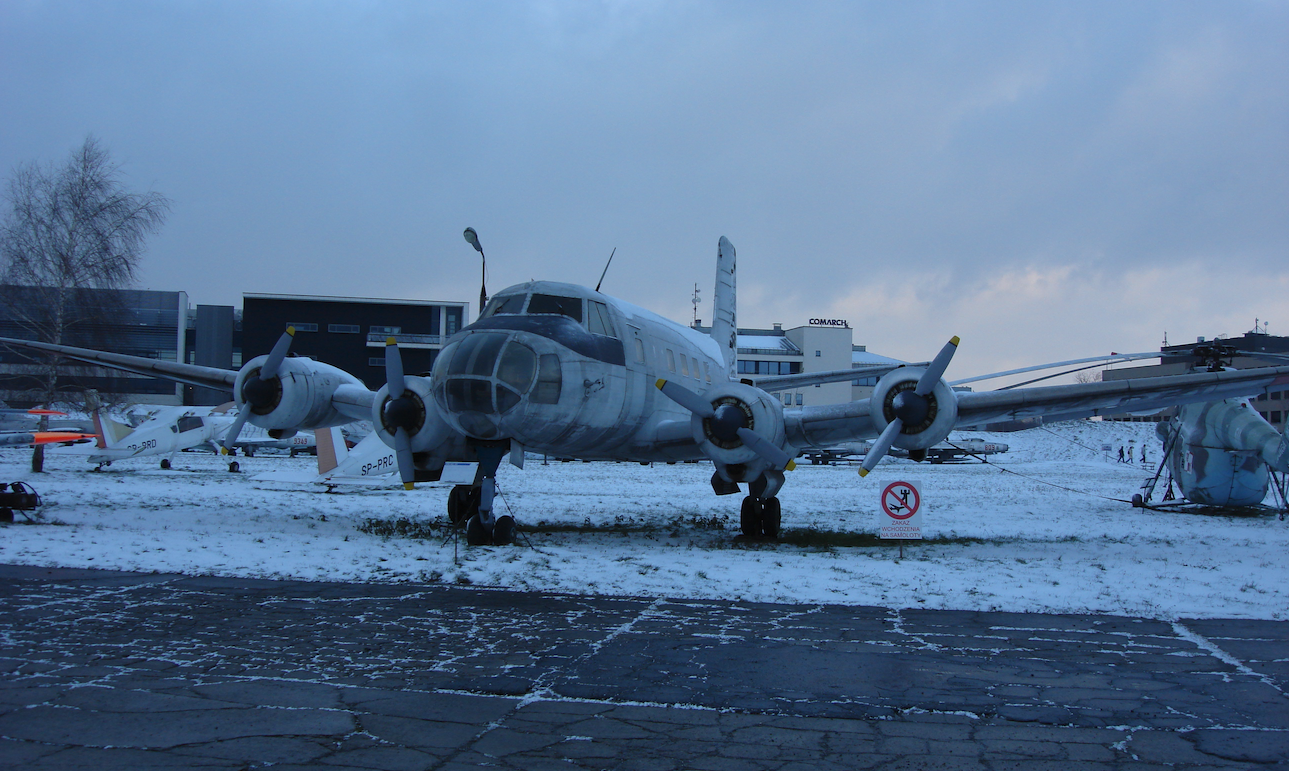
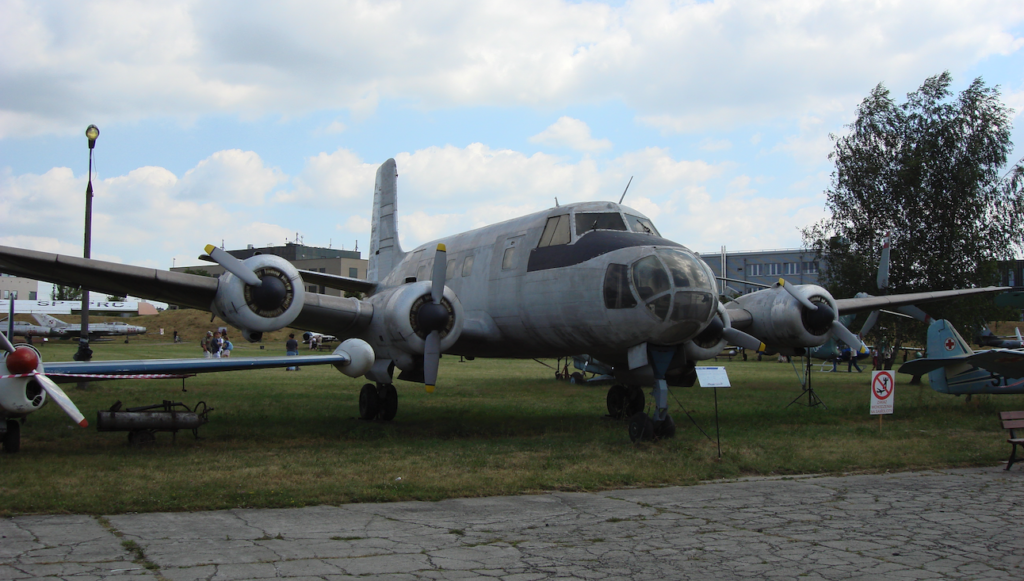
Kraków 2009-07-14
167c Section 21 July 1959.
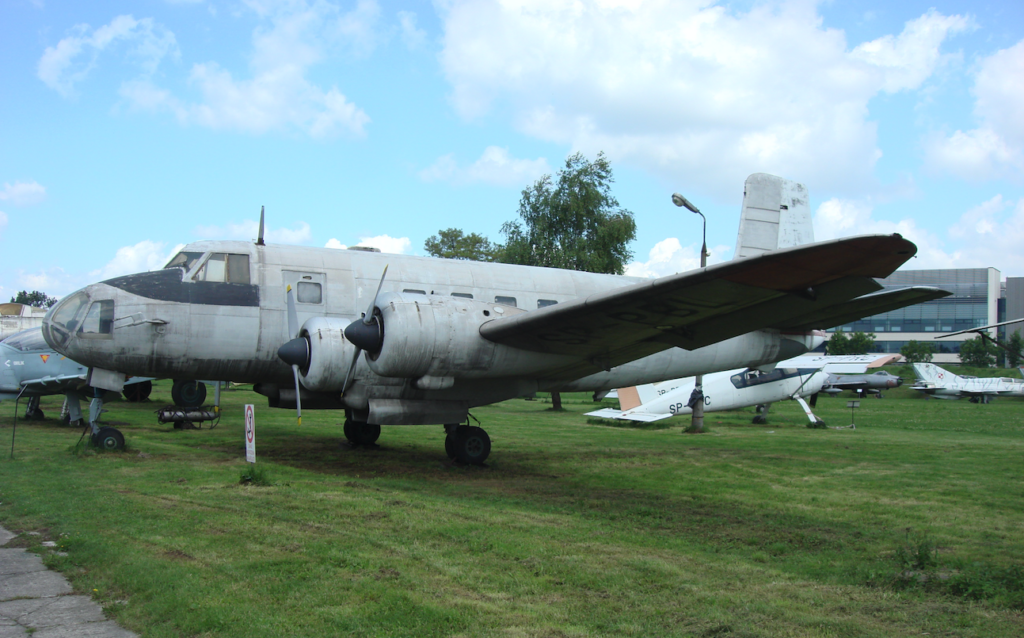
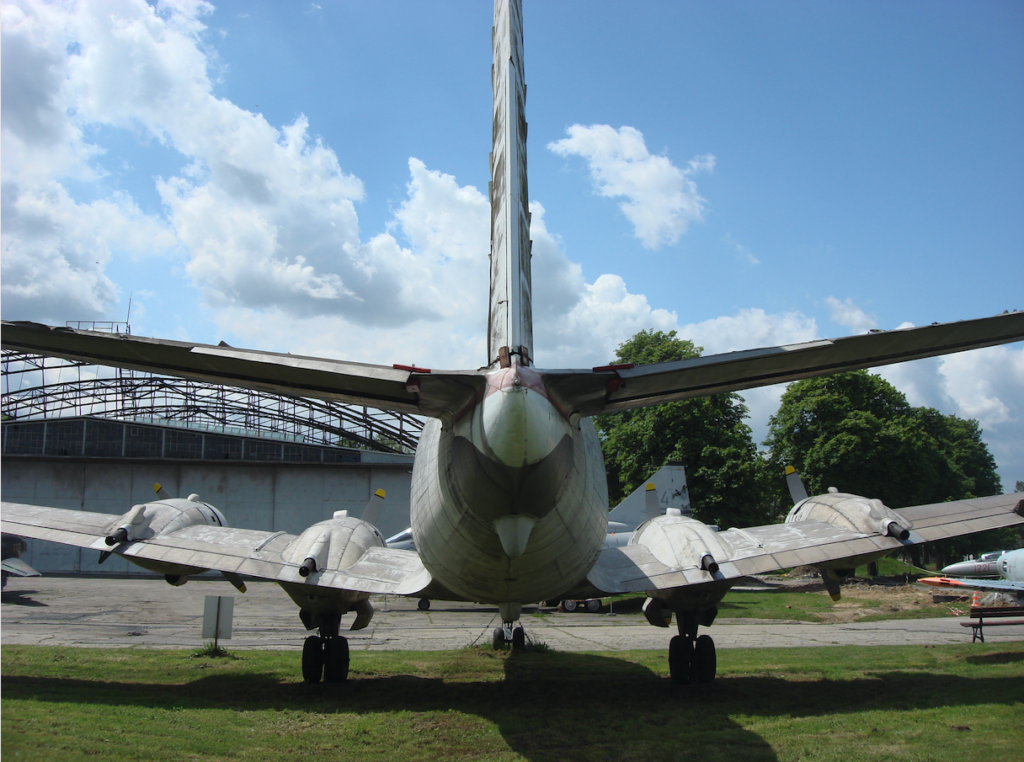
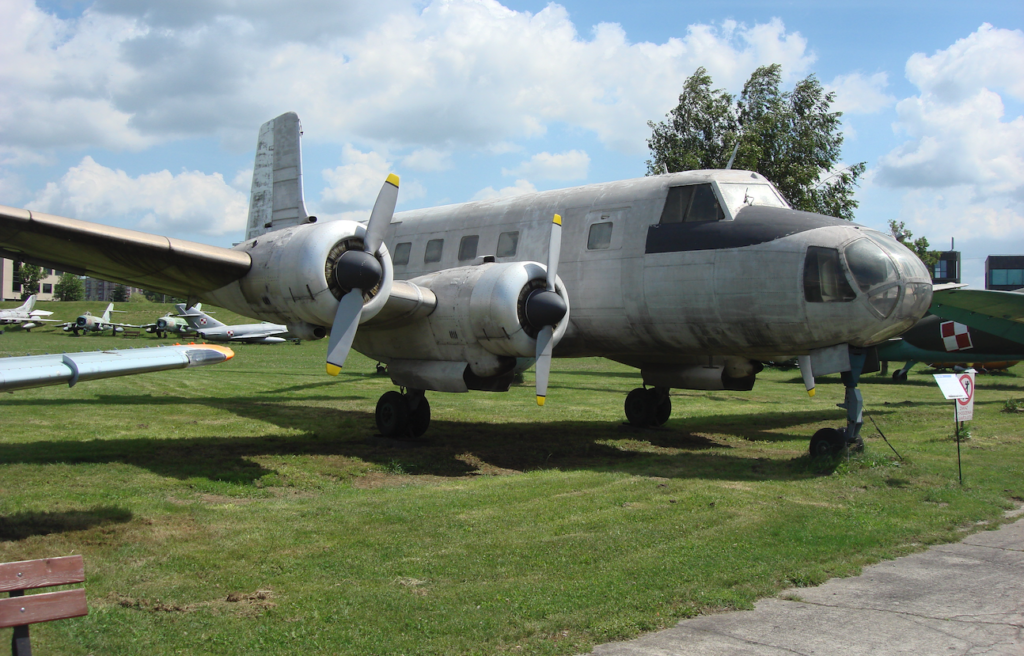
WSK-Okęcie OKL MD-12. Poland
Passenger aircraft, photogrammetric.
History
History
After the end of World War II, our society hoped for a return to normalcy. That it would be no worse than after we regained independence in 1918. Factories, schools, universities, and institutes were reopened. The nation eagerly got to work, little realizing what the communist government had in store for us. And then there was the massive exodus of people, driven like cattle by border changes.
As early as mid-1945, a small number of former aviation industry workers were trying to organize the Institute of Aviation as a research facility, design offices, and workshops capable of building prototypes and small series. All this was accomplished with little support from the central government. As we know, the central government was preoccupied with consolidating communist rule, so it postponed economic development. Moreover, as subsequent decades demonstrated, the central government only knew how to torpedo aviation industry initiatives. However, for the Polish Aviation Industry, the period 1945-1949 was not a lost cause. Aviation schools and universities reopened. The Institute of Aviation began operating. The Aviation Experimental Workshops, led by Tadeusz Sołtyk, and the Central Aircraft Study, led by Franciszek Misztal, were established. The Civil Aviation Department began developing technical specifications (WTs), including those for small transport aircraft.
In 1950, the government took over the Polish Air Force, not to boost our economy, but to expand our army beyond its needs to meet the Kremlin’s needs. They suspended the work of design offices. Despite this, the economy received a massive injection of new technologies.
However, several designs were developed in the transport aircraft department. These included teams led by Professor Tadeusz Sołtyk, Professor Franciszek Misztal, and then Franciszek Misztal and Leszek Dulęba.
In 1946, the Ministry of Communications formulated the basic design principles for a small, economical aircraft for short distances, operating from airfields with grass (dirt) surfaces. It is likely that no detailed WTT guidelines were presented.
In February 1949, the first post-war passenger aircraft, the LWD Miś, capable of carrying eight passengers, made its maiden flight. After its damage in 1952, the program was canceled. The aircraft had a chance of entering series production and entering wider service, but political considerations prevailed.
In July 1950, the CSS-12 passenger aircraft, capable of carrying ten passengers, first flew. Due to the dissolution of the bureau, work on the aircraft was suspended. In 1955, work was temporarily resumed. The aircraft was deemed successful, but due to the exhaustion of the German-made engine stocks, work was discontinued, and the program was ultimately canceled in 1960.
In 1953, the Institute of Aviation requested that the Ministry of Industry include in its 1954 plan the design and construction of a small passenger aircraft based on the 1946 assumptions. By order of the Minister of Heavy Industry, contained in Regulation No. 193 of October 12, 1957, the Aviation Design Center at WSK-Okęcie, known simply as OKL, was established. This center harkened back to the traditions of the pre-war Aircraft Design Center at PZL-WP No. 1 and the post-war Central Aircraft Design Center. This connection was in name only. The new center was intended to become the main design base for the entire aviation industry. The OKL was located on the WSK-Okęcie premises. It was headed by Tadeusz Gumowski, Master of Science in Engineering, from the pre-war PZL, who was also the company’s deputy general director. In retrospect, it is clear that the establishment of OKL was intended solely to serve the government’s interests, allowing it to control new aviation ideas in Poland and, at the appropriate moment, to eliminate them if they fell within the scope of work at CCCP.
Individual units of OKL were created by transferring entire teams from the Institute of Aviation and WSK-Okęcie, or by establishing new units. By December 1, 1957, seven teams were already operating under the OKL umbrella, including the office of Professor Franciszek Misztal and his deputy, Professor Leszek Dulęba. The office was named OKP-2.
In 1954, the Institute of Aviation developed preliminary designs for two passenger aircraft. They were developed by a team led by Dr. Franciszek Misztal.
Engineer Franciszek Misztal earned his doctorate at the age of 28 from the Aachen University of Technology. He designed the PZL-23 Karaś, PZL-26, and PZL-38 Wilk aircraft. He developed a box-shaped wing structure made of corrugated sheet metal.
The new aircraft were the FM-11, which seated 10 passengers, and the FM-12, which seated 14 passengers. Both were twin-engine aircraft. At that time, Mr. Leszek Dulęba, co-creator of the RWD aircraft, joined the team. The two men focused on a 14-passenger aircraft and designated it MD-12, after the names of both designers. The design featured a T-shaped tailplane and a large, two-part door to facilitate the loading of larger cargo.
On November 26, 1955, the Ministry of Transport commissioned the Aviation Institute to prepare a preliminary design for a twin-engine MD-12 aircraft with a capacity of 14 passengers. The MD-12 was intended primarily as a passenger aircraft. Many design features were borrowed from the CSS-12.
Powerplant Program
The aircraft was designed for Soviet ASz-21 engines, each producing 2 x 760 hp and featuring a variable-blade propeller. This engine had powered the OKB Antonov An-2 prototype nearly 10 years earlier. However, the Antonov OKB was never satisfied with this powerplant and sought to equip the An-2 with an engine producing nearly 1,000 hp. Ultimately, the An-2 was equipped with a 1,000 hp ASz-621R engine. In 1958, Poland acquired a license for this engine and continues to produce it at the PZL-Kalisz plant to this day (2009). It’s difficult to explain the entire dedication of the powerplant to the MD-12. Production of the ASz-21 engine was halted, while production of the ASz-621 engine continued at full speed for the next 50 years.
The design team learned in mid-1956 that there would be no ASz-21 engines. Without engines, there would be no aircraft. Therefore, the team, capable of calculation, decided to rely only on themselves. Immediately available was the good Polish WN-3 engine, which powered the Bies trainer aircraft. Engineer Wiktor Narkiewicz designed this engine, modeling it on the American Jacobs engine used in twin-engine Cessna Bocat aircraft. However, the WN-3 engine only produced 330 hp, yet the Bies aircraft’s performance rivaled that of aircraft with engines twice as powerful, such as the Yakovlev Yak-11. Therefore, for the MD-12, it was logical to have four WN-3 engines as the powerplant. Perhaps our designers expected that in the future it would be easier to build a much larger, four-engine Polish passenger aircraft. After the team’s decision, voices were raised: “These engines are not suitable for such an aircraft, but you don’t have any others.” If such a plan wasn’t adopted, the program would fail, and the bureau would be liquidated.
Fortunately, in 1956, the authorities gave the green light for such a plan. At the same time, they ordered an increase in passenger capacity to 20. This was strange, because with the ASz-21 engines, 2 x 760 hp = 1,520 hp. With the WN-3 engines, 4 x 330 hp = 1,320 hp. This means there might be a power shortage. Apparently, the authorities promised additional funds for the development of new propellers, which, however, never materialized. A composite propeller was tested in Poland, but its final version was released after the MD-12 program had already been terminated.
To be fair, there were plans to add a turbocharger and a reduction gear to the propeller. However, this would have effectively been a new engine. There was also the idea of converting the engine to a twin fourteen-cylinder radial, but given the cooling problems other manufacturers had with such a system, the idea was abandoned.
Therefore, the engine and propeller had to be adopted. It should also be noted that the existing propellers were adjustable, but feathering was not possible. This meant that when the engine cut, the propeller created additional drag. This was irrelevant for the Bies, but for a four-engine passenger aircraft, it was a different story. To complete the propulsion issue, it should be added that the engine cowlings and all the accessories already existed, which was also not insignificant. And one last thing, which the designers learned after the program’s conclusion: the WN-3 engines on the MD-12 aircraft never failed. If there were any faults, they were only with the accessories.
Technology.
A little about materials. The design wanted to use chromium-molybdate steel, of which small quantities remained after the war. Polish steelworks could produce it, but only if the order was large, and the program couldn’t guarantee that. Therefore, the designers were forced to use 30HGSA steel, used in the production of PZL Lim-1/2 fighters. The designers expressed reservations about the welds and heat treatment of this steel.
Thanks to the production of the Lim-1/2 aircraft, the designers gained access to electron beam castings. Electron beam castings are highly sensitive to corrosion, but in the MD-12 they were used in the control system, aileron and flap supports. Examining the MD-12 at the MLP today (2009), we can see that these components look very good, and the aircraft has been outdoors since 1967.
Clad sheets were also used in the MD-12. Cladding involves applying a protective layer of another metal or alloy to metal, usually by hot rolling. This allows for obtaining sheet metal with the appropriate properties and a protective layer, such as an acid-resistant one. The most common cladding method is carbon steel, copper, nickel, silver, and aluminum.
Many components were sourced off-the-shelf, but many power units and hydraulic systems also had to be designed and built from scratch, undergoing testing at the Institute of Aviation. The radio equipment was large and heavy. It weighed about 200 kg. None of our radio engineering plants were eager to develop a new one. Why? Not because they couldn’t do it. But because the financial outlay would have been high and the profits nil. The appointed directors preferred to keep a low profile. Remember, the program didn’t have the support of the highest party authorities.
Travel comfort.
We can learn how difficult it was for our designers to design a passenger cabin from a few memories. Frankly, they had no model to follow. They based their designs on the DC-3, Li-2, Il-12, and Il-14. They knew of Western designs only from a few advertising materials. A few designers had the opportunity to see how a passenger cabin could be designed at the Farnborough Salon. But that was back in 1962, and it was a dream come true. They even tried to install ashtrays in our seats. Today (2009), smoking is completely forbidden, even at bus stops, let alone on airplanes. The seats were individual, sparsely upholstered. But there was more legroom than in a contemporary Boeing B.767. Their backrests were fixed, not adjustable. This was due to two factors: the flight was not long, and the movable backrest complicated the seat frame and increased the cost of production.
There was no buffet on board, again due to the short flight. The cabin crew, represented by a flight attendant, was also eliminated. It was determined that passengers could receive candy with their ticket. The flight attendant’s only significant function was evacuating passengers, but this task was assigned to the co-pilot.
A fully functional restroom was planned and installed on board, complete with a toilet and sink. The restroom successfully passed all tests, although its possible malfunction did not pose a catastrophic threat.
Not much weight or space was allocated for luggage. It was expected that travelers would have very little. Few today remember that when going on vacation to an aunt, a parcel containing some belongings and gifts for the family was sent a few days earlier.
The issue of cabin soundproofing cannot be ignored. In this regard, Andrzej Rudnik, M.Sc. Eng., with the help of Professor Marek Kwiek from the University of Poznań, developed an innovative soundproofing technology. A bit cumbersome to produce, but effective. To preface the facts, the photogrammetric specimen was soundproofed as usual.
The cabin heating system was very interesting. It was simply underfloor heating. The cabin floor was made of corrugated sheet metal. Hot air was vented through these channels. However, the system required refinement, as excessive heat loss occurred between the engine and floor.
Prototypes.
In 1956, construction of prototypes began.
In December 1957, work was transferred from the Aviation Institute to the Aviation Design Center (OKL), established within WSK-Okęcie.
When the Aviation Institute was established, it was assumed that the prototypes would be handled by the Aviation Institute for aerodynamic, static, and flight tests. The factory flight tests were conducted by the Aviation Institute’s Flight Testing Department, headed by Ryszard Lewandowski, M.Sc. Eng. This was in accordance with the then-current Minister of Communications’ Announcement of June 2, 1948. In practice, the OKL built the prototypes, repaired defects, implemented changes, and performed technical maintenance during flights, with the aircraft piloted by pilots from the Flight Testing Department. Engineer Jan Wyganowski conducted the tests on behalf of the Flight Testing Department. The pilots drew on the experience gained from flying the CSS-12.
Four prototypes of the MD-12 were built, one of which was designated for static tests and three for flight. The static test aircraft was completed in March 1959.
On July 21, 1959, the first SP-PAL aircraft designated for flight testing made its maiden flight. The pilots were test pilot engineer Andrzej Abłamowicz and test pilot Aleksander Wąsowicz. The date of the maiden flight is noteworthy: it was one day before the great communist holiday of July 22nd. The authorities enjoyed receiving reports of the socialist state’s successes at this time. The minister had the opportunity to show off his skills to the party authorities who had placed him there.
This aircraft was not fully equipped. The pilots’ seats were unupholstered. There were no undercarriage bay covers. There were no seats in the passenger cabin. There was also no de-icing system, heating and ventilation, or radio navigation equipment. The aircraft was incomplete, but it received this crucial approval for flight. The SP-PAL aircraft was approved for initial flights with certain reasonable restrictions: permissible mass of 5,800 kg (designed 7,500 kg), permissible g of +2/-1 (designed g of +3.5/-1.25), and permissible speed of 280 km/h (designed 370 km/h).
Testing this complex aircraft, given the lack of experience with four-engine aircraft, was a challenging task. The first stage of testing allowed for verification of the systems’ functionality, performance, and flight characteristics. This stage, known as Section A, comprised 15 flights lasting 10 hours and 5 minutes and concluded on September 29, 1959. After this date, the Commission convened and issued a Preliminary Opinion. This document stated that the MD-12 was ready for full factory tests. No significant changes to its design, powerplant, equipment, or installations were planned. Due to its good flight characteristics, the schedule for further tests adopted on February 26, 1959, was maintained. In short, the opinion on the aircraft was optimistic. Perhaps a bit too optimistic.
Tests continued, and on July 7, 1960, a Preliminary Opinion on the flight deck equipment was issued, based on 54 hours of flight. However, the opinion included a full package of recommended changes.
On November 26, 1960, the IL Strength Department issued the State Control Test Report for the MD-12 prototype.
Strength tests and other tests were gradually carried out, allowing for the increase of initial limits. It was then that the aircraft’s childhood illnesses became apparent. The first strange phenomenon during flights was a jerking of the pedals. The second disturbing phenomenon was vibration of the aircraft’s tailplane during normal level flight. The stabilizer vibrated very violently, appearing to be tilting sideways by 30 degrees. This was accompanied by violent jerks of the control column. Extending the flaps immediately calmed the flight. However, the matter was ignored, even though it was a serious indication that additional investigation was necessary. The culmination of the tailplane vibration was the crash of SP-PAL, but more on that below.
In September 1959, the aircraft performed a demonstration flight over the 10th Anniversary Stadium in Warsaw. It was then that the attitude of our government, and especially Comrade Wiesław Gomółka, towards Polish design and the Polish aviation industry, became clear. He became, to put it mildly, furious.
As a side note, let us add that Comrade Wiesław Gomółka reacted identically when the director of the FSO (passenger car factory) in Żerań demonstrated a Warszawa M-20 convertible with leather upholstery and other innovations that improved travel comfort. Well, the Polish nation has enemies not only abroad. Some enemies live right next door. The incident over the 10th Anniversary Stadium put an end to the MD-12 aircraft. The remaining work was accomplished solely by force of inertia.
In the fall of 1959, work on the MD-12 program was supplemented by part of the study designs for the KS-1 and KS-2 short-takeoff aircraft.
In December 1960, the MD-12 aircraft, registration SP-PBD, in its passenger version, was completed. It was the second aircraft to fly. The first flight took place on January 7, 1961. This aircraft already had the final passenger cabin configuration and was almost completely equipped.
The SP-PBD aircraft was painted in a pattern that everyone really liked. The paint scheme was designed by designer Jerzy Misztal. The coincidence of their names with the chief designer.
The first flight of this aircraft and its introduction to flight testing allowed for the intensification of factory testing. On April 29, 1961, the document “Report on Factory Tests of the MD-12 Passenger Version” was issued. This report was published in six parts with annexes: 1. engine cooling measurements. 2. flight characteristics, stalls, and trim capability. 3. performance. 4. preliminary operational test. 5. flight characteristics, stability, and controllability. 6. fuel consumption measurements, evaluation of the compressed air system, and evaluation of the internal lighting.
The aircraft reached a maximum indicated speed of 410 km/h and recovered in flight at a speed of 370 km/h to a g-value of 3.0. The aircraft was assessed as easy to fly. The Report highlighted a number of significant issues requiring improvement. Significant issues included: a lack of warning of approaching a stall. A vibration known as buffeting, the recovery from which was relatively slow. Poor climb with one engine inoperative, caused by high propeller drag. A review of the flap deflection, as the assumed values appear excessive.
On July 5, 1961, the manufacturer, WSK-Okęcie, requested that IL conduct a type approval test that would allow passenger transport. The test was limited in scope and completed within 10.5 flight hours. These tests were conducted from July 24, 1961, to July 28, 1961. Consequently, IL issued an Interim Ruling on August 16, 1961, approving the MD-12 aircraft for passenger and cargo transport. The ruling was issued for the summer period, for 150 flight hours, until September 16, 1961. The ruling ran for four pages and included the following specifications: Permissible takeoff and landing weight: 7,500 kg, permissible g-load: +3.00/-1.25, maximum speed in rough air: 216 km/h, maximum diving speed: 370 km/h, flights under IFR conditions and at night.
Rzeszów Operation.
On August 24, 1961, LOT Polish Airlines and WSK-Okęcie signed an agreement providing for the lease by LOT Polish Airlines of an MD-12 aircraft for passenger transport on the Warsaw-Rzeszów-Warsaw route from August 28, 1961, to September 30, 1961.
The purpose of the operation was to assess the suitability of the MD-12 for LOT Polish Airlines. Evaluate cruising speed with passengers and fuel consumption. Gather experience for possible future operation at LOT.
120 flights were made, transporting a total of 1,730 passengers, with a total flight time of 129 hours. Flights were performed twice a day, there and back. It’s easy to calculate that one flight lasted approximately 1 hour. The average speed was 280 km/h. The total propellant cost per hour of flight was 55.4% of the Li-2’s cost. The total fuel cost per hour and passenger was 58.5% of the Li-2’s cost. The total fuel cost per passenger-kilometer was 57.0% of the Li-2’s cost. Due to the aircraft’s maximum range of 650 km, the aircraft could only be safely refueled at Okęcie Airport.
This confirmed the MD-12’s economical operation in practice. The aircraft fulfilled its intended missions.
In 1962-1963, a number of advertising, excursion, and business flights continued. However, this did not affect LOT Polish Airlines’ interest in the aircraft. It did not, because it could not, given the current government configuration. The star alignment was simply unfavorable for the MD-12 from the very beginning.
Work continued at the factory. Primarily on improving heating and de-icing, reducing noise, and improving the range of radio equipment.
Photogrammetric version.
The existing aircraft could not simply be discarded, although the Party Central Committee would have had no objection to this. Therefore, as early as 1960, military and civilian institutions expressed initial interest in using the MD-12 for photogrammetric flights.
At that time, the Li-2 photogrammetric aircraft were reaching the end of their service life. The Military Institute of Geodesy and Cartography became interested in the MD-12 aircraft. General Naumenko and Colonel Lippert worked there and became the driving force behind the project. Fortunately, in the GDR (German Democratic Republic), at the Zeiss works in Jena, a new aerial camera had been built, and a carrier was needed for it.
The photogrammetric version was codenamed Product 43 and designated MD-12 F.
When starting to build the photogrammetric version, the designers immediately hit upon the idea of placing an observer in the nose, replacing the large luggage compartment. The idea was excellent, as the protruding canopy, as on the Li-2, was replaced with a station that did not impair the aircraft’s flown airflow. However, a significant problem arose. Access to this position had to be relocated to the co-pilot’s station, thus transforming the aircraft into a single-pilot aircraft, assisted by an automatic pilot. The crew consisted of two; pilot and navigator, and two or three camera operators. However, because the MD-12 is a four-engine machine and many operations had to be performed manually, such as setting the throttles, adjusting the mixture, RPM, shutters, and many others, the pilot had to have a good assistant, a third crew member. Fortunately, no one questioned this arrangement.
The passenger version of the aircraft had a low ceiling, which was too low for the photogrammetric version. This parameter needed to be improved. First of all, the wing was lengthened, increasing the lifting area. The wingtip contour was also changed. The aircraft’s total weight was also reduced from 7,500 kg to 7,000 kg.
According to the consensus, engineer Marcin Fortuński made the greatest contribution to the MD-12 F. Consequently, the team joked that the MD-12 F designation came from the surnames Misztal, Dulęba, and Fortuński. There was also another joke within the team about this version. The aircraft had numerous cutouts, necessary for the new station and new equipment, but difficult to calculate on the calculating machine, which sometimes malfunctioned. The team consoled itself with the newly deciphered registration SP-PBD: Push Biedę Dalej.
In May 1961, a mock-up of the photogrammetric version was completed. It was evaluated by the Mockup Commission, and discussions were held with future users. In July 1961, at a conference in Jena, specialists from geodetic services from the communist bloc countries met. At this conference, requirements for a photogrammetric aircraft were approved. In July 1962, the General Staff of the Polish Army approved the technical requirements (WT) for a photogrammetric aircraft. This decision enabled the first flight of the MD-12F aircraft, registration SP-PBL, to take place on July 21, 1962. Taxiing tests were conducted as early as July 15, 1962. Once again, the first flight took place the day before the Communist holiday of July 22nd. Once again, someone had something to brag about and be proud of.
Over the next 10 days, the entire first phase of flight testing, scheduled for seven hours of flight, was completed. The results confirmed the aircraft’s performance. The positive results of the first stage of tests enabled the IL to issue an “Interim Decision” on August 18, 1962, authorizing the aircraft to fly.
Operation Bucharest.
This “Rule” had a significant impact and enabled the aircraft to participate in the Comecon Topographic Congress from October 5-15, 1962, with Mongolia, South Korea, and Vietnam participating.
Before the aircraft flew there, it performed a series of photogrammetric flights in the area of Warsaw, Góra Kalwaria, Gdańsk, and Zakopane, with a crew supplemented by military operators.
In October 1962, the aircraft flew to Bucharest for a demonstration during a conference of geodetic services of the socialist bloc countries. The feedback received was positive. On the return trip, the aircraft was demonstrated in Budapest.
After Operation Bucharest, work was underway at the factory to correct the identified defects.
In November 1962, the photogrammetric aircraft received a positive opinion from the Technical Committee of the Topographic Directorate of the General Staff of the Polish Armed Forces. In June 1963, the SP-PBL aircraft performed a demonstration flight to Dresden and Jena.
In July 1963, another conference of cartographic services was held, this time in Warsaw. At this conference, based on the tests performed to date and, above all, the photographs taken, the suitability of the MD-12F aircraft was confirmed.
At this time, the OKL, in order to intensify and simplify its organizational system, decided to establish its own organizational units capable of conducting strength tests, equipment tests, engine tests, and flight tests. The new department was formally established in June 1962. It was called the Test and Research Department (OKB), and within it was established the Flight Test Branch (OKB-1). This department gradually took over the tests previously assigned to the Aviation Law. It is important to remember that on May 31, 1962, the Aviation Law Act was enacted, implementing ICAO principles.
Disaster.
On September 17, 1963, the SP-PAL aircraft crashed. The entire crew perished: Captain Mieczysław Miłosz, co-pilot Aleksander Wąsowicz, test engineer Jerzy Żupański, observer Jerzy Hołowienko, and observer Jadwiga Sajewska. May their memory be honored!
The aircraft was performing its penultimate test flight to measure pressure distribution outside the fuselage to select the optimal location for a static pressure sensor. The crash occurred near Białobrzegi, over the town of Bronisławów.
During the flight, the aircraft lost its tailplane, undoubtedly due to flutter. Most likely, when the tailplane fell off the aircraft, the aircraft tore off or lowered its nose. In both cases, this must have resulted in a flat spin on its back and a flat impact with the ground. The aircraft did not catch fire, which facilitated the analysis of the crash. There was no flight data recorder or recording of the crew’s conversations on board.
When investigating the causes and course of the disaster, the British, whose BAC-111 crashed that same week, were envied, because they immediately knew what had happened. And we spent months researching and reconstructing the tragedy.
As is known, during numerous test flights, this aircraft underwent various tests far beyond normal operating conditions. It underwent stalls and breakaways. And not only at normal flight speeds, but also at maximum speeds of 410 km/h. Permissible maximum speeds and loads were exceeded. These were not normal conditions, but extremely strenuous ones. At the time, there was no way to see inside the enclosed caisson. Therefore, if the aircraft’s geometry, verifiable by leveling, remained unchanged, it seemed possible to continue flying because nothing was happening. In the case of the tailplane, divided chordwise by the ribs and fins, consisting of separate upper and lower sections, the lack of internal visibility proved disastrous. If the stabilizer was twisted, the upper section moved relative to the lower section. When the noses were twisted down, the upper rib moved rearward and the lower rib moved forward. The riveted joint would not fail, but the lower tab shelf bent. If it had already bent once, the structural stiffness was reduced. After several such repetitions, fatigue failure of the tab could occur. It can be assumed that the stabilizer was subjected to a load greater than the design load and the regulations under which it was designed. The regulations themselves were later amended.
Improving the design to eliminate the cause of the tailplane damage proved to be child’s play and was implemented on the SP-PBL.
Cause of the crash.
End of the program.
Throughout 1963, analyses, tests, trials, and the resulting workshop work were conducted, which continued until May 1965. As a result, the photogrammetric aircraft underwent local reinforcements, particularly the tailplane.
In 1963, during tests, an MD-12 aircraft, registration SP-PBD, was accidentally damaged while taxiing. The decision was made to repair the aircraft, but the aircraft was ultimately written off.
In October 1963, the Kremlin requested a demonstration of the photogrammetric aircraft in Lviv to consider a possible purchase.
In February 1964, the Planning Commission of the Council of Ministers decided to suspend production of the MD-12.
Also in February 1964, OKL developed a work program for transferring the MD-12 F SP-PBL and MD-12 SP-PBD to LOT Polish Airlines for use for photogrammetric purposes.
In September 1964, talks were held with LOT Polish Airlines regarding crew training for photogrammetric purposes.
In February 1965, Hortex expressed interest in using the MD-12 aircraft for cargo transport. Nothing came of it.
In May 1965, the Institute of Aviation issued a ruling and the MD-12 F SP-PBL flew again.
In June 1965, the OKL at WSK-Okęcie was liquidated. All design offices were curtailed, and staff were laid off.
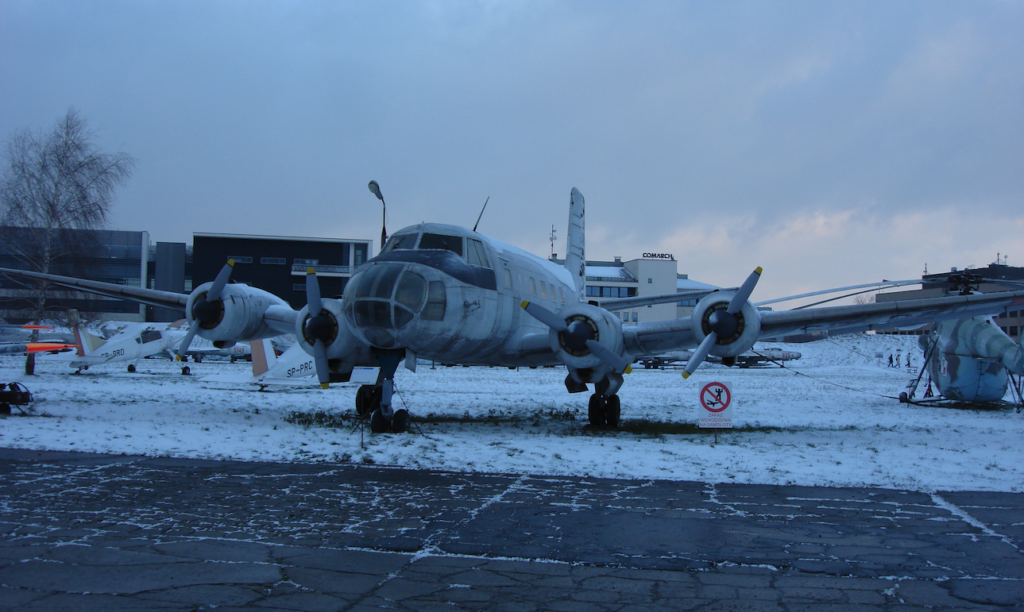
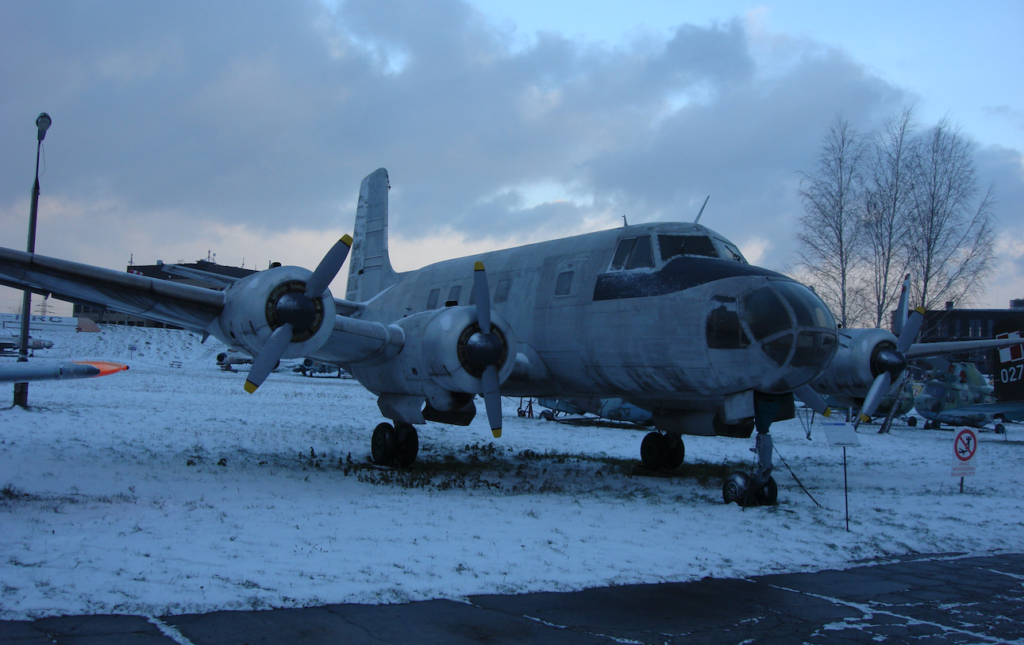
The epitaph of the MD-12 came in September 1965, when the Aviation Industry Association issued an order to terminate the MD-12 program. Consequently, LOT Polish Airlines declined to participate in further negotiations regarding the acquisition of the aircraft. It was decided to transfer the SP-PBL photogrammetric aircraft to the Aviation and Space Museum for testing, research, and in-house transportation, while retaining the SP-PBD aircraft as a source of spare parts. Due to a lack of funding, in April 1967, the SP-PBL photogrammetric aircraft was flown independently to Czyżyny, to the Museum of Aviation and Cosmonautics, where it remains as an exhibit to this day (2009). It arrived on April 19, 1967.
An Attempt to Evaluate the MD-12
Discussions about the MD-12 often cite the opinion that it was a weak aircraft, with numerous fundamental flaws. However, it must be remembered that our capabilities at the time were limited in many respects. Access to modern technologies, modern materials, and components, not to mention avionics, was therefore limited. But that wasn’t required of this aircraft. It was intended to transport passengers economically, safely, and affordably over short distances. And it was possible. Despite numerous difficulties, the aircraft held up well in many respects and outperformed other designs. For example, the cabin ergonomics were superior to those of the DH Heron. In the British aircraft, a spar ran through the center so high that women in skirts had difficulty crossing it.
Flying the MD-12, according to many pilots, was easy and posed few problems. Putting aside the childish phenomena, it’s impossible to compare this aircraft with current designs. The materials and regulations were different.
The MD-12 was also remarkably innovative in another respect. It had a two-person crew, when most passenger aircraft had a minimum of three pilots. Perhaps LOT Polish Airlines crews at the time didn’t want such a workload during flights, a fact they never officially revealed. I remember vividly when, in the 1980s, leading aircraft manufacturers began building planes with two-person cabins, the resistance from crews and trade unions was enormous. A great many polemical articles appeared, even in the Polish professional press, even though the issue didn’t concern LOT Polish Airlines at the time. The basic crew of an An-24 or Il-18 is four, and an Il-62 is five.
Oh well. It’s a shame about the lost enthusiasm, the costs incurred, and a good aircraft that had already outgrown its infancy. And at LOT Polish Airlines, the Soviet Li-2, Il-12, Il-14, and Il-18 still reigned supreme. The An-24 would have to wait a while longer.
Written by Karol Placha Hetman