
Skawina 2026-08-04
Military airports in Poland. 1918-1989.
After the rebirth of the Polish-Lithuanian Commonwealth in 1918, the Polish Army took over all airfields inherited from the occupying powers. The main airports were: Mokotów (Pole Mokotowskie) on the outskirts of Warsaw, Rakowice (Czyżyny) on the outskirts of Krakow, Ławica near Poznań, Szwedowo near Bydgoszcz, Toruń, Grudziądz, Porubanek near Vilnius, and Lewandówka in Lviv. In addition, there were a dozen or so other privately owned airports, which the military had the right to use. The infrastructure of these airports varied greatly. This was primarily due to two factors: the original purpose of the airport, and the consequences of operations during the Great War, or the lack thereof. For example, Czyżyny, Szwedowo, Toruń, and Bydgoszcz airports escaped war damage entirely. Lewandówka airport, on the other hand, was among the most severely damaged, particularly during the Polish-Soviet (Russian) War.
The Polish authorities relatively quickly developed a plan for the development of military airports, which was closely linked to the development of military aviation, which at that time was not a separate branch of the armed forces. The problem was that they had a modest budget and needed to use the funds prudently. The first stage involved securing the assets at their disposal. A significant improvement was the transfer of some of the work to co-owners of the facilities. This was the case, for example, in Ławica, where the Wielkopolska Wytwórnia Siłownia “Samolot” (Greater Poland Aircraft Factory “Samolot”) was established. This factory co-operated in maintaining the airport.
The situation was extremely difficult in two cities: Warsaw and Lviv, although the reasons were different. In Warsaw, the Pole Mokotowskie airport was too small. This was due to the presence of numerous combat and training units based there, aircraft maintenance work being carried out there, and ultimately the construction of new aircraft. Therefore, a very extensive development plan was developed for Warsaw, involving the construction of several airports. The first was to be a military airport at Okęcie, the second a transport airport at Gocław, and the third a sports airport at Bielany. In Lviv, the main difficulty was the location of Lewandówka Airport, which was located very close to the railway station and making expansion practically impossible. Therefore, the authorities sought a new location in nearby Skniłów. As a result, the Okęcie and Skniłów airports were the most important investments throughout the Second Polish Republic. The largest sums of money were spent on these airports.
Secondary airfields played an important role in Poland’s defense doctrine, and were variously designated as backup, reserve, field, ambush, and maneuver airfields. Military documentation referred to them by the name of the town or estate on which they were located, along with their military codenames. They were established near numerous Polish manors, as such locations guaranteed good aircraft maintenance and adequate social facilities for soldiers. These airfields had a very simplified infrastructure. A meadow or pasture no longer than 500 meters was sufficient for aircraft of the time. Nearby orchards or forests provided good cover for aircraft to camouflage them. The presence of a blacksmith shop allowed for minor repairs, especially damage to aircraft landing gear. The presence of horses on the estate guaranteed effective, albeit slow, communication and information flow. These airfields proved their worth in the early days of September 1939, when the aircraft based there suffered no losses, despite significant damage to the main airfields.
1945
The situation after the end of World War II was completely different from that after the Great War. Poland fell under the dictatorship of Moscow, and later Berlin, and sovereignty was out of the question. With the consent of the Western powers, Poland was stripped of its eastern territories and the so-called Recovered Territories were annexed, forcing millions of Poles to relocate. Furthermore, Poland remains unsovereign to this day. The Polish government includes communists, Volksdeutsche, and Freemasons. But that’s a topic for another time.
Immediately after the end of World War II, it was anticipated that military aviation would return to its pre-war air bases. Initial efforts were geared toward this goal. The main military aviation centers were to be Warsaw, Kraków, Poznań, Wrocław, and the Tricity area (Gdańsk, Sopot, Gdynia). Their purpose was to defend the most important urban agglomerations.
In 1950, the situation changed significantly. Three major factors prompted these changes: the Korean War, the East’s defeat in the blockade of West Berlin, and the successful nuclear test conducted by the CCCP. Decisions made at the time in the Kremlin led to Poland’s military expansion beyond the defense needs of our borders. Mass production of combat aircraft began. Simultaneously, the modernization of old airfields and the construction of approximately 100 new military airfields began. Some of these were to become bases for newly formed Polish air regiments, others were to serve as backup airfields for these regiments, and ultimately, a dozen or so airfields were to be transferred to the Soviet Army.
100% of these investments were located in northwestern Poland. The airports were located in forested areas, far from larger cities and towns. Sometimes, the sites of former German airfields or military training grounds were used.
Naming individual airports, especially alternate airports, was, and still is, somewhat difficult. Typically, an airport was named after the town in which it was located. But it could also be named after a neighboring town, as a Polish Post office, or more precisely, a post office, and often a telephone exchange, was located there. Therefore, a given airport could have two, and sometimes even three, names. For example, the alternate airport in Konarzyny was also listed as Sąpolno or Chojnice. However, in the Polish Army nomenclature, there was always one name for a given airport, and so Konarzyny airport is listed in documents as Sąpolno. In recent years, some municipalities acknowledge their connections with former airports, which is sometimes reflected in street names. At that time, in these towns, we might encounter the names “Aviation Street” or “Parachute Street.”
A significant advantage was the proximity of a railway line or the possibility of connecting a railway siding from a nearby railway station. Rail transport was crucial not only during the airport’s construction but also during its operation. Construction materials, equipment for barracks (barracks) and other buildings were delivered by rail, cut timber was transported, coal for heating, fuel for aircraft and cars, aircraft spare parts, and weapons were delivered, ground components of the air force unit were transported, aircraft engines, radios, and other military equipment were sent for repair, and even food was delivered to the army.
In the 1950s, airports were built according to a single basic plan developed by the CCCP. The most important element of the airport, much like today, was a rectangular take-off area. Approximately 3,000 meters long and 500 meters wide. The principle was that the longer side of this rectangle should be in the direction of the most common winds. A single runway with a concrete surface was placed on the take-off area. It ranged in length from 1,900 to 2,200 meters and was 40-60 meters wide. If the airport served as a base for a major air regiment, the runway was systematically lengthened or even widened during subsequent renovations. A main taxiway, 10-20 meters wide, was constructed parallel to the runway, connecting with the runway via taxiways in three or four places. Aircraft parking pads (APS), also with a concrete surface, were located at both ends of the main taxiway. In the 1950s, landing field lighting was very modest. Sometimes there was none at all. For night flights, floodlights were deployed, and even truck headlights were used.
Communications and radar equipment were similarly sparse. The most important was the radio station, which maintained communication between the air traffic control center (Air Traffic Controller) and the aircrews. Everyone operated on a single frequency, so commands were heard by everyone. Widespread use of radar equipment began in the 1960s. It was used not only for enemy detection but primarily for tactical missions and landing approaches.
Painted markings on runways and taxiways were modest. Only a dashed line was painted along the entire runway, along with a so-called target, which looked different from the current one. The target consisted of rectangular stripes painted on the left edge of the runway in the direction of approach, in the area where the aircraft should touch down. The first runway was 30 meters long, the second 20 meters, the third 10 meters (at the proper touchdown point), and again 10 meters, 20 meters, and 30 meters. The so-called “zebra” markings, which indicated the beginning/end and width of the runway, did not appear until the 1970s.
Many new airports had one or two hangars. These were primarily used for aircraft maintenance and repairs, which were performed by the regiment. Such work included replacing engines, armament, ejection seats, and landing gear. Minor airframe repairs and paintwork were also performed.
As a result of the wars in the Middle East and Indochina (1960s), planes began to be centered, i.e. placed in the centering zones in apparent disorder. The idea was to minimize losses in equipment as a result of a direct attack on the airport by enemy attack planes, so as not to damage many planes standing in equal rows with one burst from on-board weapons. This centering meant that the plane on the ground had to be a separate target for the enemy. Relatively quickly, individual aircraft parking positions were embanked with earth on three sides, creating additional protection against air raids. Already at the end of the 1960s, the first shelters and hangars, i.e. individual hiding places for aircraft, appeared. They were intended to protect the plane not only against a conventional attack, but also against an atomic (nuclear) attack.
Another important element of the airport was the composition of propellants and samariums, called MPS (propellants and lubricants). The facility was located next to a railway siding, on the edge of the airport. MPS were facilities that had their own specificity and independence. They were always additionally fenced, with their own gates for cars and trains. They had guard posts operating day and night. Own fire protection system. Only one place is designated as a smoking room for people smoking cigarettes. Own fleet of tank trucks and tank trailers with fuel dispensers. Pump and pipeline stations. Aboveground tanks, placed in deep trenches, and underground tanks, more resistant to enemy attacks. And finally, MPS had its own chemical laboratory, where standard tests of the quality of fuels, oils and lubricants were carried out.
Each airfield of a combat air regiment had its own bomb depot, or arsenal. The facility was located outside the airport, even several kilometers away. It was usually well hidden in the forest. It consisted of several facilities – bunkers where cartridges for cannons and aircraft guns, various types of aircraft bombs, unguided missiles and guided missiles were stored. The facility was fenced with a double, barbed fence and had constant guards day and night. There was also a social building for guards and warehouse staff. With the introduction of guided missiles to aircraft, a new facility called the missile preparation and launch station appeared at the airport.
The remaining infrastructure of the air base depended on the regiment’s importance in Poland’s defense system and the offensive operations of the Warsaw Pact (established in 1955). Standard unit facilities included barracks, regimental headquarters (often in the same building), a kitchen and dining hall, a canteen (for soldiers and officers), a guardhouse, a vehicle fleet with garages and a workshop, the Military Army (WAK) (military barracks administration), a bathroom, a boiler room, warehouses, and storage sheds. The unit often had its own farm with a vegetable garden and a pigsty.
In theory, each airfield was enclosed by a permanent fence of barbed wire or metal mesh. The posts were usually concrete. In reality, many airfields, especially backup airfields, lacked a complete fence. And there were many gaps in the fence, allowing conscript soldiers to go out on what was known as “the wrong path,” meaning without their superiors’ knowledge: to a village party, to see a girl, to get alcohol, etc.
Alternate airfields.
Because the national economy could not meet all of Moscow’s demands, the Polish Army was permitted to form air divisions into two-strong air regiments instead of three. As a result, several new airfields had no permanent host and were effectively designated as alternate airfields for specific air regiments. Consequently, division headquarters were located in the best possible location, near a large city. The most remote airfield was designated an alternate airfield.
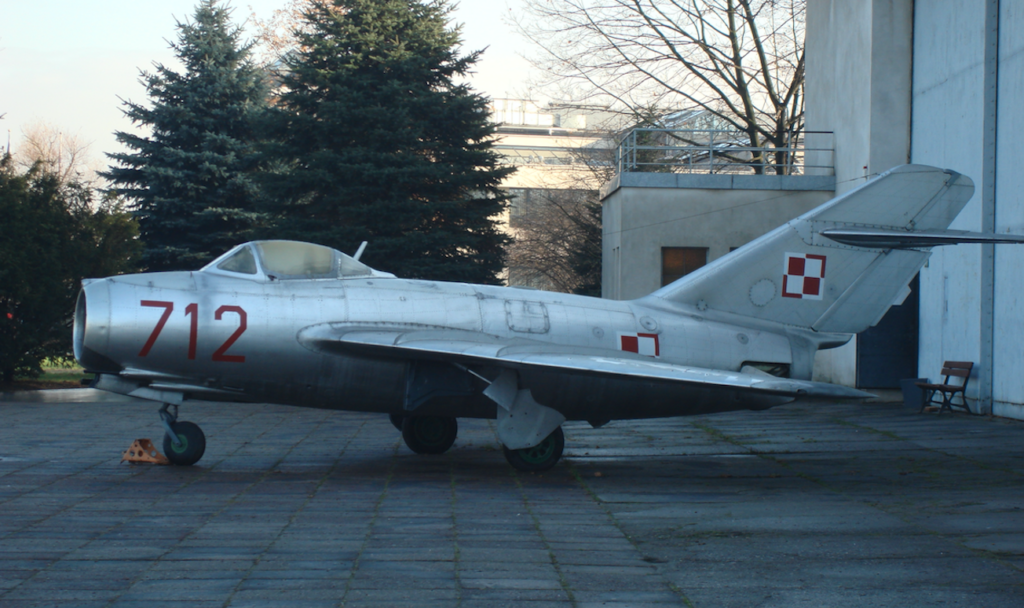
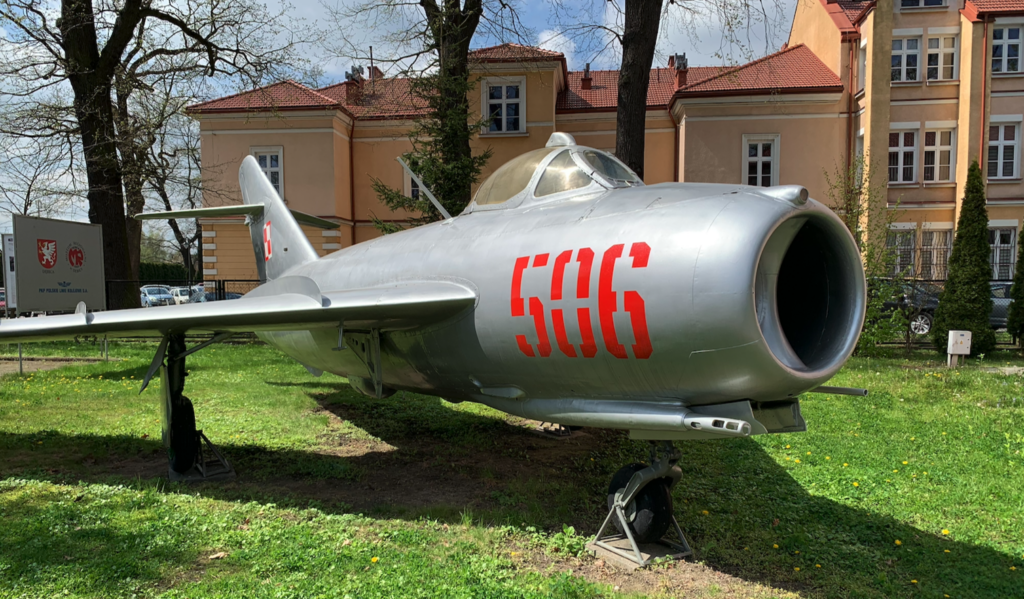
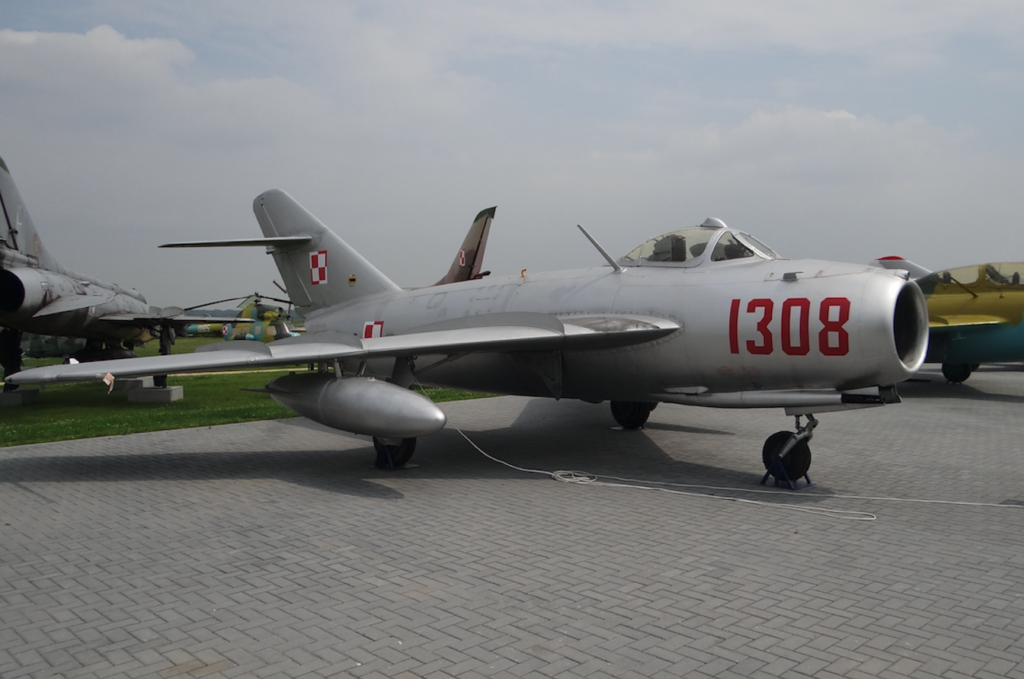
During the communist era, alternate airfields were also referred to as field airfields or ferry ports. The term “field airfield” was retained longest at airfields without a paved runway, such as Jawor Airport. The name “referral airfield” corresponded to the airfield’s function, where, in a situation of danger and impending missions, a given regiment was to be relocated closer or further from the front. During World War II, the Soviets frequently used the phrase “Regiment relocated to an airfield closer to the front.” The name “alternate airfields,” on the other hand, comes closest to the actual function of a given airfield during the Polish People’s Republic. By the 1960s, virtually all combat aircraft were required to use paved runways. Although the PZL Lim-5 (MiG-17) and even the Su-7 BKL (BKL) retained the capability to operate from the ground, numerous potential powerplant failures (foreign object ingestion) and possible landing gear damage encouraged the use of paved runways or road sections of the airfield (DOL).
Initially, the take-off area of an alternate airfield was no different from that of a primary airfield. Only from the 1970s onward did primary airfields receive permanent lighting and permanent radio equipment. Alternate airfields, however, retained their developed lighting, communications, and radar systems. Alternate airfields still had poor social facilities, with few permanent buildings on their premises. Soldiers were often quartered in tents and used field kitchens and field baths. The airfield only came alive during training periods.
The Alternate Airfield Command, or KLZ for short, operated at alternate airfields. It was responsible for maintaining the airfield. At its head was a commander with the rank of officer, assisted by a platoon leader, who was not always a professional soldier. Sometimes these were cadets completing a year’s service after completing civilian studies. The rest of the KLZ platoon consisted of conscript soldiers, seconded from their parent regiment for a period of approximately six months. There were so-called “swaps,” replacing “older” soldiers with “younger” ones. Some managed to serve almost their entire tour of duty at an alternate airfield, which had its advantages. The KLZ platoon included ground crew members of all specialties. The KLZ platoon could be quite extensive if the alternate airfield included a MPS (propellant and lubricant depot) and a bomb depot (arsenal). The KLZ had basic equipment capable of accommodating and servicing a dozen or so aircraft. When the entire regiment was redeployed, a team followed the aircraft with equipment and maintenance for the remaining aircraft. Twice a year, in autumn and spring, during so-called “transitions,” all equipment at the KLZ’s disposal was maintained. The airframe and engine specialties included basic tools, guide rails, ladders, jacks, etc. This equipment was stored on tarpaulin trailers.
The few alternate airfields were used jointly by soldiers of the Polish and Soviet Armed Forces. But not at the same time. The declared Polish-Soviet friendship was pure fiction. Polish soldiers never treated the Soviets as allies. It was difficult to forget September 17, 1939, the seizure of one-third of the Polish Republic, or the rape, mutilation (blinded to prevent them from recognizing the perpetrators), and even murder of Polish women in 1944-1945. Those interested can refer to the publication “Hunting for White Poles” by Professor Grzegorz Motyka.
There’s at least one known case where a Polish pilot landed a MiG-21 at the wrong alternate airfield. During his landing roll, he deployed his drogue parachute, which he discarded as he left the runway. Something didn’t sit right with him, as the planes on the nearby parachute were slightly different. He spotted the red stars, made a 180-degree turn, taxied back to the runway, and departed. Less than five minutes later, he landed at the correct alternate airfield, and the matter likely wouldn’t have come to light if not for the discarded drogue parachute.
The heyday of alternate airfields was the 1960s and 1970s. At that time, the Polish Army had approximately 350 Lim-1 aircraft, 500 Lim-2 aircraft, 400 Lim-5/6 bis aircraft, 30 MiG-19 aircraft, 400 MiG-21 aircraft (of various types), and 150 Il-28 aircraft.
Written by Karol Placha Hetman