
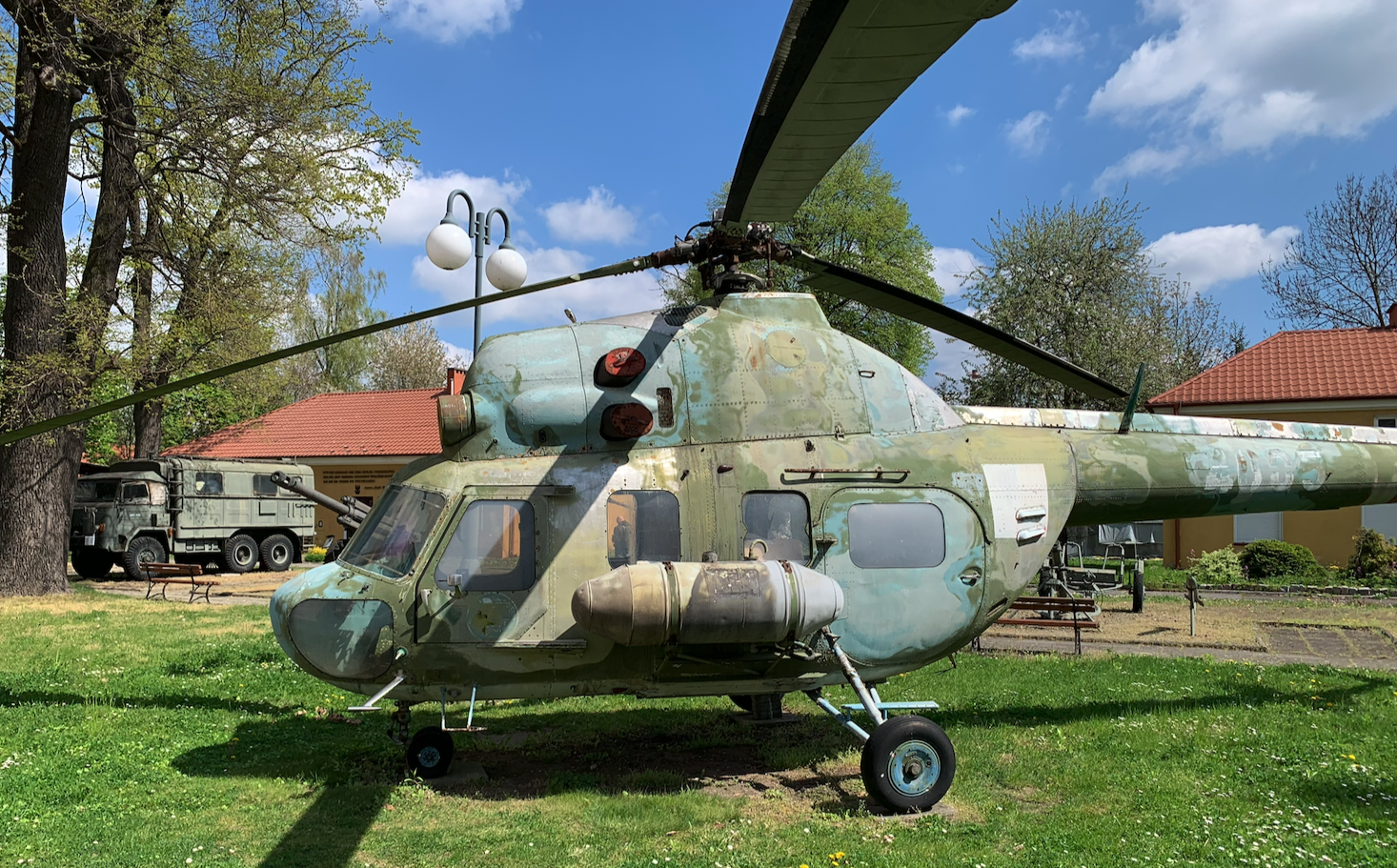
Dębica 2026-05-04
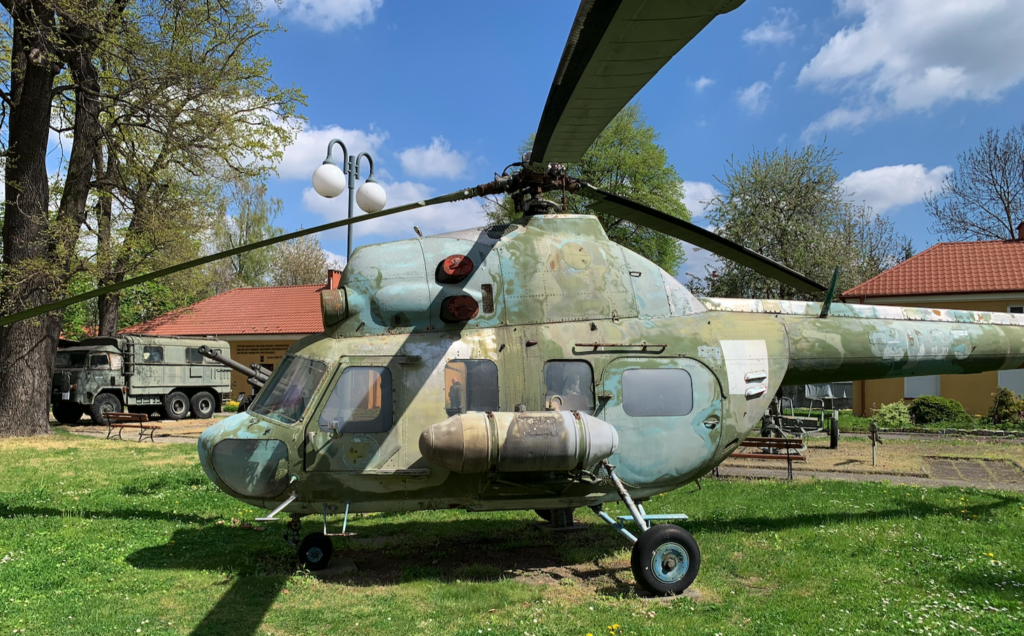
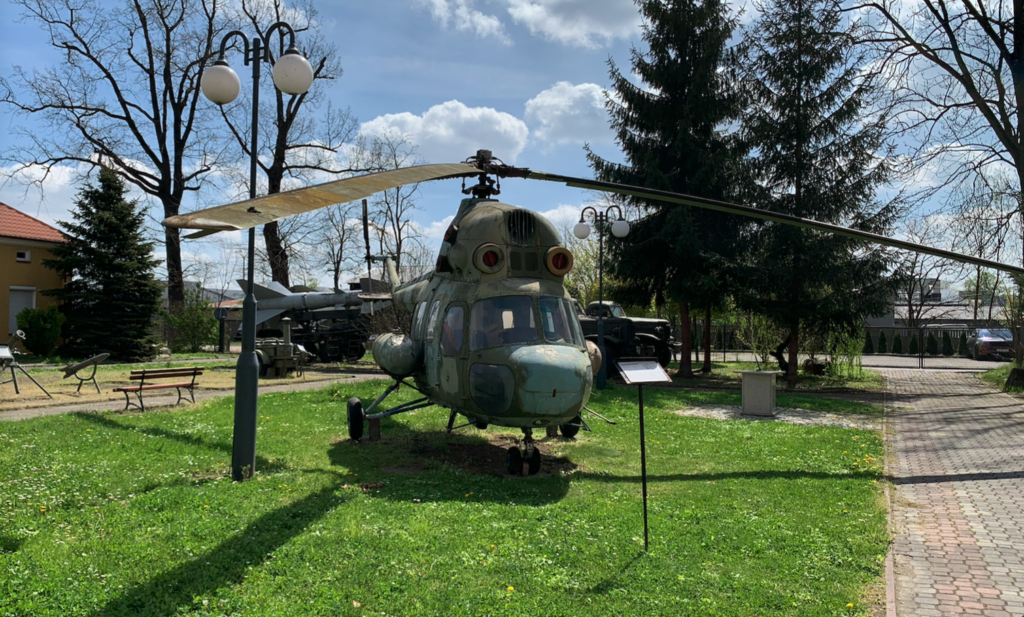
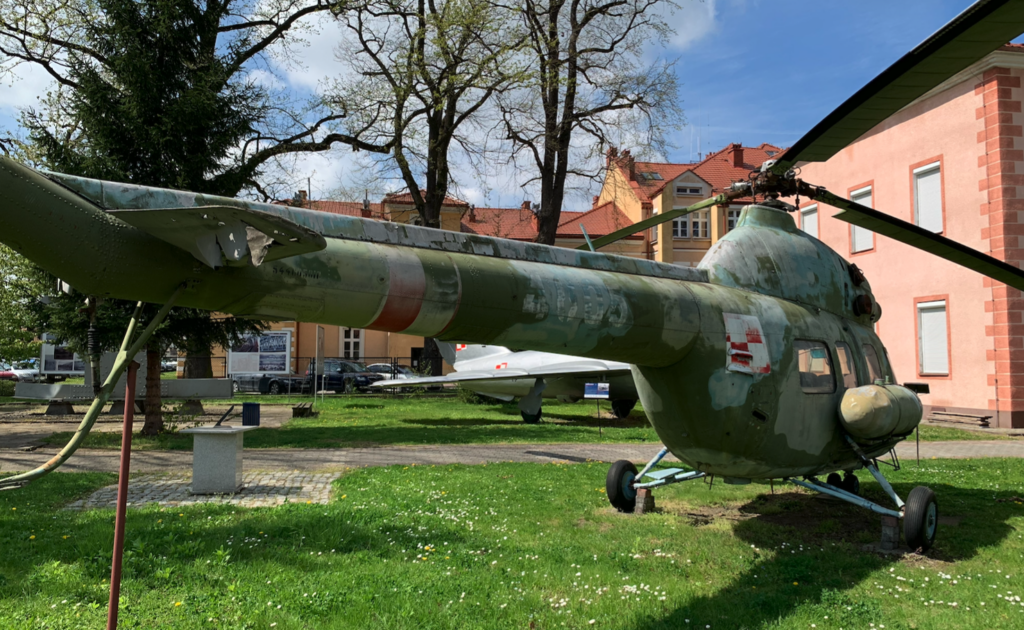
WSK PZL Świdnik Mi-2 nb 4605.
193a Section 1965-08-26. Poland.
History of the Mi-2.
The Mil Mi-2 helicopter is one of the most recognizable helicopters in the world. Its NATO designation is Hoplite. (A hoplite is a heavily armed infantryman in ancient Greece from the 7th to the 4th century BC.) The helicopter also received several slang names, including the most popular, “Teapot.” It was designed at CCCP in Mikhail Mil’s office. The helicopter proved successful, and the decision was made to enter mass production. However, the CCCP economy was inefficient, and the armaments plants were burdened by more urgent production. Therefore, the decision was made to locate Mi-2 production at WSK PZL Świdnik. Świdnik’s experience in producing the SM-1 and SM-2 helicopters aided this decision. There was also another benefit for the communists: Polish research and development work on domestic designs could be significantly reduced. As a result, every Mi-2 was built in Świdnik. In 1963, the final decisions were made, and a license for the Mi-2 helicopter was purchased. The Soviets refused to give the aircraft the name SM-3, which had been designated for it in Poland.
In 1964, WSK PZL Świdnik began producing Mi-2 helicopters from parts supplied by CCCP. In 1965, the first fully assembled Polish Mi-2 rolled off the production line. In total, approximately 5,400 Mi-2 helicopters of various variants were built. The helicopter was originally designed for civilian missions. However, more than a dozen variants were developed in Świdnik for the military, and these were primarily produced and deployed with the Polish Army and other countries. Although the Mi-2’s design is now obsolete, it is still (as of 2026) in military and civilian service in several countries. In Poland, the Mi-2’s service ended in 2023.
The Mi-2 helicopter was developed with a new turbine engine, designated GTD-350. The Mi-2 wasn’t the first helicopter at CCCP with this type of powerplant. The first was the Mil Mi-6, one of the largest helicopters in the world. Contrary to popular belief, the Mi-2 wasn’t designed as a light helicopter. After all, it was intended to carry up to nine people. The light helicopter of the time was the Mil Mi-1, which seated three to four people, produced in Poland until 1965 and at CCCP until 1970. The fact that the Mi-2 eventually supplanted the Mi-1 was due to its operational advantages. Furthermore, its twin-engine powerplant significantly improved flight safety. The development of the Mil Mi-2 helicopter was more of an experiment than a specific goal. This was because turbine-powered helicopters were a significant innovation, and all companies building this type of aircraft began working towards it. Work on the Mil Mi-2 began in 1959. In January 1961, a mock-up of the helicopter was approved. In February 1961, documentation for the construction of a prototype was ready. The prototype’s first flight took place on September 22, 1961.
One of the first prototype versions of the Mi-2 was an agricultural version. Tests were conducted at a collective farm near Moscow in 1962. The helicopter received fertilizer spraying equipment. In September 1962, this helicopter was demonstrated to the CCCP party-government authorities. In May 1963, one of the prototypes set a world speed record over a 100 km closed course, achieving a speed of 253.800 km/h.
The prototype documentation was sent to WSK PZL Świdnik in Poland. It had to be translated into Polish and all production documentation completed. All the tooling, assembly stations, and control and measurement stations had to be constructed. After the prototypes were built, they had to be subjected to static and flight tests. The same work was performed at WSK PZL Rzeszów for the GTD-350 engines and main gearbox. On August 26, 1965, the first Mi-2 helicopter, built in Świdnik from parts supplied by CCCP, flew. The crew consisted of Soviet pilots Rafail Karapatian and Belusov. On November 4, 1965, the first example produced entirely in Świdnik (serial number 520001) flew. The crew consisted of test pilot Wiesław Mercik, MSc. Eng., Kazimierz Moskowicz, MSc. Eng., and Henryk Jaworski. Series production of Mi-2 helicopters lasted from 1964 to 1991, and after a short break, resumed in 2005.
Although this design is already outdated in the 21st century and its modernization potential is limited, a modernized version of the Mi-2A was developed at the Russian Rostwiertol plant. The modernization includes replacing the engines and avionics. Similar work was carried out at the Ukrainian aviation plant in Vinnytsia. The Mi-2 MSB2 helicopter was developed there, equipped with new engines, a new reduction gear, avionics, and a slightly redesigned fuselage.
Mi-2 Versions.
Mi-2 T – transport variant designed to carry 8 passengers or a cargo of up to 700 kg inside the cabin.
Mi-2 P – passenger variant designed to carry 6-8 passengers and luggage. The seats and benches are equipped with significantly more comfortable upholstery. The walls are paneled, and the floor is carpeted. A different type of cabin lighting was installed.
Mi-2 Sh, Mi-2 U – training variants equipped with a dual-control system. In 1974, a specialized helicopter was built for radio and television broadcasts. It was designated SP-TVA. The helicopter was used extensively during the “Peace Race” cycling race, providing live broadcasts. However, the helicopter’s primary mission was to support the Security Office. Crane versions with a lifting capacity of 800 kg were built for the Instal company in Nasielsk and Mostostal. These helicopters complemented three Mil Mi-6 helicopters.
Four Mi-2 helicopters in the polar variant were built for the Polish Academy of Sciences, intended for scientists at Polish research stations in Antarctica. These helicopters were equipped with polar navigation equipment, modified radios, cameras, and additional spotlights.
Versions with thermal imaging cameras were built for Aeropol. These helicopters were used for power grid inspections.
Military, agricultural, and rescue variants are described in separate chapters.
PZL Mi-2 Overview.
Serial production of PZL Mi-2 helicopters was conducted exclusively in Poland at the WSK PZL Świdnik plant. By 1985, approximately 4,500 units had been built, and by 1988, approximately 5,100. In total, approximately 5,400 PZL Mi-2 helicopters were built. Most of the helicopters were delivered to CCCP and CCCP-dependent countries. In Poland, the helicopters were operated by the Polish Army, the Polish Air Rescue Service, and the national economy.
T-T Mi-2 specifications:
Main rotor diameter 14.56 m. Overall length 17.42 m. Fuselage length 11.94 m. Fuselage width 3.25 m. Height without tail rotor 3.75 m. Empty weight 2,375 kg. Takeoff weight 3,550 kg. Payload weight 700 kg. Fuel capacity in internal tanks 600 liters. Maximum speed 210 km/h. Cruising speed 190 km/h. Vertical climb 4.6 m/s. Service ceiling 4,000 m. Hover ceiling out of ground effect 900 m. Hover ceiling in ground effect 1,600 m. Range 300 km. Maximum range 600 km.
Written by Karol Placha Hetman